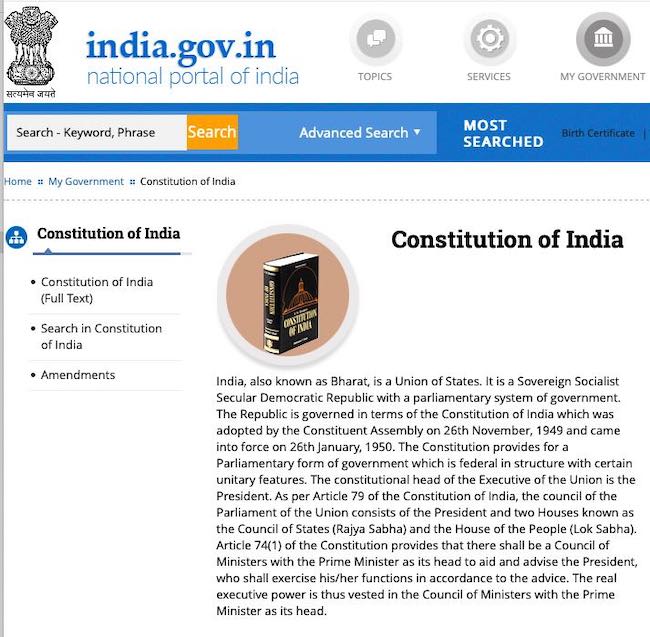
India, also known as Bharat, is a Union of States. It is a Sovereign Socialist Secular Democratic Republic with a parliamentary system of government. […]
- Equality before law.—The State shall not deny to any person equality before the law or the equal protection of the laws within the territory of India.
- Prohibition of discrimination on grounds of religion, race, caste, sex or place of birth.—(1) The State shall not discriminate against any citizen on grounds only of religion, race, caste, sex, place of birth or any of them.
(2) No citizen shall, on grounds only of religion, race, caste, sex, place of birth or any of them, be subject to any disability, liability, restriction or condition […]
- Protection of certain rights regarding freedom of speech, etc.— (1) All citizens shall have the right—
(a) to freedom of speech and expression;
(b) to assemble peaceably and without arms;[…]
Source: Constitution of India, Part III: Fundamental Rights/General (p. 6)
URL: https://legislative.gov.in/sites/default/files/COI_English.pdf | PDF-repository (2 MB)
Date Visited: 6 November 2022
~ ~ ~
To an administrator, the term ‘tribe’ means a group of citizens who are the special responsibility of the President of India | Constitution of India | Fundamental Rights according to the Constitution of India: PDF-repository (2 MB), p. 6 >>
The preamble [to India’s Constitution] sets out objectives of securing to all citizens social, economic and political justice; liberty of thought, expression, belief, faith and worship; equality of status and of opportunity, and aims to promote fraternity and ensure the unity and integrity of the Nation. | Learn more about “How Indians made Constitution a success” | Fundamental Rights according to the Constitution of India: PDF-repository (2 MB), p. 6 >>
“We shall first have to give up this hubris of considering tribes backward. Every tribe has a rich and living cultural tradition and we must respect them.” – Vice President M. Venkaiah Naidu on the constitutional obligation to respect the cultural traditions of India’s tribal communities
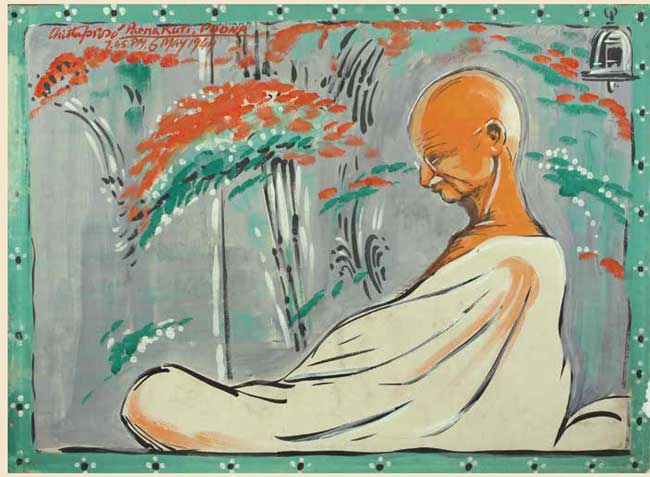
Gandhian social movement | Constitution | Adverse inclusion >>
“Air is free to all but if it is polluted it harms our health… Next comes water… From now on we must take up the effort to secure water. Councillors are servants of the people and we have a right to question them.” – Mohandas K. Gandhi, Ahmedabad address on 1 January 1918; quoted by his grandson, Gopalkrishna Gandhi, in “On another New Year’s Day: Mahatma Gandhi’s ‘khorak’ a 100 years ago” (The Hindu, 1 January 2018)
“The world has enough for everyone’s need but not for anyone’s greed.” – Mahatma Gandhi quoted by Medha Patkar and Baba Amte (Narmada Bachao Andolan)
States and Union Territories
India, a union of states, is a Sovereign, Secular, Democratic Republic with a Parliamentary system of Government. The President is the constitutional head of Executive of the Union. In the states, the Governor, as the representative of the President, is the head of Executive. The system of government in states closely resembles that of the Union. There are 28 states and 8 Union territories in the country.[*] Union Territories are administered by the President through an Administrator appointed by him/her. From the largest to the smallest, each State/UT of India has a unique demography, history and culture, dress, festivals, language etc. This section introduces you to the various States/UTs in the Country and urges you to explore their magnificent uniqueness…
[*] From 29 states and 7 Union since the publication of “The Jammu and Kashmir Reorganisation Act, 2019” by the Ministry of Law and Justice, New Delhi, on 9th August 2019. Major changes concern the status of Jammu and Kashmir and Ladakh, henceforth listed among the 8 separate “Union territories” (formerly 7); and as a result of this change, the omission of Jammu and Kashmir (along with Ladakh) from the earlier list of 29 “States”. “Dadra and Nagar Haveli and Daman & Diu” are now grouped together as one, rather than two separate “Union territories”.
Source: States and Union Territories – About India
URL: https://knowindia.india.gov.in/states-uts/
Date visited: 4 September 2021
More information about possible changes as regards tribal communities are found here | Nutrition >>
Tips for using interactive maps
Toggle to normal view (from reader view) should the interactive map not be displayed by your tablet, smartphone or pc browser
For details and hyperlinks click on the rectangular button (left on the map’s header)
Scroll and click on one of the markers for information of special interest
Explore India’s tribal cultural heritage with the help of another interactive map >>
“Nehru was fascinated by the spontaneity of tribal culture and their capacity of joy and heroism in spite of their appalling poverty, destitution, and ignorance. […] In Nehru’s view, the process of modernization must not be taken as forcing a sudden break with the tribals past but help them build upon it and grow by a natural process of evolution.” – Dr. Chittaranjan Mishra in “Tribal Philosophy and Pandit Nehru” (Odisha Review, November 2017) | Learn more >>
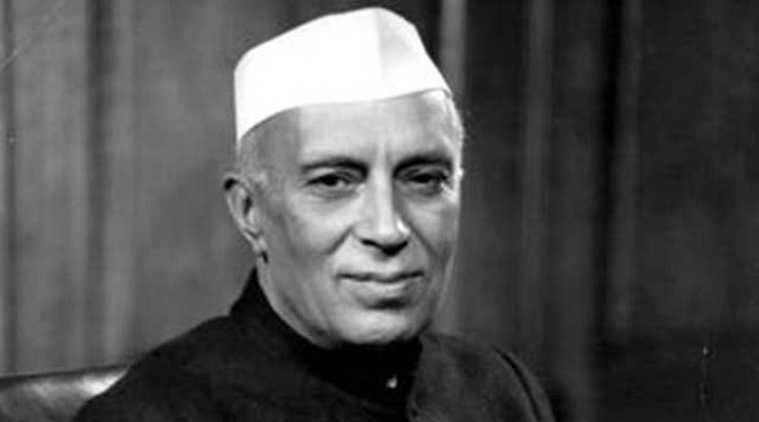
Photo © Indian Express
The current predicament of Adivasis
The current predicament of a vast majority of Adivasis is one of sharp erosion in their livelihoods and their life-worlds. Despite assurances of autonomy (the Fifth and Sixth Schedules, the Panchsheel, PESA 1996, Forests Rights Act 2006) and attempts of focused addressal of Adivasi and Tribal issues (including the establishment of an umbrella outfit, the National Council for Tribal Welfare), there are counter structures and programmes that defy the enabling of genuinely decentralised autonomy and the guarantee of democratic participation. For instance, the recently approved ‘Integrated Action Plan’ in Tribal areas overrides the representation of Adivasis in local issues in decision-making processes and arrogates powers of governance to bureaucrats and specialists.
In addition to such contradictory and conflicting measures, the forces of fast-expanding capital, along with the top-down deployment of development models have resulted in large scale displacement in Adivasi regions. Global capital’s access to mineral wealth has also intensified violence of various forms and degrees.
Source: Ch. 2, “Context and Conditions of Adivasi Life Worlds” (p. 5) in THE EDUCATION QUESTION’ FROM THE PERSPECTIVE OF ADIVASIS: CONDITIONS, POLICIES AND STRUCTURES by National Institute of Advanced Studies (Bangalore), March 2012 & UNICEF | Backup (PDF, 4 MB)
India’s founding fathers saw decentralisation as creating living social spaces around constitutional protections blending together pride of ‘citizenship’ with the richness of multi-cultural identities.
Conflict Resolution in Multicultural Societies — The Indian Experience: Jhumpa Mukherjee; Sage Publications India Pvt. Ltd, B1/I-1, Mohan Cooperative Industrial Area, Mathura Road, New Delhi-110044. Rs. 795.
Source: Book review book review by Swaran Singh: Deconstructing federalism: Conflict Resolution in Multicultural Societies by Jhumpa Mukherjee, The Hindu, 7 June 2015
Address: https://www.thehindu.com/books/books-reviews/deconstructing-federalism/article7289600.ece
Date Visited: 12 March 2021
Take the cue from the President
In those moments when questions emerge about the fragility of the state’s constitutional principles — over what has transpired since the Dadri lynching and the killing of Kannada scholar M.M. Kalburgi, for example — it is incumbent on high constitutional functionaries to rise to the occasion and seek to answer them. These incidents have triggered a response from India’s intellectuals who have earned recognition, with a string of litterateurs returning their Sahitya Akademi awards, concerned about the silence of the august body over rising intolerance. […]
It is in this context that President Pranab Mukherjee’s statement a week ago at Rashtrapati Bhavan, where he underlined the need to retain diversity, plurality and tolerance as the core values of our civilisation, came as a balm. The President later re-stated those sentiments on foreign soil – in Israel, speaking to politicians in the Jewish state, suggesting that “religion should not be a basis for a state”. […]
Secularism is a bedrock of India’s Constitution, and what needs to be debated is the means to achieve the separation of religion and the state. […]
Source: The Hindu, Opinion – Editorial, October 16, 2015
Address: https://www.thehindu.com/opinion/editorial/take-the-cue-from-the-president/article7766516.ece
Date Visited: Sat Oct 17 2015 13:15:51 GMT+0200 (CEST)
[Bold typeface added above for emphasis]
Research: explore PhD theses from all over India
Shodhganga (Open Access)
Basics
Tribal Cultural Heritage in India in the 21st century (printfriendly PDF)
Forest dwellers in early India – myths and ecology in historical perspective
Education
Background guide for education (free eBook)
Childhood | Child marriage | Children’s right to Education
! Contact: National helpline Childline & report trafficking
Customs | Marriage customs | Social conventions
Free comic books (Unicef)
Survival Int. on tribal education
Video | “Nations don’t make us human – languages make us human”: Ganesh Devy
Health, environment & nature
Biological Diversity: What is the Biodiversity Act?
Forest dwellers in early India – myths and ecology
Issues
Assimilationist & isolationist positions
“Casteism” and its effect on tribal communities
Denotified Tribe vs. “criminal tribe“
Fighting exploitation and women’s stigmatization
Particularly Vulnerable Tribal Groups & Endangered languages (interactive map)
President of India
National development and the development of tribal communities are linked
Government of India, national & international organizations
Endangered languages: Peoples’ Linguistic Survey of India
Govt. of India, NGOs, Indian universities and international organisations
Govt. What are the Rights of Scheduled Tribes (ST)
Human Rights Commission (posts) | www.nhrc.nic.in (Government of India)
India’s Constitutional obligation to respect their cultural traditions
India’s 28 States and 8 Union Territories
National Commission for Scheduled Tribes | Related posts
Particularly Vulnerable Tribal Groups (PVTG)
People’s Linguistic Survey of India | Volumes (PLSI) | PeoplesLinguisticSurvey.org
Universal Declaration of Human Rights & International Convention against Torture
Women | Safe search | President Droupadi Murmu on women’s empowerment
Legal provisions
Child rights & Right to education handbook
Constitution and Supreme Court
Denotified, nomadic and semi-nomadic (“hidden”) tribes: Classifications in different states
Forest Rights Act (FRA) | Legal rights | What is the Forest Rights Act about?
India’s Constitutional obligation to respect their cultural traditions
Right to Information Act (RTI)
Scheduled Tribes (ST) | Who are Scheduled Tribes?
Who is a forest dweller under this law, and who gets rights?
Resources
Adivasis’ struggle for India’s freedom and Independence
Anthropology & Anthropological Survey of India
The Anti-Autocracy Handbook: A Scholars’ Guide to Navigating Democratic Backsliding | Backup (PDF, 500 KB)
Books on tribal culture and related resources
Fact checking | Factchecker.in | Safe search examples with keywords:
“factchecker.in rural india“| “factchecker.in adivasi tribe“
Figures, census and other statistics | Primitive Tribes in Andaman and Nicobar Islands (Census 2011)
Indian magazines and web portals – news coverage and analysis
Indigenous knowledge: biodiversity, ecology, health, nutrition, nature, wildlife
Languages and linguistic heritage
Nehru’s 5 Principles: Panchsheel
News update in Indian periodicals: Tribal Affairs
People’s Linguistic Survey of India | Volumes (PLSI) | PeoplesLinguisticSurvey.org