Central Hall, Parliament House : 31.01.2017
The Hindu, January 31, 2017 | To read the full text of the President’s address to the joint session of Parliament, click here or download it from the President’s official website: President’s Address to Parliament (PDF, 0.19 MB)
Excerpts
Honourable Members,
30. Social and economic equality for the deprived and disempowered sections is the first promise of our constitution. My government is committed to fulfil this promise.
31. Through the Stand-up India initiative, my government plans to empower over two and a half lakh Scheduled Castes, Scheduled Tribes and women entrepreneurs. For promoting entrepreneurship, the National Scheduled Castes/Scheduled Tribes Hub has been launched, with an initial allocation of Rs. 490 crore.
32. Under the Forest Rights Act, about 16.5 lakh Individual Forest Rights titles have been granted over an area of 55.4 lakh acres of forest land. Further, Community Forest Rights titles have been distributed over an area of about 47 lakh acres of forest land.
33. The location of our mineral wealth largely coincides with tribal habitations in our country. The Pradhan Mantri Khanij Kshetra Kalyan Yojana will serve the dual purpose of ensuring sustainable mining activity as well as local area development for the betterment of the tribals and the poor inhabitants in the mining areas. District Mineral Foundation is a novel initiative in this regard.
34. My government has increased the allocation under the Tribal sub-plan. Fourteen different sectors have been identified under the Vanbandhu Kalyan Yojana for the empowerment of tribals. 100 out of the 300 clusters envisaged under the Shyama Prasad Mukherjee Rurban Mission, will be developed in tribal areas.
Source: Full text of the President’s address to the joint session of Parliament – The Hindu
Address: https://www.thehindu.com/news/resources/Full-text-of-the-Presidents-address-to-the-joint-session-of-Parliament/article17120888.ece
19 April 2021
“Education has to liberate a person from narrow world view and the boundaries of caste, community, race and gender. Teachers have been entrusted with the responsibility of moulding the young minds to understand the world and make it better.” – Shri Pranab Mukherjee, President of India (National Award 2014 to Teachers) | Some clarifications on caste-related issues by reputed scholars >>
Diversity, plurality and tolerance are “core values of our civilisation”: Rashtrapati Bhavan >>
Source: Press Information Bureau (Government of India, 5 September 2015)
URL: https://www.education.gov.in/sites/upload_files/mhrd/files/President%20-Confers.pdf
19 April 2021
Express News Service, New Delhi, , August 9, 2014
The Ministry of Rural Development on Friday launched its flagship Shyama Prasad Mukherji Rurban Mission, which is aimed at providing urban amenities in rural areas.
Launching the scheme, Union Rural Development Minister Nitin Gadkari said the government was committed to providing good amenities, jobs and infrastructure in rural areas on a priority basis. He said by providing basic facilities to all the stakeholders in the rural areas, the problem of migration could be tackled effectively. […]
In the first phase, Rs 100 crore will be spent on the scheme in three identified projects in Warangal district of Andhra Pradesh and Sangli and Buldhana districts of Maharashtra. The mission was a promise made by the BJP in its 2014 Lok Sabha election manifesto.
Source: Centre launches its flagship Rurban mission; identifies 3 projects | The Indian Express
Address: http://indianexpress.com/article/india/india-others/centre-launches-its-flagship-rurban-mission-identifies-3-projects/
Date Visited: Sun May 21 2017 17:12:48 GMT+0200 (CEST)
Learn more
How tribal communities have protected India’s forests and preserved biodiversity all over the world
“Tribal communities have proven that they are the best guardians of the forest and die-hard conservationists”: Illegal mining destroys the life and culture of the conservators of forests >>
“Even though they are responsible for protecting the largest part of the global forest heritage […] a third of indigenous and community lands in 64 countries are under threat due to the lack of land tenure rights.” – Pressenza Rio de Janerio in “Indigenous people are heading to CoP26: ‘There is no solution to the climate crisis, without us’” (Down To Earth, 1 November 2021) >>
“The British established mode of forest governance imposed restrictions on local forest-dwelling communities. In 1860, the Company withdrew all access rights for using the forests (food, fuel, medicine and selling forest products) since the forests and forest-dwelling communities provided refuge to the rebels during the Sepoy Mutiny.” – Bharat Rural Livelihoods Foundation >>
“Tribal population was spread all over India and most of them occupied wild tracts, hilly and forested areas, away from more civilized centers. In 1880 their population was estimated at about seventy million. They had existed for centuries with their own social traditions and beliefs and subsisted on natural resources. They had preserved their near isolation and way of life until the British administration and policies made inroads into their territories.” – Subha Johari in Tribal Dissatisfaction Under Colonial Economy of 19th Century >>
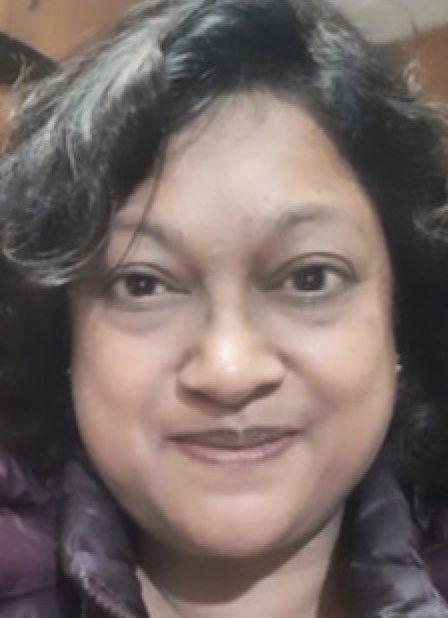
“Two main streams within Indian anthropology influenced the literary and visual representations of tribes by mainstream writers, artists and film-makers.” – Dr. Ivy Hansdak clarifies how they are associated with “assimilationist” and “isolationist” positions or policies >>
In Marginalised but not Defeated, Tarun Kanti Bose (a seasoned public interest journalist) “documents the hard and difficult struggle to implement the Forest Rights Act, how the oppressed adivasis have united into forest unions, how they are now entering into new thresholds of protracted struggles and victories in a non-violent manner.” | Learn more: https://countercurrents.org/2023/05/book-review-marginalised-but-not-defeated >>
“Tribal men and women mix freely, but with respect for each other [but] caste Hindu society in India is so convinced of its own superiority that it never stops to consider the nature of social organisation among tribal people. In fact it is one of the signs of the ‘educated’ barbarian of today that he cannot appreciate the qualities of people in any way different from himself – in looks or clothes, customs or rituals.” – Guest Column in India Today >>
Learn more about colonial policies, the Forest Rights Act, its importance for ecology, biodiversity, ethnobotany and nutrition, and about the usage of Adivasi (Adibasi) communities in different states of India: in legal and historical records, in textbooks, scholarly papers and the media >>
Tip: to find out more on the above issues, type a combination of search terms in the search field below
Find up-to-date information provided by, for and about Indian authors, researchers, officials, and educators
List of sites covered by this Google SafeSearch engine
Ashoka Trust for Research in Ecology and the Environment (ATREE) – www.atree.org
Freedom United – www.freedomunited.org
Government of India (all websites ending on “.gov.in”)
Kalpavriksh Environmental Action Group – https://kalpavriksh.org
Shodhganga (a reservoir of Indian theses) – https://shodhganga.inflibnet.ac.in
Survival International – www.survivalinternational.org
UCLA Digital Library – https://digital.library.ucla.edu
Unesco – https://en.unesco.org
Unesco digital library – https://unesdoc.unesco.org
Unicef – www.unicef.org
United Nations – www.un.org/en
Video Volunteers – www.videovolunteers.org
WorldCat (“the world’s largest library catalog, helping you find library materials online”) – https://worldcat.org
Search tips
Combine the name of any particular state, language or region with that of any tribal (Adivasi) community.
Add keywords of special interest (music, poetry, dance just as health, sacred grove and biodiversity); learn about the rights of Scheduled Tribes such as the “Forest Rights Act” (FRA); and the United Nations “Declaration on the Rights of Indigenous Peoples”, “Universal Declaration of Human Rights”, “women’s rights”, or “children’s right to education”.
Ask a question that includes “tribal” or “Adivasi”, for instance: “Adivasi way of life better?” (or “tribal way of life worse?”)
Specify any particular issue or news item (biodiversity, bonded labour and human trafficking, climate change, ecology, economic development, ethnobotany, ethnomedicine, global warming, hunter-gatherers in a particular region or state, prevention of rural poverty, water access).
For official figures include “scheduled tribe ST” along with a union state or region: e.g. “Chhattisgarh ST community”, “Himalayan tribe”, “Scheduled tribe Tamil Nadu census”, “ST Kerala census”, “Particularly Vulnerable Tribal Group Jharkhand”, “PVTG Rajasthan”, “Adivasi ST Kerala”, “Adibasi ST West Bengal” etc.
SafeSearch browser tips
If your (mobile) browser fails to display “embedded” media contents, Google maps and SafeSearch windows
Try another browser like Firefox, Chrome or Safari available on your device
Ensure your favourite browser is up to date
Close your present browser
Check your browser and mobile (gsm) settings:
e.g. permission for video or JavaScript
(seen under Preferences >Security >Enable JavaSript)
Restart your computer (smartphone, tablet)
Reconnect to your wifi network or connect to a different one
On some iPhone models the following helps:
>Settings >Safari >scroll down to:
SETTING FOR WEBSITES
Enable “Request Desktop Website” (All Websites) temporarily
Return to the map-post in Safari and “Reload”
Return to >Settings and disable “Request Desktop Website” again
Return to the post in Safari and “Reload”which should now display “embedded” contents as intended (with the convenience of browsing the mobile version on a small screen)
Note: similar solutions may also work with other mobile operating systems.
“We shall first have to give up this hubris of considering tribes backward. Every tribe has a rich and living cultural tradition and we must respect them.” – Vice President M. Venkaiah Naidu on the constitutional obligation to respect the cultural traditions of India’s tribal communities
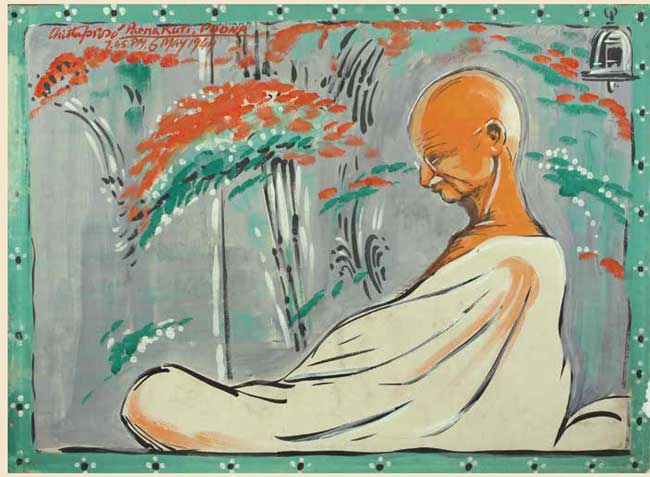
Gandhian social movement | Constitution | Adverse inclusion >>
“Air is free to all but if it is polluted it harms our health… Next comes water… From now on we must take up the effort to secure water. Councillors are servants of the people and we have a right to question them.” – Mohandas K. Gandhi, Ahmedabad address on 1 January 1918; quoted by his grandson, Gopalkrishna Gandhi, in “On another New Year’s Day: Mahatma Gandhi’s ‘khorak’ a 100 years ago” (The Hindu, 1 January 2018)
“The world has enough for everyone’s need but not for anyone’s greed.” – Mahatma Gandhi quoted by Medha Patkar and Baba Amte (Narmada Bachao Andolan)
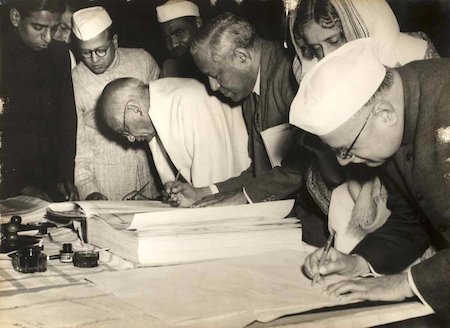
Photo: The Better India >>
Bhimrao Ramji Ambedkar (1891–1956): “Indian jurist, economist, social reformer and political leader who headed the committee drafting the Constitution of India [and] served as Law and Justice minister in the first cabinet of Jawaharlal Nehru” | Wikipedia >>
“The State shall not discriminate against any citizen on grounds only of religion, race, caste, sex, place of birth or any of them.” – Constitution of India & National Human Rights Commission >>
“Religion is a personal matter and should not be politicised.” – Invitation by the Bharat Jodo Abhiyan (BJA) – a civil society platform involving organisations from across 15 states – extended to all like-minded citizens “who take pride in our progressive, inclusive civilization and are committed to our constitutional values of fraternity, liberty, equality and justice” | TheWire (2 January 2024) >>
“The Indian constitution had to empower the state to enter into the realm of Indian society and transform it by eradicating deeply embedded economic, political and social hierarchies.” – “The Foreign and the Indigenous in the Indian Constitution: Constitution Day talk” by Arun Thiruvengadam (Centre for Law and Policy Research, Bangalore, 2 December 2015)
“Tribals are subject to oppression and cruelty even after independence and still picked up by the investigating officers to cover up shoddy investigations. […] The only recourse available to us is to faithfully abide by and give life to the constitutional ideals which Dr Ambedkar helped formulate, and use those to bring transformative change in the minds and perceptions of the society.” – Supreme Court Judge Justice D.Y. Chandrachud (The Wire, 7 December 2021)
Basics
Tribal Cultural Heritage in India in the 21st century (printfriendly PDF)
Forest dwellers in early India – myths and ecology in historical perspective
Education
Background guide for education (free eBook)
Childhood | Child marriage | Children’s right to Education
! Contact: National helpline Childline & report trafficking
Customs | Marriage customs | Social conventions
Free comic books (Unicef)
Survival Int. on tribal education
Video | “Nations don’t make us human – languages make us human”: Ganesh Devy
Health, environment & nature
Biological Diversity: What is the Biodiversity Act?
Forest dwellers in early India – myths and ecology
Issues
Assimilationist & isolationist positions
“Casteism” and its effect on tribal communities
Denotified Tribe vs. “criminal tribe“
Fighting exploitation and women’s stigmatization
Particularly Vulnerable Tribal Groups & Endangered languages (interactive map)
President of India
National development and the development of tribal communities are linked
Government of India, national & international organizations
Endangered languages: Peoples’ Linguistic Survey of India
Govt. of India, NGOs, Indian universities and international organisations
Govt. What are the Rights of Scheduled Tribes (ST)
Human Rights Commission (posts) | www.nhrc.nic.in (Government of India)
India’s Constitutional obligation to respect their cultural traditions
India’s 28 States and 8 Union Territories
National Commission for Scheduled Tribes | Related posts
Particularly Vulnerable Tribal Groups (PVTG)
People’s Linguistic Survey of India | Volumes (PLSI) | PeoplesLinguisticSurvey.org
Universal Declaration of Human Rights & International Convention against Torture
Women | Safe search | President Droupadi Murmu on women’s empowerment
Legal provisions
Child rights & Right to education handbook
Constitution and Supreme Court
Denotified, nomadic and semi-nomadic (“hidden”) tribes: Classifications in different states
Forest Rights Act (FRA) | Legal rights | What is the Forest Rights Act about?
India’s Constitutional obligation to respect their cultural traditions
Right to Information Act (RTI)
Scheduled Tribes (ST) | Who are Scheduled Tribes?
Who is a forest dweller under this law, and who gets rights?
Resources
Adivasis’ struggle for India’s freedom and Independence
Anthropology & Anthropological Survey of India
The Anti-Autocracy Handbook: A Scholars’ Guide to Navigating Democratic Backsliding | Backup (PDF, 500 KB)
Books on tribal culture and related resources
Fact checking | Factchecker.in | Safe search examples with keywords:
“factchecker.in rural india“| “factchecker.in adivasi tribe“
Figures, census and other statistics | Primitive Tribes in Andaman and Nicobar Islands (Census 2011)
Indian magazines and web portals – news coverage and analysis
Indigenous knowledge: biodiversity, ecology, health, nutrition, nature, wildlife
Languages and linguistic heritage
Nehru’s 5 Principles: Panchsheel
News update in Indian periodicals: Tribal Affairs
People’s Linguistic Survey of India | Volumes (PLSI) | PeoplesLinguisticSurvey.org