Forest Rights: Jung Jungle aur Jungle ke logo ka. Voices of Bhil tribal from semi-arid forest, Rajasthan, India.
A short video documentary (14mins) film ‘Forest Rights’ is produced and directed by Purabi Bose based on research field work data collection. Camera assistance by Savyasachi.
The film brings the voices of marginalised scheduled tribes, in particular, the Bhil tribal of Rajasthan, to express the complexities of tribal India’s decentralisation and forest tenure reform in their lives and in tribal self-governance of forests in semi-arid areas. The story told through the voices of Bhil people (men and women) provides further insights on the issue of institutional pluralism, citizenship, forest governmentality, participation, and the challenge of access rights particularly of tribal women that are prevalent amnd may have increased due to the implementation of the Forest Rights Act 2006.
This film has been premiered at the International Association for the Study of Commons (IASC), January 2011 in Hyderabad, India. The film has been used as educational material in the Universities (on Social Development, Law and Governance, and Forest Management and People) in the Netherlands, USA, Brazil and Germany.
Keywords: NTFPs, minor forest produce, gender, rights, human rights, government, institutions, decentralisation, micro-politics, community, indigenous people, tribal, adivasi, women, authority, power, delegation, devolution, citizenship, institutional pluralism.
Purabi Bose.
Published on Apr 27, 2012
Source: ▶ Forest Rights. A film by Purabi Bose. – YouTube
Address : https://www.youtube.com/watch?v=D9DeJeLwGhY&feature=youtu.be
Date Visited: 10 June 2021
Research: explore PhD theses from all over India
Shodhganga (Open Access)
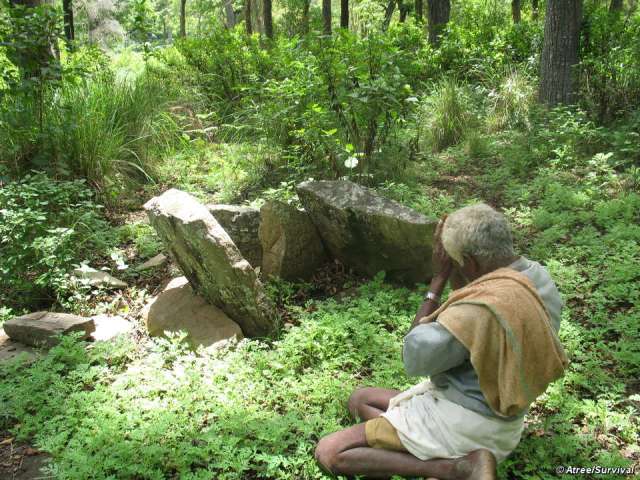
Learn more about the Soliga community in Karnataka >>
“We have a special responsibility to document, monitor and conserve our most precious asset” – Kamaljit S. Bawa in “Our biodiversity, our life, our future” >>
Facts and figures: India’s biological, cultural and geographic diversity
Spread over 3,287,240 km2 and despite a total human population of over 1,210,000,000, India represents a wide spectrum of biological, cultural and geographic diversity. It has been identified as one of the top 12 global biodiversity hotspots and has 91 eco-cultural zones inhabited by 4,635 ethnic communities. India also has amongst the largest indigenous/tribal population, constituting 8.08% of the country’s population, representing 461 tribes. The term ‘Indigenous Peoples’ is not officially recognized in the country, instead the Constitution of India uses the term ‘Scheduled Tribes’. The total forest cover is estimated to be approximately 20% of the total area of the country. About 1,70,379 villages with a population of 10,674,334 inhabit areas in close proximity of forests.
Source: RECOGNITION AND SUPPORT OF ICCAs IN INDIA by Neema Pathak Broome and Tushar Dash, p. 4 | PDF-Repository
URL: https://kalpavriksh.org/wp-content/uploads/2021/01/IndiaICCARecognition_Final_SEPT2012-as-published.pdf
Date Visited: 10 March 2025
Basics
Tribal Cultural Heritage in India in the 21st century (printfriendly PDF)
Forest dwellers in early India – myths and ecology in historical perspective
Education
Background guide for education (free eBook)
Childhood | Child marriage | Children’s right to Education
! Contact: National helpline Childline & report trafficking
Customs | Marriage customs | Social conventions
Free comic books (Unicef)
Survival Int. on tribal education
Video | “Nations don’t make us human – languages make us human”: Ganesh Devy
Health, environment & nature
Biological Diversity: What is the Biodiversity Act?
Forest dwellers in early India – myths and ecology
Issues
Assimilationist & isolationist positions
“Casteism” and its effect on tribal communities
Denotified Tribe vs. “criminal tribe“
Fighting exploitation and women’s stigmatization
Particularly Vulnerable Tribal Groups & Endangered languages (interactive map)
President of India
National development and the development of tribal communities are linked
Government of India, national & international organizations
Endangered languages: Peoples’ Linguistic Survey of India
Govt. of India, NGOs, Indian universities and international organisations
Govt. What are the Rights of Scheduled Tribes (ST)
Human Rights Commission (posts) | www.nhrc.nic.in (Government of India)
India’s Constitutional obligation to respect their cultural traditions
India’s 28 States and 8 Union Territories
National Commission for Scheduled Tribes | Related posts
Particularly Vulnerable Tribal Groups (PVTG)
People’s Linguistic Survey of India | Volumes (PLSI) | PeoplesLinguisticSurvey.org
Universal Declaration of Human Rights & International Convention against Torture
Women | Safe search | President Droupadi Murmu on women’s empowerment
Legal provisions
Child rights & Right to education handbook
Constitution and Supreme Court
Denotified, nomadic and semi-nomadic (“hidden”) tribes: Classifications in different states
Forest Rights Act (FRA) | Legal rights | What is the Forest Rights Act about?
India’s Constitutional obligation to respect their cultural traditions
Right to Information Act (RTI)
Scheduled Tribes (ST) | Who are Scheduled Tribes?
Who is a forest dweller under this law, and who gets rights?
Resources
Adivasis’ struggle for India’s freedom and Independence
Anthropology & Anthropological Survey of India
The Anti-Autocracy Handbook: A Scholars’ Guide to Navigating Democratic Backsliding | Backup (PDF, 500 KB)
Books on tribal culture and related resources
Fact checking | Factchecker.in | Safe search examples with keywords:
“factchecker.in rural india“| “factchecker.in adivasi tribe“
Figures, census and other statistics | Primitive Tribes in Andaman and Nicobar Islands (Census 2011)
Indian magazines and web portals – news coverage and analysis
Indigenous knowledge: biodiversity, ecology, health, nutrition, nature, wildlife
Languages and linguistic heritage
Nehru’s 5 Principles: Panchsheel
News update in Indian periodicals: Tribal Affairs
People’s Linguistic Survey of India | Volumes (PLSI) | PeoplesLinguisticSurvey.org