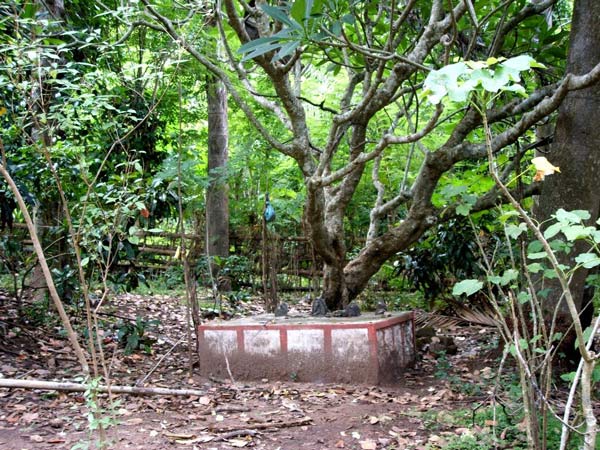
Eco-spirituality in the face of climate change >>
Kaani community >>
United Nations on climate change >>
NEW DELHI: The government has diluted its stand on requiring consent from tribals before handing over their forestlands for projects in an affidavit filed before the Supreme Court on the Vedanta case.
The changed policy cited in the affidavit of the government, contrary to existing regulations, could now make it easy for hundreds of other projects as well which require formal consent from tribals who have rights over forestlands under the Forest Rights Act. […]
On an odd note, now the consent, government has said, would be required for setting up dispensaries, fair price shops and providing other such basic needs to the tribals in the forestland but not for most of the industrial and development projects. […]
The environment ministry had in August 2009 passed orders bringing the forest clearance process in agreement with the Forest Rights Act and making it mandatory that rights of tribals over forests not be extinguished without their consent. But the unease of the government ensured the rules were followed more often in breach though in the case of Vedanta, they were cited, besides other reasons, for blocking the project, while Rahul Gandhi took lead in claiming he would work like a ‘sipahi (solider)’ for the tribals.
The first formal attempt to do away with the regulations came from the PMO after the infrastructure ministries complained against it. But leaking of the PMO report in the public domain led to uproar from tribal groups and forced the government to not go the whole hog in diluting the rules. But stealthily, it seems to have decided to get the same done through an affidavit in the Supreme Court where a judicial approval on the position could help the government seal the diluted norm without an explicit move in public domain.
Source: Tribals’ consent on forestland only in exceptional cases: Govt, Nitin Sethi, Times Of India, 16 February 2013
Address : http://articles.timesofindia.indiatimes.com/2013-02-16/developmental-issues/37132157_1_tribal-rights-forestlands-vedanta-case
Date Visited: Wed Mar 13 2013 17:14:55 GMT+0100 (CET)
Up-to-date reports by Indian experts and journalists
Search tips
Combine the name of any particular state, language or region with that of any tribal (Adivasi) community.
Add keywords of special interest (music, poetry, dance just as health, sacred grove and biodiversity); learn about the rights of Scheduled Tribes such as the “Forest Rights Act” (FRA); and the United Nations “Declaration on the Rights of Indigenous Peoples”, “Universal Declaration of Human Rights”, “women’s rights”, or “children’s right to education”.
Ask a question that includes “tribal” or “Adivasi”, for instance: “Adivasi way of life better?” (or “tribal way of life worse?”)
Specify any particular issue or news item (biodiversity, bonded labour and human trafficking, climate change, ecology, economic development, ethnobotany, ethnomedicine, global warming, hunter-gatherers in a particular region or state, prevention of rural poverty, water access).
For official figures include “scheduled tribe ST” along with a union state or region: e.g. “Chhattisgarh ST community”, “Himalayan tribe”, “Scheduled tribe Tamil Nadu census”, “ST Kerala census”, “Particularly Vulnerable Tribal Group Jharkhand”, “PVTG Rajasthan”, “Adivasi ST Kerala”, “Adibasi ST West Bengal” etc.
SafeSearch browser tips
If your (mobile) browser fails to display “embedded” media contents, Google maps and SafeSearch windows
Try another browser like Firefox, Chrome or Safari available on your device
Ensure your favourite browser is up to date
Close your present browser
Check your browser and mobile (gsm) settings:
e.g. permission for video or JavaScript
(seen under Preferences >Security >Enable JavaSript)
Restart your computer (smartphone, tablet)
Reconnect to your wifi network or connect to a different one
On some iPhone models the following helps:
>Settings >Safari >scroll down to:
SETTING FOR WEBSITES
Enable “Request Desktop Website” (All Websites) temporarily
Return to the map-post in Safari and “Reload”
Return to >Settings and disable “Request Desktop Website” again
Return to the post in Safari and “Reload”which should now display “embedded” contents as intended (with the convenience of browsing the mobile version on a small screen)
Note: similar solutions may also work with other mobile operating systems.
List of websites covered by this Google custom search engine
Academia.edu (platform for academics to share research papers) – www.academia.edu
Archive.org – https://archive.org
Centre for Science and Environment – https://www.cseindia.org
Current Conservation – https://www.currentconservation.org
Development and Cooperation (D+C) https://www.dandc.eu
Down To Earth (India) – www.downtoearth.org.in
India Environment Portal – www.indiaenvironmentportal.org.in
Harnessing Nature Magazine – https://harnessingnature.online
Mongabay-India – https://india.mongabay.com
M S Swaminathan Research Foundation – www.mssrf.org
Navdanya (protecting India’s biodiversity based food heritage) – https://navdanya.org
People’s Archive of Rural India – https://ruralindiaonline.org/
Third World Network (Penang, Malaysia) – https://twn.my
The Shola Trust (nature conservation in the Nilgiri region) – www.thesholatrust.org
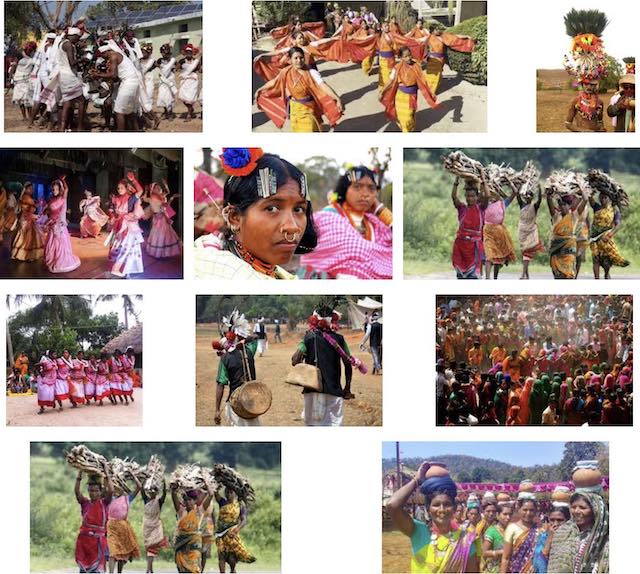
Indian online periodicals and platforms | Images view >>
~ ~ ~
Personalize your CustomSearch by combining other search words >>
(e.g. name of a tribal community and region, a craft, or dance and puppetry)
Research: explore PhD theses from all over India
Shodhganga (Open Access)
We have a special responsibility to document, monitor and conserve our most precious asset
Kamaljit S. Bawa on biodiversity and the need for a better understanding of interactions between nature and society | Learn more: Biodiversity | Climate change | Audio | The Climate Question (BBC Podcast) | Sacred grove | Survey of the Environment >>
For additional learning resources visit the website of the Centre for Science and Environment (CSE), “a public interest research and advocacy organisation based in New Delhi”:
Communication for Awareness
CSE’s publications and informational products have been its strength and they have always combined research and readability to get the message across.
CSE’s tools for awareness raising are periodicals, publications, films/short spots, briefing papers, exhibitions, posters and other products. CSE’s informational products reach people in more diverse ways such as features service, website and e-news bulletins. […]
Source: About CSE
URL: https://www.cseindia.org
Date Visited: 10 July 2022
Basics
Tribal Cultural Heritage in India in the 21st century (printfriendly PDF)
Forest dwellers in early India – myths and ecology in historical perspective
Education
Background guide for education (free eBook)
Childhood | Child marriage | Children’s right to Education
! Contact: National helpline Childline & report trafficking
Customs | Marriage customs | Social conventions
Free comic books (Unicef)
Survival Int. on tribal education
Video | “Nations don’t make us human – languages make us human”: Ganesh Devy
Health, environment & nature
Biological Diversity: What is the Biodiversity Act?
Forest dwellers in early India – myths and ecology
Issues
Assimilationist & isolationist positions
“Casteism” and its effect on tribal communities
Denotified Tribe vs. “criminal tribe“
Fighting exploitation and women’s stigmatization
Particularly Vulnerable Tribal Groups & Endangered languages (interactive map)
President of India
National development and the development of tribal communities are linked
Government of India, national & international organizations
Endangered languages: Peoples’ Linguistic Survey of India
Govt. of India, NGOs, Indian universities and international organisations
Govt. What are the Rights of Scheduled Tribes (ST)
Human Rights Commission (posts) | www.nhrc.nic.in (Government of India)
India’s Constitutional obligation to respect their cultural traditions
India’s 28 States and 8 Union Territories
National Commission for Scheduled Tribes | Related posts
Particularly Vulnerable Tribal Groups (PVTG)
People’s Linguistic Survey of India | Volumes (PLSI) | PeoplesLinguisticSurvey.org
Universal Declaration of Human Rights & International Convention against Torture
Women | Safe search | President Droupadi Murmu on women’s empowerment
Legal provisions
Child rights & Right to education handbook
Constitution and Supreme Court
Denotified, nomadic and semi-nomadic (“hidden”) tribes: Classifications in different states
Forest Rights Act (FRA) | Legal rights | What is the Forest Rights Act about?
India’s Constitutional obligation to respect their cultural traditions
Right to Information Act (RTI)
Scheduled Tribes (ST) | Who are Scheduled Tribes?
Who is a forest dweller under this law, and who gets rights?
Resources
Adivasis’ struggle for India’s freedom and Independence
Anthropology & Anthropological Survey of India
The Anti-Autocracy Handbook: A Scholars’ Guide to Navigating Democratic Backsliding | Backup (PDF, 500 KB)
Books on tribal culture and related resources
Fact checking | Factchecker.in | Safe search examples with keywords:
“factchecker.in rural india“| “factchecker.in adivasi tribe“
Figures, census and other statistics | Primitive Tribes in Andaman and Nicobar Islands (Census 2011)
Indian magazines and web portals – news coverage and analysis
Indigenous knowledge: biodiversity, ecology, health, nutrition, nature, wildlife
Languages and linguistic heritage
Nehru’s 5 Principles: Panchsheel
News update in Indian periodicals: Tribal Affairs
People’s Linguistic Survey of India | Volumes (PLSI) | PeoplesLinguisticSurvey.org