Find this and other speeches by the President of India | National development and the development of tribal communities are linked to each other >>
I am glad to be participating in the Human Rights Day celebration organised by the National Human Rights Commission. It is an important occasion for the whole of humankind, as it was on this day in 1948 that the United Nations General Assembly adopted the Universal Declaration of Human Rights, also known as UDHR.
The adoption of the UDHR was a landmark event in world history. Today, there is a high degree of awareness about the concept of human rights. The principle of equality underpinning it has been widely accepted. But nearly 75 years ago, the world was a bit different. A large number of human beings were treated as less than equal. The advent of modernity, it seemed, had dispelled the clouds of the dark ages, but the sun of progress was yet to shine everywhere. At that point, the world leadership got together, drafted this milestone document, and proclaimed that each of us, as a human being, is entitled to basic rights.
Today, we fail to understand why something as simple as basic dignity could be denied to someone solely on the basis of their race, religion, gender or language, or where and in which group they were born.
Any mention of the UDHR is bound to remind us of the incomparable contribution made by an Indian to its drafting. Hansaben Mehta, as you know, was India’s representative to the UN Human Rights Commission. When the very first line was drafted as “All men are born free and equal”, it was Hansaben who suggested changing it to “All human beings are born free and equal”. A minor correction, with major implications. She was a disciple of Gandhiji and widely participated in the freedom struggle, which, I think, explains her refined sensitivity.
Yet, progress towards equality has been a slow journey in many places. The text of the UDHR is said to have been translated into more than 500 languages, which makes it the most translated document in history. Still, when we consider the sad developments that keep taking place in many parts of the world, we wonder if the declaration has been read at all in some of those languages.

Source: “ADDRESS BY THE PRESIDENT OF INDIA, SMT DROUPADI MURMU ON THE OCCASION OF HUMAN RIGHTS DAY CELEBRATION ORGANISED BY THE NATIONAL HUMAN RIGHTS COMMISSION” (New Delhi : 10.12.2022)
URL: https://www.presidentofindia.gov.in/speeches-detail.htm?993
Date Visited: 14 December 2022
[Bold typeface added above for emphasis]
Up-to-date coverage in the Indian press:
President of India >>
Speeches by the President of India >>
“We shall first have to give up this hubris of considering tribes backward. Every tribe has a rich and living cultural tradition and we must respect them.” – Vice President M. Venkaiah Naidu on the constitutional obligation to respect the cultural traditions of India’s tribal communities
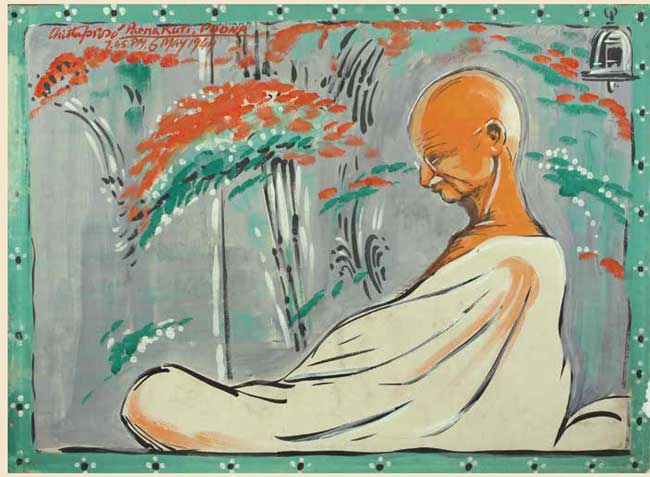
Gandhian social movement | Constitution | Adverse inclusion >>
“Air is free to all but if it is polluted it harms our health… Next comes water… From now on we must take up the effort to secure water. Councillors are servants of the people and we have a right to question them.” – Mohandas K. Gandhi, Ahmedabad address on 1 January 1918; quoted by his grandson, Gopalkrishna Gandhi, in “On another New Year’s Day: Mahatma Gandhi’s ‘khorak’ a 100 years ago” (The Hindu, 1 January 2018)
“The world has enough for everyone’s need but not for anyone’s greed.” – Mahatma Gandhi quoted by Medha Patkar and Baba Amte (Narmada Bachao Andolan)
Basics
Tribal Cultural Heritage in India in the 21st century (printfriendly PDF)
Forest dwellers in early India – myths and ecology in historical perspective
Education
Background guide for education (free eBook)
Childhood | Child marriage | Children’s right to Education
! Contact: National helpline Childline & report trafficking
Customs | Marriage customs | Social conventions
Free comic books (Unicef)
Survival Int. on tribal education
Video | “Nations don’t make us human – languages make us human”: Ganesh Devy
Health, environment & nature
Biological Diversity: What is the Biodiversity Act?
Forest dwellers in early India – myths and ecology
Issues
Assimilationist & isolationist positions
“Casteism” and its effect on tribal communities
Denotified Tribe vs. “criminal tribe“
Fighting exploitation and women’s stigmatization
Particularly Vulnerable Tribal Groups & Endangered languages (interactive map)
President of India
National development and the development of tribal communities are linked
Government of India, national & international organizations
Endangered languages: Peoples’ Linguistic Survey of India
Govt. of India, NGOs, Indian universities and international organisations
Govt. What are the Rights of Scheduled Tribes (ST)
Human Rights Commission (posts) | www.nhrc.nic.in (Government of India)
India’s Constitutional obligation to respect their cultural traditions
India’s 28 States and 8 Union Territories
National Commission for Scheduled Tribes | Related posts
Particularly Vulnerable Tribal Groups (PVTG)
People’s Linguistic Survey of India | Volumes (PLSI) | PeoplesLinguisticSurvey.org
Universal Declaration of Human Rights & International Convention against Torture
Women | Safe search | President Droupadi Murmu on women’s empowerment
Legal provisions
Child rights & Right to education handbook
Constitution and Supreme Court
Denotified, nomadic and semi-nomadic (“hidden”) tribes: Classifications in different states
Forest Rights Act (FRA) | Legal rights | What is the Forest Rights Act about?
India’s Constitutional obligation to respect their cultural traditions
Right to Information Act (RTI)
Scheduled Tribes (ST) | Who are Scheduled Tribes?
Who is a forest dweller under this law, and who gets rights?
Resources
Adivasis’ struggle for India’s freedom and Independence
Anthropology & Anthropological Survey of India
The Anti-Autocracy Handbook: A Scholars’ Guide to Navigating Democratic Backsliding | Backup (PDF, 500 KB)
Books on tribal culture and related resources
Fact checking | Factchecker.in | Safe search examples with keywords:
“factchecker.in rural india“| “factchecker.in adivasi tribe“
Figures, census and other statistics | Primitive Tribes in Andaman and Nicobar Islands (Census 2011)
Indian magazines and web portals – news coverage and analysis
Indigenous knowledge: biodiversity, ecology, health, nutrition, nature, wildlife
Languages and linguistic heritage
Nehru’s 5 Principles: Panchsheel
News update in Indian periodicals: Tribal Affairs
People’s Linguistic Survey of India | Volumes (PLSI) | PeoplesLinguisticSurvey.org