“[T]he Constitution gives equal respect to all communities, sects, lingual and ethnic groups, etc. The Constitution guarantees to all citizens freedom of speech (Article 19), freedom of religion (Article 25), equality (Articles 14 to 17), liberty (Article 21), etc.” – Supreme Court judgment quoted by The Hindu in “India, largely a country of immigrants” >>
In Marginalised but not Defeated, Tarun Kanti Bose (a seasoned public interest journalist) “documents the hard and difficult struggle to implement the Forest Rights Act, how the oppressed adivasis have united into forest unions, how they are now entering into new thresholds of protracted struggles and victories in a non-violent manner. […] A must for all young journalists, social science students, editors, civil society groups and the academia.” | Read the full book review here: https://countercurrents.org/2023/05/book-review-marginalised-but-not-defeated >>
When It Comes to Dalit and Tribal Rights, the Judiciary in India Just Does Not Get It
Instead of questioning why the abolition of untouchability has failed in India, the apex court has upheld and reiterated false stereotypes against Dalits and Adivasis.
Though the Indian constitution envisaged the abolition of ‘untouchability’ and an end to discrimination, prejudice is rampant among the affluent sections of society and those entrusted with upholding the constitution have tended to treat Dalits and Adivasis with utter insensitivity.
For years, ‘mainstream’ discourse in society has focused on limiting the constitutional provisions enacted in favour of Dalits and Adivasis. In particular, two key concerns of these groups — protection from atrocities, and adequate representation — have been the target of several prejudices, stereotypes, and fake propaganda. It is unfortunate that even the Supreme Court of a constitutional democracy like ours has often failed to sift fact from fiction. […]
The application of affirmative action policies through the constitutionally entrenched provisions of reservations has consistently been limited by the Supreme Court in a series of judgments. The language in these judgments [e.g. ‘primitive culture’, ‘human zoo’] reflects the inherent stereotypes against the idea of reservations. […]
This view is damaging and contrary to the constitutional obligation of the state to provide adequate representation to Dalits and Adivasis. On one side, the Supreme Court has restricted the application of reservation through its consistent judgments by placing a mandatory condition for any government to collect data regarding the inadequate representation of Dalits and tribals and to exclude the “creamy layer”, before making reservation in promotion policies. But, on the other side, the court abdicated its responsibility by holding that it would not hold the government accountable even if the under-representation of Dalits and tribals in public services is brought to its notice. […]
The court seems to have forgotten, or perhaps ignored the fact that policies made in favour of Dalits and tribals are not patronising in nature or made out of pity or charity. These freedoms have been won by Dalits and tribals after constant struggle and sacrifice, as they believe that their identity and way of life is in no way inferior to anyone else’s in the country. […]
“Tribal men and women mix freely, but with respect for each other [but] caste Hindu society in India is so convinced of its own superiority that it never stops to consider the nature of social organisation among tribal people. In fact it is one of the signs of the ‘educated’ barbarian of today that he cannot appreciate the qualities of people in any way different from himself – in looks or clothes, customs or rituals.” – Guest Column in India Today >>
Photo: Report on Women’s Rights, p. 15
Equality of Opportunity in matters of Public Employment Constitution Article 15
Prohibition of discrimination on grounds of religion, race, caste, sex or place of birth.—(1) The State shall not discriminate against any citizen on grounds only of religion, race, caste, sex, place of birth or any of them. (2) No citizen shall, on grounds only of religion, race, caste, sex, place of birth or any of them, be subject to any disability, liability, restriction or condition with regard to— (a) access to shops, public restaurants, hotels and places of public entertainment; or (b) the use of wells, tanks, bathing ghats, roads and places of public resort maintained wholly or partly out of State funds or dedicated to the use of the general public. (3) Nothing in this article shall prevent the State from making any special provision for women and children. 2 [(4) Nothing in this article or in clause (2) of article 29 shall prevent the State from making any special provision for the advancement of any socially and educationally backward classes of citizens or for the Scheduled Castes and the Scheduled Tribes.]
Source: pp. 9 & 16, “Women’s Rights in India: An Analytical Study of The United Nations Convention on the Elimination of All Forms of Discrimination against Women (CEDAW) and The Indian Constitution, Legislations, Schemes, Policies & Judgements 2021” by Research Division, National Human Rights Commission, India (www.nhrc.nic.in) | Learn more >> URL: https://www.jorhatjudiciary.gov.in Date Visited: 9 May 2023
“The contribution of [over 200,000] charities—which range from small concerns to vast India-wide networks—to development and the individual lives of millions of poor Indians is incalculable. Activist groups helped India gain independence in 1947 and have since helped restrain the state’s excesses and compensate for its weaknesses.” – Civil society in India >>
“Religion is a personal matter and should not be politicised.” – Invitation by the Bharat Jodo Abhiyan (BJA) – a civil society platform involving organisations from across 15 states – extended to all like-minded citizens “who take pride in our progressive, inclusive civilization and are committed to our constitutional values of fraternity, liberty, equality and justice” | TheWire (2 January 2024) >>
“Doctors in the region [Palakkad district] argue that while the proportion of people with mental illnesses is not unusually high, the problem is a crisis because of their socioeconomic vulnerability.” […] “The non-inclusivity of Adivasis is nothing but racial discrimination. Adivasis were always ruled.” | In-depth analysis (Scroll.in 5 April 2023) >>
“Casteism is the investment in keeping the hierarchy as it is in order to maintain your own ranking, advantage, privilege, or to elevate yourself above others or keep others beneath you. […] For this reason, many people—including those we might see as good and kind people—could be casteist, meaning invested in keeping the hierarchy as it is or content to do nothing to change it, but not racist in the classical sense, not active and openly hateful of this or that group.” | Learn more about the effects of “casteism” on tribal communities >>
Tribal languages are a treasure trove of knowledge about a region’s flora, fauna and medicinal plants
“Tribal languages are a treasure trove of knowledge about a region’s flora, fauna and medicinal plants. Usually, this information is passed from generation to generation. However, when a language declines, that knowledge system is completely gone.” – Ayesha Kidwai (Centre for Linguistics, School of Language, Literature and Culture Studies, Jawaharlal Nehru University, New Delhi) quoted by Abhijit Mohanty in “Seven decades after independence, many tribal languages in India face extinction threat” | Learn more about the work done by the People’s Linguistic Survey of India and endangered languages worldwide >>
“India’s geographic location at the confluence of three major biogeographic zones – i.e. the Indo-Malayan, the Eurasian and the Afro-Tropical – makes it extremely biodiverse in its genes, species and ecosystems. It is one of the world’s 17 megadiverse countries (Mittermeier et al. 1997). India can boast of over 8.1% of the world’s biodiversity supported on 2.4% of the earth’s surface. An estimated 47,000 identified plant species represent 11% of the world’s flora.” | Learn more: eBook | Disseminating environment related information to improve peoples’ livelihoods >>
“The notion of ‘mainstreaming’ needs to be challenged not just because Adivasi culture is being crushed, but also because Adivasi values and ways of life offer insights that the ‘mainstream’ needs. If we are to halt the destruction of ecosystems, we need to understand how closely biodiversity and cultural diversity are intertwined. Perhaps it is time to reverse the gaze and begin to learn afresh from Adivasis.” – Felix Padel & Malvika Gupta (The Hindu) | Learn more about the role of tribal communities in fostering biodiversity, ethnobotany and cultural diversity | Success stories | Tribal identity >>
“I think that by retaining one’s childhood love of such things as trees, fishes, butterflies and … toads, one makes a peaceful and decent future a little more probable, and that by preaching the doctrine that nothing is to be admired except steel and concrete, one merely makes it a little surer that human beings will have no outlet for their surplus energy except in hatred and leader worship.” – George Orwell | Learn more: Childhood | Customs | Games and leisure time | Literature – fiction | Storytelling >>
Adivasi communities: stewards of India’s cultural heritage and biodiversity
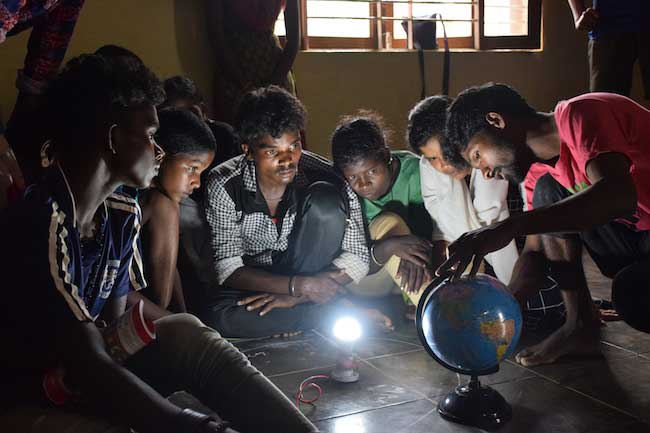
[…] India’s tribal communities — over 104.5 million people, or 8.6 per cent of the population — remain among the most marginalised despite decades of welfare schemes and development promises. In states such as Chhattisgarh, Jharkhand, Bihar, Rajasthan and Odisha, tribal districts consistently record higher poverty levels than non-tribal areas, even as these regions supply land, forests and minerals for the country’s growth. These communities have often been compelled to relinquish their lands for large-scale infrastructure projects, resulting in the erosion of their identity, livelihoods, and future prospects.
It is crucial to recognise the value these communities bring, particularly their eco-friendly lifestyles, which offer important insights into addressing climate-related challenges. For instance, during the 2018 drought in Sundergarh, Odisha, a visit to a remote tribal village revealed thriving vegetation and effective water-harvesting systems. Kiri village in Lahunipara block of Sundergarh district, inhabited by the Paudi Bhuyan community — a Particularly Vulnerable Tribal Group (PVTG) — has demonstrated remarkable resilience.
This observation underscores the importance of learning from traditional ecological knowledge, especially sustainable farming practices that rely on drought-resistant and indigenous seeds.
Adivasi communities, as stewards of India’s cultural heritage and biodiversity, must be central to the nation’s development narrative. Their lives are intricately linked to land, forests and water, yet they face growing threats from climate change, livelihood insecurity and displacement. Addressing these challenges requires more than welfare initiatives; it demands robust enforcement of constitutional rights, substantial public investment and the strengthening of Gram Sabha–based governance. […]
Up-to-date reports by Indian journalists and commentators
To search Indian periodicals, magazines, web portals and other sources safely, click here. To find an Indian PhD thesis on a particular tribal community, region and related issues, click here >>