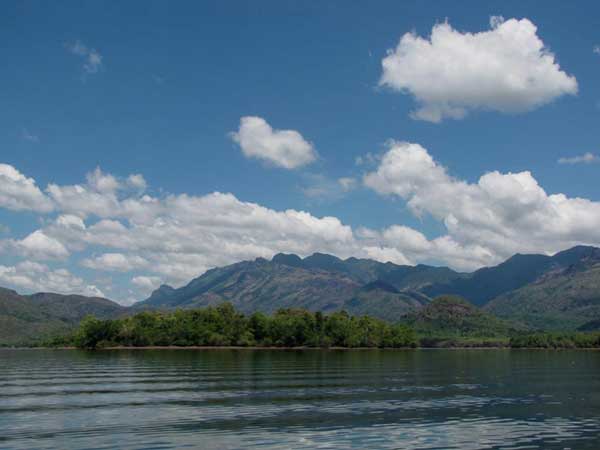
Photo courtesy Davidson Sargunam >>
Facts and figures: India’s biological, cultural and geographic diversity
Spread over 3,287,240 km2 and despite a total human population of over 1,210,000,000, India represents a wide spectrum of biological, cultural and geographic diversity. It has been identified as one of the top 12 global biodiversity hotspots and has 91 eco-cultural zones inhabited by 4,635 ethnic communities. India also has amongst the largest indigenous/tribal population, constituting 8.08% of the country’s population, representing 461 tribes. The term ‘Indigenous Peoples’ is not officially recognized in the country, instead the Constitution of India uses the term ‘Scheduled Tribes’. The total forest cover is estimated to be approximately 20% of the total area of the country. About 1,70,379 villages with a population of 10,674,334 inhabit areas in close proximity of forests.
Source: RECOGNITION AND SUPPORT OF ICCAs IN INDIA by Neema Pathak Broome and Tushar Dash, p. 4 | PDF-Repository
URL: https://kalpavriksh.org/wp-content/uploads/2021/01/IndiaICCARecognition_Final_SEPT2012-as-published.pdf
Date Visited: 10 March 2025
The traditional knowledge of people belonging to Kaani tribe in the Western Ghats of Kanyakumari district has helped a research student secure her doctorate.
The Kaani tribe, who inhabit hills and deep jungles, are a veritable storehouse of traditional wisdom. Their traditional knowledge is passed orally through generations. Mushrooms form a prominent place in their menu. Since Kanyakumari district is blessed by two monsoons, the tribal people go in search of mushrooms after the rain. Environmental educator S.S. Davidson, who is conducting research on the culture of the Kaani tribe, told The Hindu that the tribal people shared their knowledge on a host of edible mushrooms to a team of mycologists headed by him. A research scholar, Johnsy Moses, chose an edible mushroom, ‘Lentinus,’ for her doctoral research at the Centre for Advanced Studies in Botany of Madras University.
The edible mushroom was cultured in controlled laboratory conditions in the university. […]
The ‘Lentius’ mushroom grows at the base of bamboos. If bamboo clusters were destroyed or degraded, there was every possibility of this edible mushroom species facing extinction owing to loss of habitat.
These wild mushrooms could be commercially exploited to add variety to the menu, said Davidson. The research scholar was awarded PhD degree for her research. She was guided by V. Kaviarasan, a mycology expert in Madras University.
Source: Chennai student conducts study on mushrooms of Western Ghats – The Hindu
Address : https://www.thehindu.com/todays-paper/tp-national/tp-tamilnadu/chennai-student-conducts-study-on-mushrooms-of-western-ghats/article4593311.ece
Date Visited: 3 January 2022
Up-to-date reports by Indian experts and journalists
Search tips
Combine the name of any particular state, language or region with that of any tribal (Adivasi) community.
Add keywords of special interest (music, poetry, dance just as health, sacred grove and biodiversity); learn about the rights of Scheduled Tribes such as the “Forest Rights Act” (FRA); and the United Nations “Declaration on the Rights of Indigenous Peoples”, “Universal Declaration of Human Rights”, “women’s rights”, or “children’s right to education”.
Ask a question that includes “tribal” or “Adivasi”, for instance: “Adivasi way of life better?” (or “tribal way of life worse?”)
Specify any particular issue or news item (biodiversity, bonded labour and human trafficking, climate change, ecology, economic development, ethnobotany, ethnomedicine, global warming, hunter-gatherers in a particular region or state, prevention of rural poverty, water access).
For official figures include “scheduled tribe ST” along with a union state or region: e.g. “Chhattisgarh ST community”, “Himalayan tribe”, “Scheduled tribe Tamil Nadu census”, “ST Kerala census”, “Particularly Vulnerable Tribal Group Jharkhand”, “PVTG Rajasthan”, “Adivasi ST Kerala”, “Adibasi ST West Bengal” etc.
SafeSearch browser tips
If your (mobile) browser fails to display “embedded” media contents, Google maps and SafeSearch windows
Try another browser like Firefox, Chrome or Safari available on your device
Ensure your favourite browser is up to date
Close your present browser
Check your browser and mobile (gsm) settings:
e.g. permission for video or JavaScript
(seen under Preferences >Security >Enable JavaSript)
Restart your computer (smartphone, tablet)
Reconnect to your wifi network or connect to a different one
On some iPhone models the following helps:
>Settings >Safari >scroll down to:
SETTING FOR WEBSITES
Enable “Request Desktop Website” (All Websites) temporarily
Return to the map-post in Safari and “Reload”
Return to >Settings and disable “Request Desktop Website” again
Return to the post in Safari and “Reload”which should now display “embedded” contents as intended (with the convenience of browsing the mobile version on a small screen)
Note: similar solutions may also work with other mobile operating systems.
List of websites covered by this Google custom search engine
Academia.edu (platform for academics to share research papers) – www.academia.edu
Archive.org – https://archive.org
Centre for Science and Environment – https://www.cseindia.org
Current Conservation – https://www.currentconservation.org
Development and Cooperation (D+C) https://www.dandc.eu
Down To Earth (India) – www.downtoearth.org.in
India Environment Portal – www.indiaenvironmentportal.org.in
Harnessing Nature Magazine – https://harnessingnature.online
Mongabay-India – https://india.mongabay.com
M S Swaminathan Research Foundation – www.mssrf.org
Navdanya (protecting India’s biodiversity based food heritage) – https://navdanya.org
People’s Archive of Rural India – https://ruralindiaonline.org/
Third World Network (Penang, Malaysia) – https://twn.my
The Shola Trust (nature conservation in the Nilgiri region) – www.thesholatrust.org
Indian online periodicals and platforms | Images view >>
~ ~ ~
Personalize your CustomSearch by combining other search words >>
(e.g. name of a tribal community and region, a craft, or dance and puppetry)
Research: explore PhD theses from all over India
Shodhganga (Open Access)
Search Worldcat.org for publications by reputed authors (select “Open Content/Open Access” for freely downloadable content)
Search tips
Combine the name of any particular state, language or region with that of any tribal (Adivasi) community.
Ask a question that includes “tribal” or “Adivasi”, for instance: “Adivasi way of life better?” (or “tribal way of life worse?”)
Add keywords of special interest (music, poetry, dance just as health, sacred grove and biodiversity); learn about the rights of Scheduled Tribes such as the “Forest Rights Act” (FRA); and the United Nations “Declaration on the Rights of Indigenous Peoples”, “Universal Declaration of Human Rights”, “women’s rights”, or “children’s right to education”.
Specify any particular issue or news item (biodiversity, bonded labour and human trafficking, climate change, ecology, economic development, ethnobotany, ethnomedicine, global warming, hunter-gatherers in a particular region or state, prevention of rural poverty, water access).
Learn more
Anthropology | Ekalavya (Eklavya) | Government | Networking | Organisations
Colonial policies | Bonded labour, Forced labour, Slavery & Zamindar | “Criminal tribe”
Biodiversity | Biodiversity hotspot | Hyderabad biodiversity pledge | Western Ghats – tribal heritage & ecology
Climate change | Audio | The Climate Question (BBC Podcast)
Coastal region | Mangrove forest | Water | Wetland
Customs | Homes and utensils | Modernity | Native science | Revival of traditions
eBooks, eJournals & reports | eLearning
eBook | Background guide for education
Ecology | Eco tourism | Ethnobotany | Sustainable agriculture | Wildlife tourism
Food distribution | Recommendations
Forest Rights Act (FRA) | Hunter-gatherers | Nishad (Nishada, Sanskrit Niṣāda, “tribal, hunter, mountaineer, degraded person outcast”) | Vanavasi (Vanvasi, Vanyajati)
Health and nutrition | Antivenom | Ayurveda
History | Environmental history and what makes for a civilization – Romila Thapar
Hunter-gatherer | Man animal conflict | Vanavasi | Sakuntala narrative
Fruit | Honey & bees | Indigenous knowledge systems | Mushroom | Vegetable
Involving tribal communities in conservation (Kanyakumari)
Mountains | Nishad (Nishada, Sanskrit Niṣāda, “tribal, hunter, mountaineer, degraded person outcast”) | Particularly vulnerable tribal group (PVTG)
Nature and wildlife | Bamboo | Bird | Crocodile | Elephant | Insect | Snake | Tiger | Trees
Sacred grove | Worship and rituals
Scheduled Tribes | Classifications in different states
Success story | “The tribal food basket has always been diverse and nutritious”
United Nations on climate change
What is the Forest Rights Act about?
Who is a forest dweller under this law, and who gets rights?