UN Permanent Forum on Indigenous Issues >>
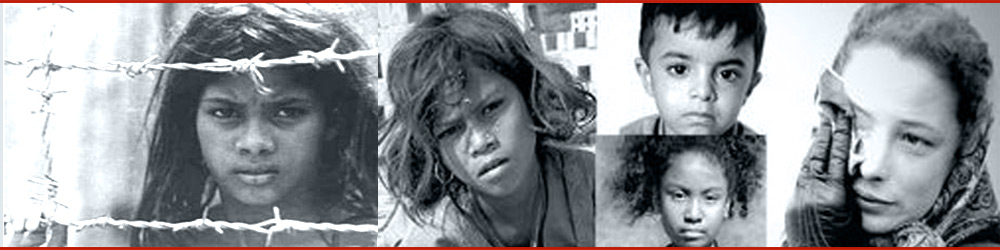
Millions of our children still labour today, in factories, farms, kilns, mines, homes and city waste dumps, when they should be in school or in a playground. We profoundly fail these children, collectively depriving them of education, play, rest, healthy growth and childhood. Despite democracy and glittering economic growth, it is unconscionable that we continue to tolerate child work, socially and legally. […]
Latest official estimates report around five million children economically active in the labour market, which is two per cent of the total child population of India in the age group 5–14 years. Child rights activists, however, argue that the actual numbers of child workers are much larger, because children not in school are hidden child workers, rearing younger siblings, tending the home, or helping parents earn in the fields, home-based work or vending. Their numbers are four times as many as enumerated child workers. […]
There are encouraging reports of growing numbers of children in school, and declining child workers during the last decade. But we need to view these figures with caution, because there is growing evidence of the informalisation of the work force with rapid economic growth. Work is often sub-contracted to home-based workers by big companies to evade labour protection regulations and responsibilities, and work is transferred also to the children working from home; as a consequence, children may be inducted into labour sometimes as early as five or six years of age. Such child labour is often invisible to the census enumerator. […]
Seventy-two per cent recorded child workers are in agriculture and constitute almost nine per cent of all agricultural workers. These children work long hours on farms and face the harmful effects of inhaling pesticides and other chemicals. Many girls are subject to hazards of physical and sexual abuse even at a young age of 10 or 12 years at work. […]
The debate on child labour should have been settled with the Constitutional amendment recognising the right to education as a fundamental right of all children. If the law demands that a child must be in a mainstream school, she cannot simultaneously be at work. There need be no bar on children helping their families after school hours and in vacations, in fields, home-based work, forest gathering and vending, but none of this can be at the expense of schooling and the protection of the child.
Today, despite the legal right to education, many children who are the most vulnerable remain unreached by State efforts. These include children of migrant labour, children subjected to bondage and trafficking, and street children and child workers. To ensure their right to education and childhood remains a paramount unfinished agenda for freedom.
Source: “Barefoot – An unfinished agenda” by Harsh Mander, The Hindu, November 19, 2011
Address : https://www.thehindu.com/opinion/columns/Harsh_Mander/article2641960.ece
Date Visited: 19 July 2021
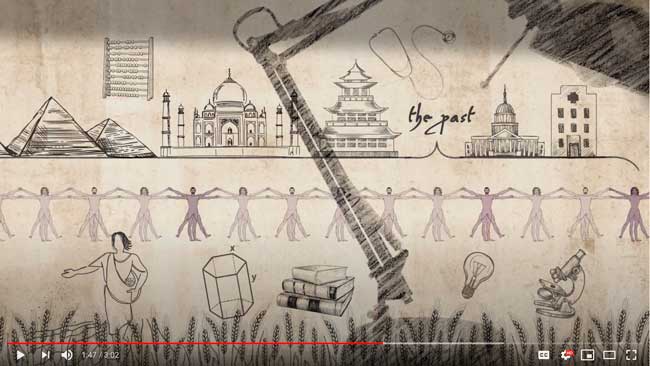
Watch “The Good Ancestor – The Legacies We Leave” (3 min.): An animation that explores the legacies we might leave for future generations >>
Links to some of the most important organisations, thinkers and doers that are leading the way and that have inspired the book The Good Ancestor by Roman Krznaric >>
Facts and figures: India’s biological, cultural and geographic diversity
Spread over 3,287,240 km2 and despite a total human population of over 1,210,000,000, India represents a wide spectrum of biological, cultural and geographic diversity. It has been identified as one of the top 12 global biodiversity hotspots and has 91 eco-cultural zones inhabited by 4,635 ethnic communities. India also has amongst the largest indigenous/tribal population, constituting 8.08% of the country’s population, representing 461 tribes. The term ‘Indigenous Peoples’ is not officially recognized in the country, instead the Constitution of India uses the term ‘Scheduled Tribes’. The total forest cover is estimated to be approximately 20% of the total area of the country. About 1,70,379 villages with a population of 10,674,334 inhabit areas in close proximity of forests.
Source: RECOGNITION AND SUPPORT OF ICCAs IN INDIA by Neema Pathak Broome and Tushar Dash, p. 4 | PDF-Repository
URL: https://kalpavriksh.org/wp-content/uploads/2021/01/IndiaICCARecognition_Final_SEPT2012-as-published.pdf
Date Visited: 10 March 2025
Tip: discover publications released by Indian publishers and institutions by typing “tribal children stories” in combination with the name of a tribal community (e.g. “Gond”, “Santal”, “Warli”), an Indian State or Union Territory (e.g. “Andaman”, “Tripura”, “Telangana”), a region (e.g. “Bastar”, “Northeast India”, “Nilgiri”), name of artist, author or publisher, and preferred language (“Tamil”, “Hindi”, “bilingual”).
List of sites covered by this Google SafeSearch engine
https://books.katha.org (Katha Books)
https://publicationsdivision.nic.in
Search tips
Combine the name of any particular state, language or region with that of any tribal (Adivasi) community.
Add keywords of special interest (music, poetry, dance just as health, sacred grove and biodiversity); learn about the rights of Scheduled Tribes such as the “Forest Rights Act” (FRA); and the United Nations “Declaration on the Rights of Indigenous Peoples”, “Universal Declaration of Human Rights”, “women’s rights”, or “children’s right to education”.
Ask a question that includes “tribal” or “Adivasi”, for instance: “Adivasi way of life better?” (or “tribal way of life worse?”)
Specify any particular issue or news item (biodiversity, bonded labour and human trafficking, climate change, ecology, economic development, ethnobotany, ethnomedicine, global warming, hunter-gatherers in a particular region or state, prevention of rural poverty, water access).
For official figures include “scheduled tribe ST” along with a union state or region: e.g. “Chhattisgarh ST community”, “Himalayan tribe”, “Scheduled tribe Tamil Nadu census”, “ST Kerala census”, “Particularly Vulnerable Tribal Group Jharkhand”, “PVTG Rajasthan”, “Adivasi ST Kerala”, “Adibasi ST West Bengal” etc.
SafeSearch browser tips
If your (mobile) browser fails to display “embedded” media contents, Google maps and SafeSearch windows
Try another browser like Firefox, Chrome or Safari available on your device
Ensure your favourite browser is up to date
Close your present browser
Check your browser and mobile (gsm) settings:
e.g. permission for video or JavaScript
(seen under Preferences >Security >Enable JavaSript)
Restart your computer (smartphone, tablet)
Reconnect to your wifi network or connect to a different one
On some iPhone models the following helps:
>Settings >Safari >scroll down to:
SETTING FOR WEBSITES
Enable “Request Desktop Website” (All Websites) temporarily
Return to the map-post in Safari and “Reload”
Return to >Settings and disable “Request Desktop Website” again
Return to the post in Safari and “Reload”which should now display “embedded” contents as intended (with the convenience of browsing the mobile version on a small screen)
Note: similar solutions may also work with other mobile operating systems.
More SafeSearch on this website
Research: explore PhD theses from all over India
Shodhganga (Open Access)
Human trafficking | Violence against women
Slavery | Zamindari
Human trafficking is a crime. To report in India, contact
Shakti Vahini https://shaktivahini.org/contact-us >> shaktivahini@gmail.com
+91-9899710847 +91-9582909025
and/or Childline 1098 (national helpline)
National Programme for Child Labour Free India | PDF-Repository (70 KB)
“Child marriage is not just an age-old social evil, but also a heinous crime that robs children of their childhood. Child marriage is a “crime against children” that violates basic human rights, minor girls are forced to marry and live a life of mental trauma, physical and biological stress, domestic violence including limited access to education and increased vulnerability to domestic violence. […] early pregnancies leading to complications and higher rate of maternal mortality and death of infants, malnutrition.” – Shakti Vahini’s campaign for a Child Marriage Free India >>
“As per a study on human trafficking, the state of Jharkhand has emerged as India’s trafficking hub with thousands of tribal women and girls being trafficked out of the state each year to Delhi, Punjab, Haryana and beyond [while] human traffickers are also involved in many cases of missing children.” – The Wire | Shakti Vahini | Tourism locations | Adivasi tribal bondage slavery trafficking (Safe search) >>
“Childline 1098 is a 24×7 emergency, free phone outreach for children in distress. It is one of the world’s biggest emergency helpline services dedicated to children, and is considered to be among the country’s largest emergency response systems” – The Hindu, 17 April 2022 >>
Related posts
See also
Anganwadi | Community facilities | Ekalavya
Appropriate education for Adivasi children – the Vidyodaya School model at Gudalur
Books on tribal culture and related resources | Indian publishers
Childhood | Children’s books | Childrens rights: Education | UNICEF India | Safe search
eBook | Background guide for education
Education and literacy | Lecture “A View of Higher Education in India”
Endangered language | Multi-lingual education
Health and nutrition | Recommendations by the Expert Committee
Particularly vulnerable tribal group
Santali education | Teaching Santal children by Boro Baski
Search select websites: Govt. of India, NGOs and international organisations – Custom search engine