By Mari Marcel Thekaekara, The New Internationalist, September 14, 2012
Culture is a tricky thing. How do we define it? Who decides when customs and traditions, even ancient, cherished ones, can be dispensed with? These and many other similar questions have been debated by the Adivasi groups we (ACCORD, an NGO in the Nilgiri hills of Tamil Nadu) work with for the last 25 years. Yet, culture was not a priority, it was neither life threatening, nor in clear and present danger (we thought). And so land, human rights, health, education and housing took priority.
A quarter of a century later, we realize with dismay that the Gudalur Adivasi kids who go to local schools are losing their language, customs and traditions. […]
The young people began discussions about each other’s customs. The youngsters doing the course were Paniyas, Bettakurumbas and Kattunaickens. They exchanged stories of how equality and sharing was instilled even in little children in their individual tribes. We non-adivasis were constantly stunned by the fact that Adivasi kids never fought for a sweet, however tiny. They always shared it solemnly and equally, a truly amazing sight to see.
At the end of the first week, Stan then gave them a weekend assignment. They were to go home and ask their parents and grandparents to tell them stories of the past. The stories about customs, traditions and food, or just stories, were to be recorded and shared when they returned.
The group came back on Monday morning brimming over with information. […]
‘We are going to teach all the kids what Adivasi means and that our people are spread out all over India and all over the world.
By Mari Marcel Thekaekara, The New Internationalist, September 14, 2012
Culture is a tricky thing. How do we define it? Who decides when customs and traditions, even ancient, cherished ones, can be dispensed with? These and many other similar questions have been debated by the Adivasi groups we (ACCORD, an NGO in the Nilgiri hills of Tamil Nadu) work with for the last 25 years. Yet, culture was not a priority, it was neither life threatening, nor in clear and present danger (we thought). And so land, human rights, health, education and housing took priority.
A quarter of a century later, we realize with dismay that the Gudalur Adivasi kids who go to local schools are losing their language, customs and traditions. […]
The young people began discussions about each other’s customs. The youngsters doing the course were Paniyas, Bettakurumbas and Kattunaickens. They exchanged stories of how equality and sharing was instilled even in little children in their individual tribes. We non-adivasis were constantly stunned by the fact that Adivasi kids never fought for a sweet, however tiny. They always shared it solemnly and equally, a truly amazing sight to see.
At the end of the first week, Stan then gave them a weekend assignment. They were to go home and ask their parents and grandparents to tell them stories of the past. The stories about customs, traditions and food, or just stories, were to be recorded and shared when they returned.
The group came back on Monday morning brimming over with information. […]
‘We are going to teach all the kids what Adivasi means and that our people are spread out all over India and all over the world.
Read the full blog and earlier ones by Mari Marcel Thekaekara here:
Lessons of the past for young Adivasi — New Internationalist
http://www.newint.org/blog/2012/09/14/adivasi-kids-learn-past/
Date Visited: 16 December 2020
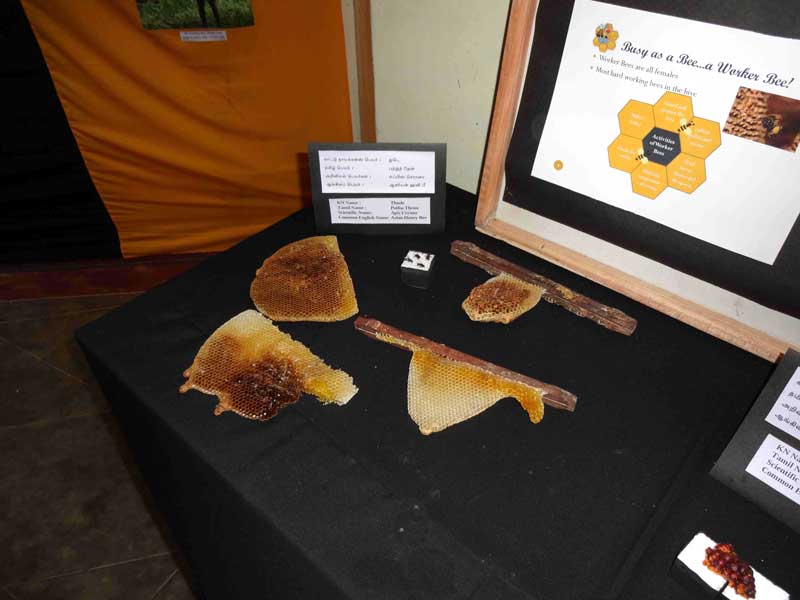
The Scheduled Tribes and Other Traditional Forest Dwellers (Forest Rights Act) gives members of tribal communities the right “to collect, use, and dispose of minor forest produce including bamboo, brush wood, stumps, cane, tussar, cocoons, honey, wax, lac, tendu or kendu leaves, medicinal plants and herbs, roots, tubers.” – Azim Premji University Team
Tribal languages are a treasure trove of knowledge about a region’s flora, fauna and medicinal plants
“Tribal languages are a treasure trove of knowledge about a region’s flora, fauna and medicinal plants. Usually, this information is passed from generation to generation. However, when a language declines, that knowledge system is completely gone.” – Ayesha Kidwai (Centre for Linguistics, School of Language, Literature and Culture Studies, Jawaharlal Nehru University, New Delhi) quoted by Abhijit Mohanty in “Seven decades after independence, many tribal languages in India face extinction threat” | Learn more about the work done by the People’s Linguistic Survey of India and endangered languages worldwide >>
“India’s geographic location at the confluence of three major biogeographic zones – i.e. the Indo-Malayan, the Eurasian and the Afro-Tropical – makes it extremely biodiverse in its genes, species and ecosystems. It is one of the world’s 17 megadiverse countries (Mittermeier et al. 1997). India can boast of over 8.1% of the world’s biodiversity supported on 2.4% of the earth’s surface. An estimated 47,000 identified plant species represent 11% of the world’s flora.” | Learn more: eBook | Disseminating environment related information to improve peoples’ livelihoods >>
“The notion of ‘mainstreaming’ needs to be challenged not just because Adivasi culture is being crushed, but also because Adivasi values and ways of life offer insights that the ‘mainstream’ needs. If we are to halt the destruction of ecosystems, we need to understand how closely biodiversity and cultural diversity are intertwined. Perhaps it is time to reverse the gaze and begin to learn afresh from Adivasis.” – Felix Padel & Malvika Gupta (The Hindu) | Learn more about the role of tribal communities in fostering biodiversity, ethnobotany and cultural diversity | Success stories | Tribal identity >>
“I think that by retaining one’s childhood love of such things as trees, fishes, butterflies and … toads, one makes a peaceful and decent future a little more probable, and that by preaching the doctrine that nothing is to be admired except steel and concrete, one merely makes it a little surer that human beings will have no outlet for their surplus energy except in hatred and leader worship.” – George Orwell | Learn more: Childhood | Customs | Games and leisure time | Literature – fiction | Storytelling >>
Adivasi communities: stewards of India’s cultural heritage and biodiversity
[…] India’s tribal communities — over 104.5 million people, or 8.6 per cent of the population — remain among the most marginalised despite decades of welfare schemes and development promises. In states such as Chhattisgarh, Jharkhand, Bihar, Rajasthan and Odisha, tribal districts consistently record higher poverty levels than non-tribal areas, even as these regions supply land, forests and minerals for the country’s growth. These communities have often been compelled to relinquish their lands for large-scale infrastructure projects, resulting in the erosion of their identity, livelihoods, and future prospects.
It is crucial to recognise the value these communities bring, particularly their eco-friendly lifestyles, which offer important insights into addressing climate-related challenges. For instance, during the 2018 drought in Sundergarh, Odisha, a visit to a remote tribal village revealed thriving vegetation and effective water-harvesting systems. Kiri village in Lahunipara block of Sundergarh district, inhabited by the Paudi Bhuyan community — a Particularly Vulnerable Tribal Group (PVTG) — has demonstrated remarkable resilience.
This observation underscores the importance of learning from traditional ecological knowledge, especially sustainable farming practices that rely on drought-resistant and indigenous seeds.
Adivasi communities, as stewards of India’s cultural heritage and biodiversity, must be central to the nation’s development narrative. Their lives are intricately linked to land, forests and water, yet they face growing threats from climate change, livelihood insecurity and displacement. Addressing these challenges requires more than welfare initiatives; it demands robust enforcement of constitutional rights, substantial public investment and the strengthening of Gram Sabha–based governance. […]
Source: “Union Budget must shift from welfare to rights-based public investment for Adivasi communities” by Debabrat Patra, Sion Kongari & Saurabh Kumar, Down to Earth, 9 February 2026
URL: https://www.downtoearth.org.in/governance/union-budget-must-shift-from-welfare-to-rights-based-public-investment-for-adivasi-communities
Date Visited: 30 June 2026
“Tribal communities are a standing example of how women play a major role in preservation of eco historic cultural heritage in India.” – Mari Marcel Thekaekara (writer and Co-Founder of ACCORD-Nilgiris) | Learn more >>
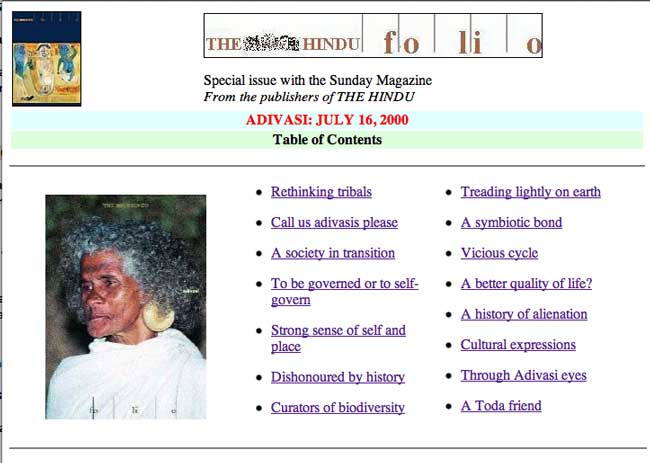
Articles and authors
Rethinking tribals by GN Devy
Call us adivasis, please by Gail Omvedt
A society in transition by Suresh Sharma
To be governed or to self-govern by Smitu Kothari
Strong sense of self and place by Amita Baviskar
Dishonoured by history by Meena Radhakrishna
Curators of biodiversity by KK Chakravarthy
Treading lightly on earth by Ashish Kothari
A symbiotic bond by Mari Thekaekara and Stan Thekaekara
Vicious cycle by Dilip D’Souza
A better quality of life? by Roopa Devadasan and N Devadasan
A history of alienation by Pankaj Sekhsaria
Cultural expressions by Jaya Jaitly
Through Adivasi eyes by Mari Thekaekara and Stan Thekaekara
A Toda friend by S Anandalakshmy
Source: Folio (Special issue with the Sunday Magazine): ADIVASI: JULY 16, 2000 from the publishers of THE HINDU
Date Visited: 15 March 2018 (discontinued since)
Research: explore PhD theses from all over India
Shodhganga (Open Access)
Search Worldcat.org for publications by reputed authors (select “Open Content/Open Access” for freely downloadable content)
Search tips
Combine the name of any particular state, language or region with that of any tribal (Adivasi) community.
Ask a question that includes “tribal” or “Adivasi”, for instance: “Adivasi way of life better?” (or “tribal way of life worse?”)
Add keywords of special interest (music, poetry, dance just as health, sacred grove and biodiversity); learn about the rights of Scheduled Tribes such as the “Forest Rights Act” (FRA); and the United Nations “Declaration on the Rights of Indigenous Peoples”, “Universal Declaration of Human Rights”, “women’s rights”, or “children’s right to education”.
Specify any particular issue or news item (biodiversity, bonded labour and human trafficking, climate change, ecology, economic development, ethnobotany, ethnomedicine, global warming, hunter-gatherers in a particular region or state, prevention of rural poverty, water access).
See also
ACCORD – Action for Community Organisation, Rehabilitation and Development
Anganwadi | Community facilities | Ekalavya
Articles by Mari Marcel Thekaekara (writer and Co-Founder of ACCORD-Nilgiris)
Ashwini community health programme
Childhood | Child marriage | Children’s right to Education
eJournals, eBooks & reports | eLearning
eBook | Background guide for education
Education and literacy | Right to education
Forest Rights Act (FRA) | Legal rights over forest land
Gudalur | Communities: Paniya | Kattunayaka | Mullukurumba | Bettakurumba
Health and nutrition | Recommendations by the Expert Committee
Shola Trust | Nilgiri biosphere
Western Ghats – tribal heritage & ecology
What is the Forest Rights Act about?
Who is a forest dweller under this law, and who gets rights?
Tips for using interactive maps
Toggle to normal view (from reader view) should the interactive map not be displayed by your tablet, smartphone or pc browser
For details and hyperlinks click on the rectangular button (left on the map’s header)
Scroll and click on one of the markers for information of special interest
Explore India’s tribal cultural heritage with the help of another interactive map >>