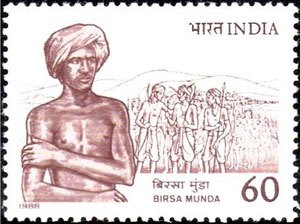
Adivasis rejected the British knowledge and “chose to remain outside the colonial economy and social discourse”: Ganesh Devy – A View of Higher Education in India
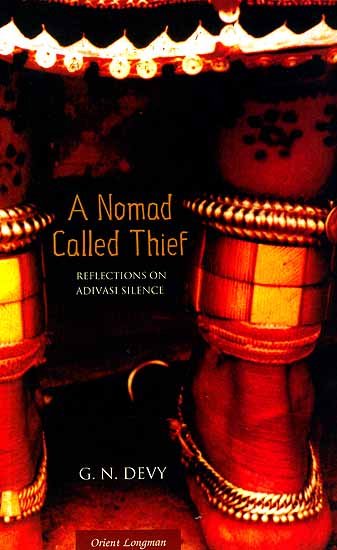
A Nomad Called Thief: Reflections on Adivasi Silence and Voice by GN Devy
Adivasis confronted the British. They fought the British. They resisted the Raj in every possible way, did not accept the British Raj at all. Adivasis chose to remain outside the colonial economy and social discourse. Even when the universities came up in the 1850s, the Adivasis did not join the Bombay colleges or the Chennai (Madras) colleges at all. They kept fighting for their land. They rejected the British knowledge. However, Indians did not look at Adivasis as part of the freedom struggle. Dalits were subjugated and freed together with the rest of India. The Adivasi freedom has not been synchronous with the rest. The two stories are different and that’s why the leadership patterns are different.
Prof. Ganesh Devy in response to a listener’s question as regards “Adivasi identity” Source: “A View of Higher Education in India” p. 43 by Prof. Ganesh Devy (Chair, People’s Linguistic Survey of India, Bhasha Research and Publication Centre)
The accounts of nineteenth- and twentieth-century anthropologists, and those written by political commentators, scholars and government officials, are critical to a discussion of how tribal people have long been positioned as antithetical to ‘civilised’ societies. The political scientist Uday Chandra speaks of how primitivism, which he describes as ‘a type of liberal imperial ideology of rule that has justified the subjugation of populations and places described wild, savage or, simply, primitive,’ has continued, despite changes in its approach, into the present day, whether in law, policy or discourse about development.
[These] forested and hilly terrains are segregated from the general society due to several constitutional, legal and administrative restrictions. […] At the time of independence in 1947, twenty-three lakh [2.3 million] people were reportedly suffering as Criminal Tribes. Pertinently, while the targeted communities were Hindu castes, the British maliciously labelled many of them as ‘tribes’ […] thereby gaming them for ‘civilising’ missions. […]
The Government of India Act, 1935, a precursor of the Constitution of India, further formalized the exclusion of vanvasi areas by classifying them as Excluded Areas and Partially Excluded Areas. As a result, general Indians became almost foreigners to these areas in their own country as they were forbidden from entering and/or acquiring property there. […]
The STs in Scheduled Areas do not get quality education, healthcare and other services as these are rare there. The STs who hold immovable property there cannot sell or monetize them as the free market does not operate in Scheduled Areas. […]
“Casteism is the investment in keeping the hierarchy as it is in order to maintain your own ranking, advantage, privilege, or to elevate yourself above others or keep others beneath you.” – Book review quoting Caste: The Origins of Our Discontents by Isabel Wilkerson
“Two prominent figures who have significantly contributed to this discourse are Mahatma Gandhi, Father of the Nation, and Bhimrao Ramji Ambedkar, Father of the Constitution. The two stalwarts of Indian politics, while revered equally by the public, had contrasting views on the caste system. […] And yet, despite their differences, they developed an understanding to work for the betterment of the marginalised.” – Rishabh Sharma in “How Ambedkar and Gandhi’s contrasting views paved way for caste reservation” (India Today, 6 October 2023) | Learn more >>
“Tribal men and women mix freely, but with respect for each other [but] caste Hindu society in India is so convinced of its own superiority that it never stops to consider the nature of social organisation among tribal people. In fact it is one of the signs of the ‘educated’ barbarian of today that he cannot appreciate the qualities of people in any way different from himself – in looks or clothes, customs or rituals.” – Guest Column in India Today >>
Photo: Report on Women’s Rights, p. 15
Equality of Opportunity in matters of Public Employment Constitution Article 15
Prohibition of discrimination on grounds of religion, race, caste, sex or place of birth.—(1) The State shall not discriminate against any citizen on grounds only of religion, race, caste, sex, place of birth or any of them. (2) No citizen shall, on grounds only of religion, race, caste, sex, place of birth or any of them, be subject to any disability, liability, restriction or condition with regard to— (a) access to shops, public restaurants, hotels and places of public entertainment; or (b) the use of wells, tanks, bathing ghats, roads and places of public resort maintained wholly or partly out of State funds or dedicated to the use of the general public. (3) Nothing in this article shall prevent the State from making any special provision for women and children. 2 [(4) Nothing in this article or in clause (2) of article 29 shall prevent the State from making any special provision for the advancement of any socially and educationally backward classes of citizens or for the Scheduled Castes and the Scheduled Tribes.]
Source: pp. 9 & 16, “Women’s Rights in India: An Analytical Study of The United Nations Convention on the Elimination of All Forms of Discrimination against Women (CEDAW) and The Indian Constitution, Legislations, Schemes, Policies & Judgements 2021” by Research Division, National Human Rights Commission, India (www.nhrc.nic.in) | Learn more >> URL: https://www.jorhatjudiciary.gov.in Date Visited: 9 May 2023
“The contribution of [over 200,000] charities—which range from small concerns to vast India-wide networks—to development and the individual lives of millions of poor Indians is incalculable. Activist groups helped India gain independence in 1947 and have since helped restrain the state’s excesses and compensate for its weaknesses.” – Civil society in India >>
“Religion is a personal matter and should not be politicised.” – Invitation by the Bharat Jodo Abhiyan (BJA) – a civil society platform involving organisations from across 15 states – extended to all like-minded citizens “who take pride in our progressive, inclusive civilization and are committed to our constitutional values of fraternity, liberty, equality and justice” | TheWire (2 January 2024) >>
“Doctors in the region [Palakkad district] argue that while the proportion of people with mental illnesses is not unusually high, the problem is a crisis because of their socioeconomic vulnerability.” […] “The non-inclusivity of Adivasis is nothing but racial discrimination. Adivasis were always ruled.” | In-depth analysis (Scroll.in 5 April 2023) >>
“Casteism is the investment in keeping the hierarchy as it is in order to maintain your own ranking, advantage, privilege, or to elevate yourself above others or keep others beneath you. […] For this reason, many people—including those we might see as good and kind people—could be casteist, meaning invested in keeping the hierarchy as it is or content to do nothing to change it, but not racist in the classical sense, not active and openly hateful of this or that group.” | Learn more about the effects of “casteism” on tribal communities >>
Tribal languages are a treasure trove of knowledge about a region’s flora, fauna and medicinal plants
“Tribal languages are a treasure trove of knowledge about a region’s flora, fauna and medicinal plants. Usually, this information is passed from generation to generation. However, when a language declines, that knowledge system is completely gone.” – Ayesha Kidwai (Centre for Linguistics, School of Language, Literature and Culture Studies, Jawaharlal Nehru University, New Delhi) quoted by Abhijit Mohanty in “Seven decades after independence, many tribal languages in India face extinction threat” | Learn more about the work done by the People’s Linguistic Survey of India and endangered languages worldwide >>
“India’s geographic location at the confluence of three major biogeographic zones – i.e. the Indo-Malayan, the Eurasian and the Afro-Tropical – makes it extremely biodiverse in its genes, species and ecosystems. It is one of the world’s 17 megadiverse countries (Mittermeier et al. 1997). India can boast of over 8.1% of the world’s biodiversity supported on 2.4% of the earth’s surface. An estimated 47,000 identified plant species represent 11% of the world’s flora.” | Learn more: eBook | Disseminating environment related information to improve peoples’ livelihoods >>
“The notion of ‘mainstreaming’ needs to be challenged not just because Adivasi culture is being crushed, but also because Adivasi values and ways of life offer insights that the ‘mainstream’ needs. If we are to halt the destruction of ecosystems, we need to understand how closely biodiversity and cultural diversity are intertwined. Perhaps it is time to reverse the gaze and begin to learn afresh from Adivasis.” – Felix Padel & Malvika Gupta (The Hindu) | Learn more about the role of tribal communities in fostering biodiversity, ethnobotany and cultural diversity | Success stories | Tribal identity >>
“I think that by retaining one’s childhood love of such things as trees, fishes, butterflies and … toads, one makes a peaceful and decent future a little more probable, and that by preaching the doctrine that nothing is to be admired except steel and concrete, one merely makes it a little surer that human beings will have no outlet for their surplus energy except in hatred and leader worship.” – George Orwell | Learn more: Childhood | Customs | Games and leisure time | Literature – fiction | Storytelling >>
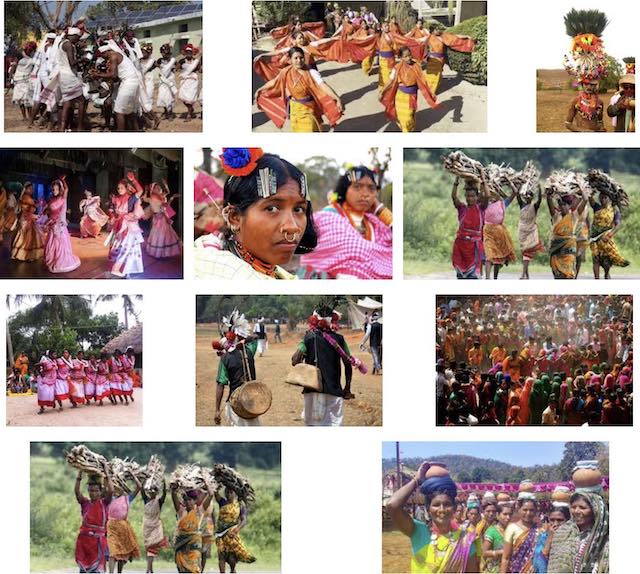
Adivasi communities: stewards of India’s cultural heritage and biodiversity
[…] India’s tribal communities — over 104.5 million people, or 8.6 per cent of the population — remain among the most marginalised despite decades of welfare schemes and development promises. In states such as Chhattisgarh, Jharkhand, Bihar, Rajasthan and Odisha, tribal districts consistently record higher poverty levels than non-tribal areas, even as these regions supply land, forests and minerals for the country’s growth. These communities have often been compelled to relinquish their lands for large-scale infrastructure projects, resulting in the erosion of their identity, livelihoods, and future prospects.
It is crucial to recognise the value these communities bring, particularly their eco-friendly lifestyles, which offer important insights into addressing climate-related challenges. For instance, during the 2018 drought in Sundergarh, Odisha, a visit to a remote tribal village revealed thriving vegetation and effective water-harvesting systems. Kiri village in Lahunipara block of Sundergarh district, inhabited by the Paudi Bhuyan community — a Particularly Vulnerable Tribal Group (PVTG) — has demonstrated remarkable resilience.
This observation underscores the importance of learning from traditional ecological knowledge, especially sustainable farming practices that rely on drought-resistant and indigenous seeds.
Adivasi communities, as stewards of India’s cultural heritage and biodiversity, must be central to the nation’s development narrative. Their lives are intricately linked to land, forests and water, yet they face growing threats from climate change, livelihood insecurity and displacement. Addressing these challenges requires more than welfare initiatives; it demands robust enforcement of constitutional rights, substantial public investment and the strengthening of Gram Sabha–based governance. […]
As the nation commemorates “150 years of the Mahatma Gandhi”, NCST [National Commission for Scheduled Tribes] brought out a book titled “Janjatiya Swadhinta Sangram” in Hindi. The book, which was released by the Vice President, brings out the little unknown facets of the freedom struggle of tribal people in the country. The book highlights the contribution of tribal uprising against british regime during freedom struggle. It includes articles on Shaheed Veer Buddhu Bhagat, Bhagwan Birsa Munda, Tilka Manjhi, Sidhu Kanhu, Bhumkal Gundadhur, Krantiveer Surendra Sai, Kunwar Raghunath Shah, Vidrohi Tantya Bheel, Amar Shaheed Veer Narayan Singh, Param Balidani Govind Guru and Janjati Veerangana Maharani Durgawati. It is an effort of the Commission to bring out the invaluable contribution and valour of tribal leadership in the freedom struggle of India. […]
Source: M. Venkaiah Naidu (Vice President of India) quoted in “Vice president delivers ‘first foundation day lecture of NCST’: Constitution and Tribes” by Press Information Bureau, National Commission for Scheduled Tribes (NCST), 19 February 2019 URL: https://ncst.nic.in/sites/default/files/2019/Media/2.pdf Date visited: 4 November 2020
Information about the above-mentioned freedom fighters hailing from tribal communities across India may be found by typing their names in the search window seen below (including Indian PhD theses available on Shodhganga).
Up-to-date reports by Indian experts and journalists
Search tips
Combine the name of any particular state, language or region with that of any tribal (Adivasi) community.
Add keywords of special interest (music, poetry, dance just as health, sacred grove and biodiversity); learn about the rights of Scheduled Tribes such as the “Forest Rights Act” (FRA); and the United Nations “Declaration on the Rights of Indigenous Peoples”, “Universal Declaration of Human Rights”, “women’s rights”, or “children’s right to education”.
Ask a question that includes “tribal” or “Adivasi”, for instance: “Adivasi way of life better?” (or “tribal way of life worse?”)
Specify any particular issue or news item (biodiversity, bonded labour and human trafficking, climate change, ecology, economic development, ethnobotany, ethnomedicine, global warming, hunter-gatherers in a particular region or state, prevention of rural poverty, water access).
For official figures include “scheduled tribe ST” along with a union state or region: e.g. “Chhattisgarh ST community”, “Himalayan tribe”, “Scheduled tribe Tamil Nadu census”, “ST Kerala census”, “Particularly Vulnerable Tribal Group Jharkhand”, “PVTG Rajasthan”, “Adivasi ST Kerala”, “Adibasi ST West Bengal” etc.
SafeSearch browser tips
If your (mobile) browser fails to display “embedded” media contents, Google maps and SafeSearch windows
Try another browser like Firefox, Chrome or Safari available on your device
Ensure your favourite browser is up to date
Close your present browser
Check your browser and mobile (gsm) settings: e.g. permission for video or JavaScript (seen under Preferences >Security >Enable JavaSript)
Restart your computer (smartphone, tablet)
Reconnect to your wifi network or connect to a different one
On some iPhone models the following helps:
>Settings >Safari >scroll down to: SETTING FOR WEBSITES
Return to >Settings and disable “Request Desktop Website” again
Return to the post in Safari and “Reload”which should now display “embedded” contents as intended (with the convenience of browsing the mobile version on a small screen)
Note: similar solutions may also work with other mobile operating systems.
List of websites covered by this Google custom search engine
Academia.edu (platform for academics to share research papers) – www.academia.edu