“Unless we affirm our culture and right and language, we won’t live. Our colour is good, our language is good, our art is good, our way of living is good. If we can respect your religion and your practices, why can’t you respect ours?” – G. Thenadikulam, Wayanad District
“We say, ‘you don’t have to take care of us. We’ll take care of ourselves. We’ll lead our lives the way we know.” – Arjun Chandi, Majhi Kondh
“Land is what will see us through, not only us but our children. We will not give up our land for anything in this world. If we give our land for mining it will not make our lives any better. In fact, we will end up with no jobs, no land and no home.” – S. Pollanna, Ananthagiri
“[The Jarawa’s] knowledge of indigenous plants, herbs, diseases, and creatures of the jungle is immense and needs no schooling. No one can really educate them further. It is we, who need to be educated because soon all this knowledge will evaporate, with the immanent danger of the extinction of the tribe.” – Anvita Abbi, Professor of Linguistics, Jawaharlal Nehru University
Source: Proud not primitive info – Survival International
Address: http://notprimitive.in/not-primitive-info
Date Visited: 21 September 2022
Rights for the Future
Listen to the podcast: What rights do we need for our future?
If the Universal Declaration of Human Rights were rewritten today, what rights would we add to strive for a more just world?
In the final panel, Nahlah Ayed and guests look beyond our fractured present and try to imagine what new rights we need for our own millennium.
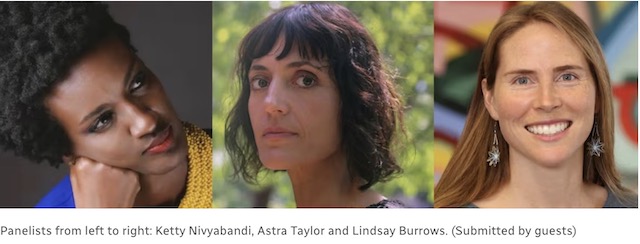
Guests in this episode:
Astra Taylor is a filmmaker and writer, and the 2023 CBC Massey lecturer. She is also the co-founder of The Debt Collective. Among other books she is the author of The Age of Insecurity, Democracy May Not Exist But We’ll Miss It When It’s Gone, and most recently, co-author of Solidarity.
Lindsay Borrows is a lawyer, author, and professor at Queen’s University Faculty of Law. Her work supports Indigenous communities to revitalize and apply their own legal traditions to promote environmental stewardship. She is a member of the Chippewas of Nawash First Nation.
Ketty Nivyaband is a global human rights activist and advocate, she holds in-depth and lived expertise on asylum and displacement, human rights in political transitions, freedom of expression and civic space and the intersections of gender, race, democracy, and human rights. Her work as Secretary General for Amnesty International Canada’s English-Speaking section is rooted in peoplepower, public accountability, and a feminist, decolonial approach to human rights.
Source: CBC Radio-Canada
URL: https://www.cbc.ca/radio/ideas/the-universal-declaration-of-human-rights-brave-new-worlds-series-1.7307081
Date Visited: 15 July 2025
Home, shelter and security as well as music, education, nature, and books for every child
In 1911, the American poet and novelist James Oppenheim wrote the now infamous poem “Bread and Roses“, inspired by the women’s suffrage activist Helen Todd. Working as a factory inspector for the state of Illinois, Todd spent her days listening to women’s accounts of low pay, inequality, and the drudgery of their work. Along with four other women from the Chicago Women’s Club, an association of wealthy middle-class women that had recently established some of the first kindergartens in Chicago, Todd began organising Illinois automobile workers for women’s right to vote in the summer of 1910. Inspired by a discussion she had with a young woman the night before giving a speech, Todd pronounced that the women’s “vote will go toward helping forward the time when life’s Bread, which is home, shelter and security, and the Roses of life, music, education, nature, and books, shall be the heritage of every child that is born in the country“. More than 70 years after the Seneca Falls convention declared women’s universal suffrage as its goal, the seemingly impossible became inevitable, and in 1920 Congress past the Nineteenth amendment to the US Constitution.
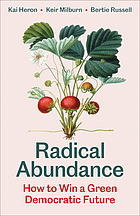
Source: Radical Abundance: How to Win a Green Democratic Future >>
“If a man cannot enjoy the return of spring, why should he be happy in a labour-saving Utopia? … I think that by retaining one’s childhood love of such things as trees, fishes, butterflies and … toads, one makes a peaceful and decent future a little more probable, and that by preaching the doctrine that nothing is to be admired except steel and concrete, one merely makes it a little surer that human beings will have no outlet for their surplus energy except in hatred and leader worship.”
George Orwell quoted in Two Cheers for Democracy (London: Penguin Books 1976), p. 76 | Learn more about Childhood | Childrens rights: UNICEF India | Safe search | Ecology and environment | Misconceptions | Modernity | Seasons and festivals | Social conventions >>
The house, in which British novelist George Orwell was born more than 110 years ago, has been converted into a museum by the Bihar Government >>
SafeSearch: Find educational and children’s books on tribal culture published in India
List of sites covered by this Google SafeSearch engine
https://books.katha.org (Katha Books)
https://publicationsdivision.nic.in
Search tips
Combine the name of any particular state, language or region with that of any tribal (Adivasi) community.
Add keywords of special interest (music, poetry, dance just as health, sacred grove and biodiversity); learn about the rights of Scheduled Tribes such as the “Forest Rights Act” (FRA); and the United Nations “Declaration on the Rights of Indigenous Peoples”, “Universal Declaration of Human Rights”, “women’s rights”, or “children’s right to education”.
Ask a question that includes “tribal” or “Adivasi”, for instance: “Adivasi way of life better?” (or “tribal way of life worse?”)
Specify any particular issue or news item (biodiversity, bonded labour and human trafficking, climate change, ecology, economic development, ethnobotany, ethnomedicine, global warming, hunter-gatherers in a particular region or state, prevention of rural poverty, water access).
For official figures include “scheduled tribe ST” along with a union state or region: e.g. “Chhattisgarh ST community”, “Himalayan tribe”, “Scheduled tribe Tamil Nadu census”, “ST Kerala census”, “Particularly Vulnerable Tribal Group Jharkhand”, “PVTG Rajasthan”, “Adivasi ST Kerala”, “Adibasi ST West Bengal” etc.
SafeSearch browser tips
If your (mobile) browser fails to display “embedded” media contents, Google maps and SafeSearch windows
Try another browser like Firefox, Chrome or Safari available on your device
Ensure your favourite browser is up to date
Close your present browser
Check your browser and mobile (gsm) settings:
e.g. permission for video or JavaScript
(seen under Preferences >Security >Enable JavaSript)
Restart your computer (smartphone, tablet)
Reconnect to your wifi network or connect to a different one
On some iPhone models the following helps:
>Settings >Safari >scroll down to:
SETTING FOR WEBSITES
Enable “Request Desktop Website” (All Websites) temporarily
Return to the map-post in Safari and “Reload”
Return to >Settings and disable “Request Desktop Website” again
Return to the post in Safari and “Reload”which should now display “embedded” contents as intended (with the convenience of browsing the mobile version on a small screen)
Note: similar solutions may also work with other mobile operating systems.
More SafeSearch on this website
Creation myths reside in every community, tribal or non-tribal. They are sung and narrated every time with the same gusto and enthusiasm as must have been rendered the very first time when they were formed. They inform us of various kinds of beliefs and norms or codes of conduct that the society adheres to. All these are imbibed in rituals that give sanctity to such beliefs. Creation myths are good indicators of the history of civilization as recorded in the society in oral form. These are documents of collective memory. They contain traditional knowledge of our indigenous ecological environment. […]
In the Santal creation myth, a pair of birds was created first and humans were created later. It was the eggs of the birds which were hatched into human figures. On the contrary, in the Great Andamanese language, it is the human who was created first – a male one, then a female and the children. All the humans were transformed into birds aka Jiro Mithe, an interesting story of the birth of avian diversity. It also informs us why Great Andamanese people do not eat birds; it is because birds are considered to be their ancestors.
Similarly, the belief that there is a world outside the existing world is an age-old phenomenon in Sanskrit literature. However, Great Andamanese people, who are the remnants of the first migration of human beings out of Africa 70,000 years ago, believed in it as it is reflected in their creation myth (Abbi 2012a). The five elements of life of which our Vedas talk about was first mentioned in the creation myth of the Great Andamanese people, which symbolizes the culture of the first settlers of South and Southeast Asia, implying thereby that it is universal and recognized by the oldest civilization on earth. These five elements are water, earth, fire, sky and space. […]
Prof. Anvita Abbi, formerly Professor of Linguistics, Jawaharlal Nehru University, New Delhi, is known for her pioneering work on many tribal and minority languages of South Asia. She has authored eighteen books, among them An Ancient Tale from Andaman (2012), Dictionary of the Great Andamanese Language (2012), Grammar of the Great Andamanese Language: An Ethnographic Study (2013), Jiro Mithe (2013) and Unwritten Languages of India (2017) and Route to Oral Literature(2018). She has occupied teaching positions at the Max Planck Institute of Evolutionary Anthropology, Leipzig, Germany, and at the La Trobe University, Melbourne, Australia, among others. For her outstanding work on the highly endangered languages of the Andaman Islands, she was conferred with the Rashtriya Lok-Bhasha Samman in 2003, the Padmashri Award in 2013 and the Kenneth Hale Award in 2015.
She has also been the Honorary Director of the Centre of Oral and Tribal Literature, Sahitya Akademi, New Delhi, and the President of the Linguistic Society of India. Presently she is holding the B.B. Borkar Chair of Comparative Literature, Goa University. She may be contacted at the email ID: anvitaabbi@gmail.com
Source: “Adivasi Creation Myths: An Enquiry into Our Beginnings”, The Johar Journal, Issue 01, July-Dec 2020
URL: https://joharjournal.org/adivasi-creation-myths-an-enquiry-into-our-beginnings/
Date visited: 21 September 2022
See also
Adivasi Academy & Museum of Adivasi Voice at Tejgadh | Lecture “A View of Higher Education in India”
Anganwadi | Community facilities | Ekalavya
Appropriate education for Adivasi children – the Vidyodaya School model at Gudalur
Bringing indigenous knowledge systems into a “pedagogy of the collective”
Childhood | Children’s books | Childrens rights: Education | UNICEF India | Safe search
People’s Linguistic Survey of India | Volumes (PLSI) | PeoplesLinguisticSurvey.org
Multi-lingual education | Residential school | Ekalavya
Multilingual education is a pillar of intergenerational learning – Unesco
Santali education | Teaching Santal children by Boro Baski
Unesco | Unicef | Unicef India | United Nations
United Nations International Days and Weeks
Video | “Nations don’t make us human – languages make us human”: Ganesh Devy
Women | Safe search | President Droupadi Murmu on women’s empowerment