“Cultivating and conserving diversity is no luxury in our times: it is a survival imperative.” – Vandana Shiva >>
The current predicament of Adivasis
The current predicament of a vast majority of Adivasis is one of sharp erosion in their livelihoods and their life-worlds. Despite assurances of autonomy (the Fifth and Sixth Schedules, the Panchsheel, PESA 1996, Forests Rights Act 2006) and attempts of focused addressal of Adivasi and Tribal issues (including the establishment of an umbrella outfit, the National Council for Tribal Welfare), there are counter structures and programmes that defy the enabling of genuinely decentralised autonomy and the guarantee of democratic participation. For instance, the recently approved ‘Integrated Action Plan’ in Tribal areas overrides the representation of Adivasis in local issues in decision-making processes and arrogates powers of governance to bureaucrats and specialists.
In addition to such contradictory and conflicting measures, the forces of fast-expanding capital, along with the top-down deployment of development models have resulted in large scale displacement in Adivasi regions. Global capital’s access to mineral wealth has also intensified violence of various forms and degrees.Source: Ch. 2, “Context and Conditions of Adivasi Life Worlds” (p. 5) in THE EDUCATION QUESTION’ FROM THE PERSPECTIVE OF ADIVASIS: CONDITIONS, POLICIES AND STRUCTURES by National Institute of Advanced Studies (Bangalore), March 2012 & UNICEF | Backup (PDF, 4 MB)
The forest department’s move to aggressively promote commercial plantation activities on community forest land in the name of compensatory afforestation is usurping the forest rights of the tribal communities. […]
The impact of CAMPA among the particularly vulnerable tribal groups (PVTGs) is devastating. They can no longer cultivate millets, pulses and cereals, which affects their self-sufficiency. For instance, the Kutia Kondh community in Kandhamal used to cultivate 22 varieties of traditional millets, but the monoculture plantations have diminished the seed diversity they had nurtured across generations.
Prashant Sahu, a Kandhamal-based local journalist revealed that as much as “about 60 % of plantations in Odisha are of commercial species. This neither benefits local communities nor naturally restores the forests.” […]
Under the CAMPA Act, the gram sabha is required to give its consent for afforestation. What is happening in Odisha is just the opposite. The Act is alienating it from the decision-making process when it comes to the management of natural resource management in tribal areas.
The way out: involving tribal communities in forest management
As far as the regeneration of degraded forests is concerned, there are any number of examples in Odisha where tribal communities have proven that they are the best guardians of the forest and die-hard conservationists. […]
Source: “Odisha’s Tribal Communities Are Reeling Under a Land Grab Project Masquerading as ‘Afforestation'” by Abhijit Mohanty (The Wire, 23 July 2020)
URL: https://thewire.in/rights/odisha-kandhamal-forest-rights-tribals
Date Visited: 26 February 2022
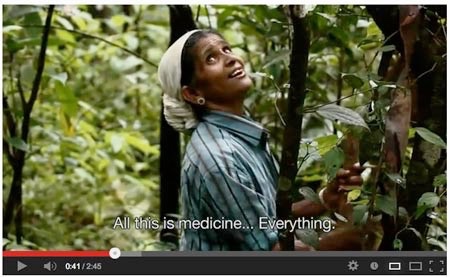
Illegal mining in forests is destroying the life and culture of schedule tribes, opined Dr H Sudarshan, director of Vivekananda Girijana Kalyana Kendra.
He was speaking at national seminar on ‘Tribes and Analogous People in India: Contemporary Issues’ on the occasion of International Day of World’s Indigenous People. […]
Certain people are looting the natural resources in forests. However, with this daylight robbery continuing unabated, scheduled tribes who are the conservators of forests are leaving for urban areas.
He also said that scheduled tribes have their own unique art and culture. But atrocities are being committed against them, and there are no constitutional provisions for their protection, he observed.
Dr Sudarshan observed that access to primary health care centres is very difficult for tribes. There have been no genuine attempts to integrate modern medicine with traditional medicine, he remarked. He stressed on the need for increasing the number of health centres in tribal areas.
Last year, employment under the MGNREGS was a source of livelihood for many tribals. However due to corruption, that has been stopped this year. Explaining the plight of tribes due to the naxal menace, he said that Scheduled Tribes are caught in between the police and naxals. He said that utmost commitment is needed to solve the problem.
Commending the Chief Minister’s initiative in providing ownership of land to tribes, he said that a programme is organised at the end of this month to distribute the title deeds for the beneficiaries. […]
Source: “Mining destroying tribal culture”, Deccan Herald, 9 August 2010
URL: www.deccanherald.com/content/87432/mining-destroying-tribal-culture.html
Date Visited: 26 February 2022
[Bold typeface added above for emphasis]
“Tribals are subject to oppression and cruelty even after independence and still picked up by the investigating officers to cover up shoddy investigations.” – D.Y. Chandrachud (Chief Justice of India since 9 November 2022) quoted in “Members of De-Notified Tribes Picked Up to Cover Up Shoddy Investigations” | Learn more >>
Learn from M S Swaminathan – a world renowned scientist – how biological diversity contributes to public health, people’s livelihood and environmental security in addition to food security: his call on fellow citizens to use and share resources in a more sustainable and equitable manner; outlining the long journey from the 1992 Earth Summit to a commitment to foster inherited knowledge through India’s Biodiversity Act and Genome Saviour Award; an award intended to reward those who are “primary conservers” – guardians of biological diversity!
More about the work of his foundation which “aims to accelerate use of modern science and technology for agricultural and rural development to improve lives and livelihoods of communities.” – www.mssrf.org | Regarding the issues of food security raised above, and the nutritional value of indigenous grains, seeds and millets, read an in-depth report that concludes that “the tribal food basket has always been diverse and nutritious” >>
Up-to-date reports by Indian experts and journalists
List of sites covered by this Google SafeSearch engine
Academia.edu (platform for academics to share research papers) – www.academia.edu
Archive.org – https://archive.org
Centre for Science and Environment – https://www.cseindia.org
Current Conservation – https://www.currentconservation.org
Development and Cooperation (D+C) https://www.dandc.eu
Down To Earth (India) – www.downtoearth.org.in
India Environment Portal – www.indiaenvironmentportal.org.in
Harnessing Nature Magazine – https://harnessingnature.online
Kalpavriksh Environmental Action Group – https://kalpavriksh.org
Mongabay-India – https://india.mongabay.com
M S Swaminathan Research Foundation – www.mssrf.org
Navdanya (protecting India’s biodiversity based food heritage) – https://navdanya.org
People’s Archive of Rural India – https://ruralindiaonline.org/
Third World Network (Penang, Malaysia) – https://twn.my
The Shola Trust (nature conservation in the Nilgiri region) – www.thesholatrust.org
TribalConnect (“uplift and benefit the community without adversely affecting or changing their vernacular”) – https://tribalconnect.org.in
WorldCat (“the world’s largest library catalog, helping you find library materials online”) – https://worldcat.org
More SafeSearch on this website
Search tips
Combine the name of any particular state, language or region with that of any tribal (Adivasi) community.
Add keywords of special interest (music, poetry, dance just as health, sacred grove and biodiversity); learn about the rights of Scheduled Tribes such as the “Forest Rights Act” (FRA); and the United Nations “Declaration on the Rights of Indigenous Peoples”, “Universal Declaration of Human Rights”, “women’s rights”, or “children’s right to education”.
Ask a question that includes “tribal” or “Adivasi”, for instance: “Adivasi way of life better?” (or “tribal way of life worse?”)
Specify any particular issue or news item (biodiversity, bonded labour and human trafficking, climate change, ecology, economic development, ethnobotany, ethnomedicine, global warming, hunter-gatherers in a particular region or state, prevention of rural poverty, water access).
For official figures include “scheduled tribe ST” along with a union state or region: e.g. “Chhattisgarh ST community”, “Himalayan tribe”, “Scheduled tribe Tamil Nadu census”, “ST Kerala census”, “Particularly Vulnerable Tribal Group Jharkhand”, “PVTG Rajasthan”, “Adivasi ST Kerala”, “Adibasi ST West Bengal” etc.
SafeSearch browser tips
If your (mobile) browser fails to display “embedded” media contents, Google maps and SafeSearch windows
Try another browser like Firefox, Chrome or Safari available on your device
Ensure your favourite browser is up to date
Close your present browser
Check your browser and mobile (gsm) settings:
e.g. permission for video or JavaScript
(seen under Preferences >Security >Enable JavaSript)
Restart your computer (smartphone, tablet)
Reconnect to your wifi network or connect to a different one
On some iPhone models the following helps:
>Settings >Safari >scroll down to:
SETTING FOR WEBSITES
Enable “Request Desktop Website” (All Websites) temporarily
Return to the map-post in Safari and “Reload”
Return to >Settings and disable “Request Desktop Website” again
Return to the post in Safari and “Reload”which should now display “embedded” contents as intended (with the convenience of browsing the mobile version on a small screen)
Note: similar solutions may also work with other mobile operating systems.
What does it mean to be Indigenous?
Indigenous Peoples can be identified according to certain characteristics:
They are politically and socially marginalized.
Most importantly, they self-identify as Indigenous Peoples.
They share an ancestral link with those who inhabited a country or region before they were colonized or before other peoples became dominant.
They have a strong link to particular territories and the surrounding natural resources.
They have distinct social, economic or political systems, which they are resolved to maintain and reproduce.
They have a distinct language, culture and beliefs.
There are more than 5,000 different Indigenous Peoples around the world comprising 476 million people – around 6.2% of the global population. They are spread across more than 90 countries in every region and speak more than 4,000 languages. | Learn more (Amnesty International) >>
Source: “INDIGENOUS PEOPLES’ RIGHTS” by Amnesty International
URL: https://www.amnesty.org/en/what-we-do/indigenous-peoples/
Date Visited: 10 May 2025
Learn more on the Rights of Indigenous Peoples, their Languages & linguistic heritage & Tribal culture worldwide >>
“If we take action, the right action – as the report [on Biological Diversity] proposes – we can transition to a sustainable planet.” […] Many good things are happening around the world and these should be celebrated and encouraged […] We have to act now. It is not too late. Otherwise, our children and grandchildren will curse us because we will leave behind a polluted, degraded and unhealthy planet.” – Elizabeth Maruma Mrema, executive secretary, UN Convention on Biological Diversity – “Extinction: Urgent change needed to save species, says UN”, BBC News, 15 September 2020 >>
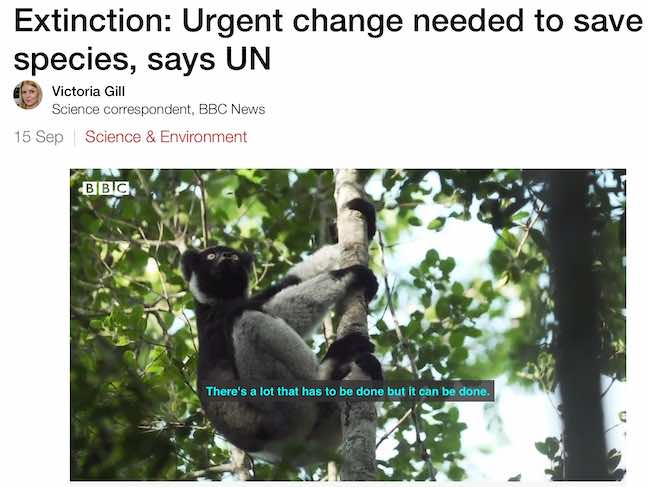
Watch the video on BBC News | More about Biodiversity in India >>
Learn more
Books on tribal culture and related resources
Constitution and Supreme Court
eJournals, eBooks & reports | eLearning | Background guide for education
Forest Rights Act (FRA) | Illegal mining
Information provided by Indian government agencies and other organizations (FAQ)
Languages and linguistic heritage
Multilingual education is a pillar of intergenerational learning – Unesco
Particularly vulnerable tribal group
Scheduled Tribes under the Constitution of India: Literacy rates and characteristics
Unesco | Unicef | Unicef India | United Nations
United Nations International Days and Weeks
United Nations Permanent Forum on Indigenous Issues
Video | “Nations don’t make us human – languages make us human”: Ganesh Devy