eBook | “That pride must never allow us to forget our many weakness and failings or blunt our longing to be rid of them” (Jawaharlal Nehru): Museums in the service of mutual understanding, cooperation and peace: International Museum Day (18 May)
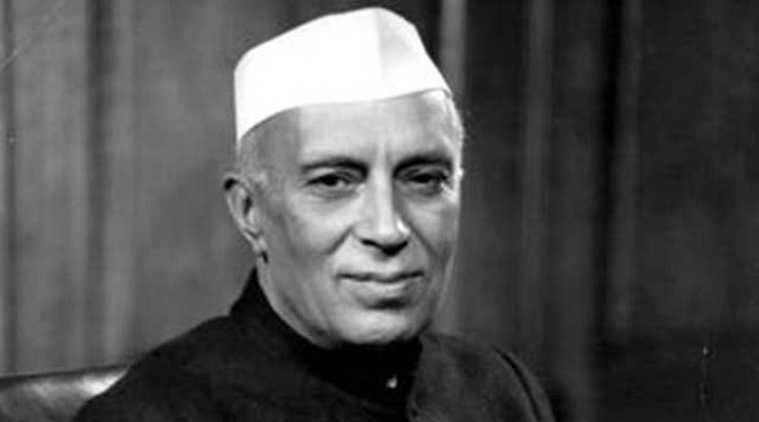
In his book, The Discovery of India, Nehru wrote, long before 1947, about the difficulties regarding uniting people with diverse languages, religions and cultural values. At the same time, as a historian, he could sketch the unifying forces which connected India right from the Ashokan period to pre-Independence India. His grasp of Buddhist philosophy and his admiration of the agnostic aspects of the Hindu religion from the earliest Upanishada is evident. He was also fully aware of the dark phases of India’s history, and its weakness, as well as its great achievements.
“We are citizens of no mean country and we are proud of the land of our birth, of our people, our culture and traditions,” he said. “That pride must never allow us to forget our many weakness and failings or blunt our longing to be rid of them.”
I was given the task of enshrining Nehru’s ideas, values and his times in a museum-pavilion in the Pragati Maidan, near the Hall of Nations which was built to celebrate the 25th year of Independence.
“Nehru was fascinated by the spontaneity of tribal culture and their capacity of joy and heroism in spite of their appalling poverty, destitution, and ignorance. […] In Nehru’s view, the process of modernization must not be taken as forcing a sudden break with the tribals past but help them build upon it and grow by a natural process of evolution.” – Dr. Chittaranjan Mishra in “Tribal Philosophy and Pandit Nehru” (Odisha Review, November 2017) | Learn more >>
The current predicament of a vast majority of Adivasis is one of sharp erosion in their livelihoods and their life-worlds. Despite assurances of autonomy (the Fifth and Sixth Schedules, the Panchsheel, PESA 1996, Forests Rights Act 2006) and attempts of focused addressal of Adivasi and Tribal issues (including the establishment of an umbrella outfit, the National Council for Tribal Welfare), there are counter structures and programmes that defy the enabling of genuinely decentralised autonomy and the guarantee of democratic participation. For instance, the recently approved ‘Integrated Action Plan’ in Tribal areas overrides the representation of Adivasis in local issues in decision-making processes and arrogates powers of governance to bureaucrats and specialists. In addition to such contradictory and conflicting measures, the forces of fast-expanding capital, along with the top-down deployment of development models have resulted in large scale displacement in Adivasi regions. Global capital’s access to mineral wealth has also intensified violence of various forms and degrees.
Source: Ch. 2, “Context and Conditions of Adivasi Life Worlds” (p. 5) in THE EDUCATION QUESTION’ FROM THE PERSPECTIVE OF ADIVASIS: CONDITIONS, POLICIES AND STRUCTURES by National Institute of Advanced Studies (Bangalore), March 2012 & UNICEF | Backup (PDF, 4 MB)
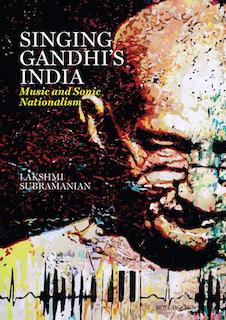
We have all known Mahatma Gandhi as the Father of the Nation, a lawyer, a social reformer, a leader and the messiah of non-violence who helped India achieve Independence. But have we ever thought the role music played in his life?
‘His absolute and uncompromising commitment to carry all communities together in crafting a utopian society is still relevant these days, especially as we live in cynical times when everything is about mobilising opinion for narrow gains and presenting one’s identity in the most superficial and orchestrated manner.’
He suggested that only true accommodation and friendship were ways out for resolving the apparently irreconcilable – and occasionally unjust – demands, but any acceptance of an encroachment on vital aspects of religious practice was not permissible. Like many Gandhian statements, it was ambivalent and contradictory with potential for endless misunderstandings and misinterpretation. […]
Neither music, nor prayer, nor fasting was able to heal the scars of a wounded civilization or to arrest its fall into an abyss of communal hatred, caste exclusion and political opportunism.
Historian Lakshmi Subramanian in Singing Gandhi’s India: Music and Sonic Nationalism (New Delhi: Roli Books 2020), pp. 115 & 189 URL: https://www.worldcat.org/title/1139768131
The objective of International Museum Day (IMD) is to raise awareness about the fact that, “Museums are an important means of cultural exchange, enrichment of cultures and development of mutual understanding, cooperation and peace among peoples.” Organised on 18 May each year or around this date, the events and activities planned to celebrate International Museum Day can last a day, a weekend or an entire week. IMD was celebrated for the first time 40 years ago. All around the world, more and more museums participate in International Museum Day. Last year, more than 37,000 museums participated in the event in about 158 countries and territories.
International Museum Day 2021: “The Future of Museums: Recover and Reimagine”
Combine the name of any particular state, language or region with that of any tribal (Adivasi) community.
Add keywords of special interest (music, poetry, dance just as health, sacred grove and biodiversity); learn about the rights of Scheduled Tribes such as the “Forest Rights Act” (FRA); and the United Nations “Declaration on the Rights of Indigenous Peoples”, “Universal Declaration of Human Rights”, “women’s rights”, or “children’s right to education”.
Ask a question that includes “tribal” or “Adivasi”, for instance: “Adivasi way of life better?” (or “tribal way of life worse?”)
Specify any particular issue or news item (biodiversity, bonded labour and human trafficking, climate change, ecology, economic development, ethnobotany, ethnomedicine, global warming, hunter-gatherers in a particular region or state, prevention of rural poverty, water access).
For official figures include “scheduled tribe ST” along with a union state or region: e.g. “Chhattisgarh ST community”, “Himalayan tribe”, “Scheduled tribe Tamil Nadu census”, “ST Kerala census”, “Particularly Vulnerable Tribal Group Jharkhand”, “PVTG Rajasthan”, “Adivasi ST Kerala”, “Adibasi ST West Bengal” etc.
SafeSearch browser tips
If your (mobile) browser fails to display “embedded” media contents, Google maps and SafeSearch windows
Try another browser like Firefox, Chrome or Safari available on your device
Ensure your favourite browser is up to date
Close your present browser
Check your browser and mobile (gsm) settings: e.g. permission for video or JavaScript (seen under Preferences >Security >Enable JavaSript)
Restart your computer (smartphone, tablet)
Reconnect to your wifi network or connect to a different one
On some iPhone models the following helps:
>Settings >Safari >scroll down to: SETTING FOR WEBSITES
Return to >Settings and disable “Request Desktop Website” again
Return to the post in Safari and “Reload”which should now display “embedded” contents as intended (with the convenience of browsing the mobile version on a small screen)
Note: similar solutions may also work with other mobile operating systems.