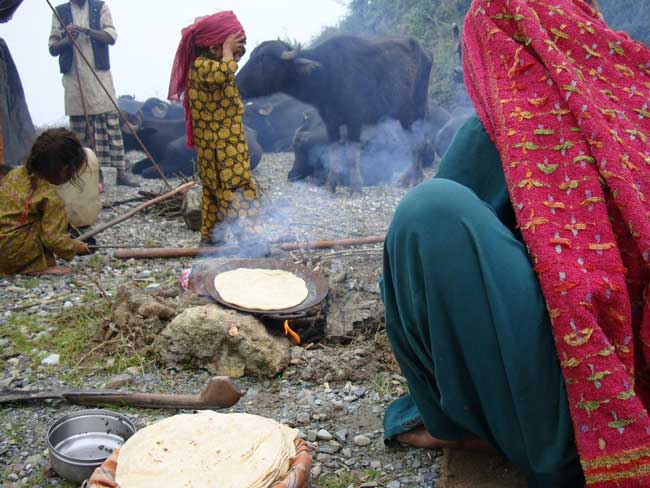
in the Himalayas © Photo Susan MacMillan | Article by Manshi Asher: Down to Earth >>
Gujjar community and India’s Himalayan regions >>
Nomadic and Semi-Nomadic Tribes | SEED – Government scheme
Ecology and environment | Economy and development >>
Ethnobotany & ethnomedicine >>
The present investigation aimed at documenting medicinally important species of trees usedby Tharu tribe in the Himalayan Terai region of India. Out of 204 tree species belonging to 143 genera and 50 families reported in this study, uses of 148 species have been recorded from this region for the first time.
Over all, more than 86 health-related issues are being cured utilizing ethnomedicinally important tree species. It has also been observed that the majority of youth in Tharu tribe are very less aware of their ethnic knowledge and are also not so much interested in such learning. Thus, a precise documentation of these information with traditional knowledge base from the ethnic people has great relevance for the human welfare. The study suggests the need for training local people for sustainable utilization of these plant resources and their proper conservation. The youth should be encouraged learning to sustain their ethnic wisdom which would also help creating employment among local inhabitants.
Source: “Ethnomedicinal Uses of Tree Species by Tharu Tribes in the Himalayan Terai Region of India” by Omesh Bajpai
URL: https://www.academia.edu/19861074/
Date Visited: 3 June 2022
“The Hindu Kush-Himalayan region holds the third largest body of frozen water in the world, and is warming at double the global average. It stands to lose one third of its glaciers by 2100 – creating huge risk to mountain communities, ecosystems and nature and the quarter of humanity downstream.” – Deepshikha Sharma (climate and environment specialist at the International Centre for Integrated Mountain Development, ICIMOD) quoted by BBC Podcast “The Climate Question” | Learn more | Biodiversity and development – Himalaya >>
Ann Hum Genet. 2002 Nov ;66 (Pt 5-6):361-8 12516613 Cit:6
Genetic relationships among some tribal groups inhabiting the north-eastern, eastern and sub-Himalayan regions of India.
[My paper] C S Chakrabarti, M Roy, N K Sengupta, R Lalthantluanga, P P Majumder
Department of Zoology, University of Burdwan, India.
The origins and genomic affinities of various tribal populations of India are of considerable contemporary interest. In this study, we have investigated relationships among five tribal groups inhabiting the north-eastern, eastern and sub-Himalayan regions of India. DNA samples have been analysed in respect of 25 polymorphic loci, based on which genetic affinities have been estimated. The interesting findings of this study are (i) the Tibeto-Burman speaking, morphologically Mongoloid, tribal groups of India are not genetically very homogeneous, and (ii) the Tharu, a group inhabiting the sub-Himalayan region, may indeed have undergone considerable admixture as has been postulated by some anthropologists.
Source: Papers: tribal
Address : http://lib.bioinfo.pl/find?field=Papers&query=tribal
Date Visited: Sat Jul 16 2011 21:06:58 GMT+0200 (CEST)
“It was assumed that tribal people have same health problems, similar needs and hence the uniform national pattern of rural health care would be applicable to them as well, albeit with some alteration in population: provider ratio. The different terrain and environment in which they live, different social systems, different culture and hence different health care needs were not addressed.”– Abhay Bang, Chairman, Expert Committee on Tribal health (2018 Report of the Expert Committee on Tribal Health) | Learn more >>
Download Tribal Health in India PDF (35 MB) >>
Searchable file (backup): PDF (OCR 70 MB) >>
Context | Health care for communities identified as “poorest of poor” (PVTGs)
India is designated as the melting pot of so many ethnic groups dwelling at the same time under the common umbrella of a unified nation. Among these varied ethnic groups, some of them have been categorized under article 342 (1) of the constitution and have been labelled as Scheduled Tribe. In the post independent scenario, several schemes for upliftment of STs were run by the government but it was found that all these groups did not come up to the same level of development. Some of them were at much lower strata than others. Thus, in order to ensure the development of these communities, they were, for the first time in 1975-76 (during 5th Five-year plan) and thereafter-in 1993, identified as poorest of poor among the STs and were designated as Primitive Tribal Groups and thereafter constitution of India renamed and declared as Particularly Vulnerable Tribal Groups (PVTGs). Out of the 75 particularly vulnerable tribal groups, 13 are residing in Odisha; they are becoming increasing vulnerable due to loss of their customary habitat. The health troubles of rural areas especially in the tribal areas need a unique concentration, because the tribal people have typical health problem.
Source: 2019 PhD thesis (Abstract) by Jayanta Kumar Nayak titled “Health Seeking Behaviour and Health Care Services among the Hill Kharia Mayurbhanj District Odisha”, Department of Anthropology, Central University of Orissa
URL: http://hdl.handle.net/10603/257651
Date Visited: 21 May 2025
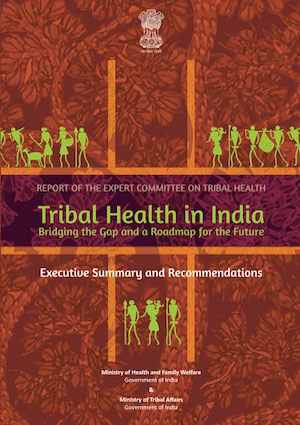
[Bold typeface added above for emphasis]
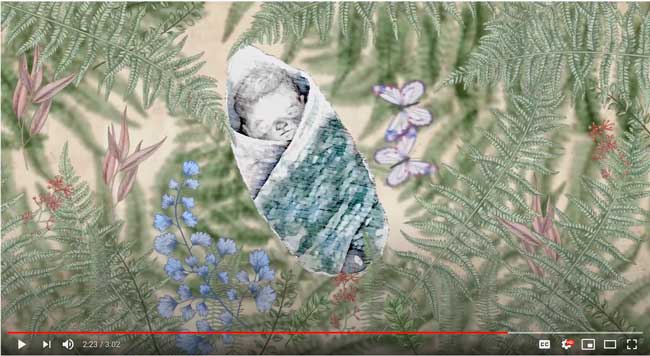
Watch “The Good Ancestor – The Legacies We Leave” (3 min.): An animation that explores the legacies we might leave for future generations >>
Links to some of the most important organisations, thinkers and doers that are leading the way and that have inspired the book The Good Ancestor by Roman Krznaric >>
Learn more
Atree.org | Ashoka Trust for Research in Ecology & the Environment (posts)
Biodiversity | Hyderabad biodiversity pledge | Nilgiri Biosphere
Climate change | Audio | The Climate Question (BBC Podcast)
eJournals & eBooks | Background guide for education
eLearning: Center for World Indigenous Studies
Forest Rights Act (FRA) | Hunter-gatherers | Legal rights over forest land
Health and nutrition | Recommendations by the Expert Committee
“The tribal food basket has always been diverse and nutritious”
United Nations on climate change
What is the Forest Rights Act about?
Who is a forest dweller under this law, and who gets rights?
Up-to-date reports by Indian experts and journalists
Search tips
Combine the name of any particular state, language or region with that of any tribal (Adivasi) community.
Add keywords of special interest (music, poetry, dance just as health, sacred grove and biodiversity); learn about the rights of Scheduled Tribes such as the “Forest Rights Act” (FRA); and the United Nations “Declaration on the Rights of Indigenous Peoples”, “Universal Declaration of Human Rights”, “women’s rights”, or “children’s right to education”.
Ask a question that includes “tribal” or “Adivasi”, for instance: “Adivasi way of life better?” (or “tribal way of life worse?”)
Specify any particular issue or news item (biodiversity, bonded labour and human trafficking, climate change, ecology, economic development, ethnobotany, ethnomedicine, global warming, hunter-gatherers in a particular region or state, prevention of rural poverty, water access).
For official figures include “scheduled tribe ST” along with a union state or region: e.g. “Chhattisgarh ST community”, “Himalayan tribe”, “Scheduled tribe Tamil Nadu census”, “ST Kerala census”, “Particularly Vulnerable Tribal Group Jharkhand”, “PVTG Rajasthan”, “Adivasi ST Kerala”, “Adibasi ST West Bengal” etc.
SafeSearch browser tips
If your (mobile) browser fails to display “embedded” media contents, Google maps and SafeSearch windows
Try another browser like Firefox, Chrome or Safari available on your device
Ensure your favourite browser is up to date
Close your present browser
Check your browser and mobile (gsm) settings:
e.g. permission for video or JavaScript
(seen under Preferences >Security >Enable JavaSript)
Restart your computer (smartphone, tablet)
Reconnect to your wifi network or connect to a different one
On some iPhone models the following helps:
>Settings >Safari >scroll down to:
SETTING FOR WEBSITES
Enable “Request Desktop Website” (All Websites) temporarily
Return to the map-post in Safari and “Reload”
Return to >Settings and disable “Request Desktop Website” again
Return to the post in Safari and “Reload”which should now display “embedded” contents as intended (with the convenience of browsing the mobile version on a small screen)
Note: similar solutions may also work with other mobile operating systems.
List of websites covered by this Google custom search engine
Academia.edu (platform for academics to share research papers) – www.academia.edu
Archive.org – https://archive.org
Centre for Science and Environment – https://www.cseindia.org
Current Conservation – https://www.currentconservation.org
Development and Cooperation (D+C) https://www.dandc.eu
Down To Earth (India) – www.downtoearth.org.in
India Environment Portal – www.indiaenvironmentportal.org.in
Harnessing Nature Magazine – https://harnessingnature.online
Mongabay-India – https://india.mongabay.com
M S Swaminathan Research Foundation – www.mssrf.org
Navdanya (protecting India’s biodiversity based food heritage) – https://navdanya.org
People’s Archive of Rural India – https://ruralindiaonline.org/
Third World Network (Penang, Malaysia) – https://twn.my
The Shola Trust (nature conservation in the Nilgiri region) – www.thesholatrust.org
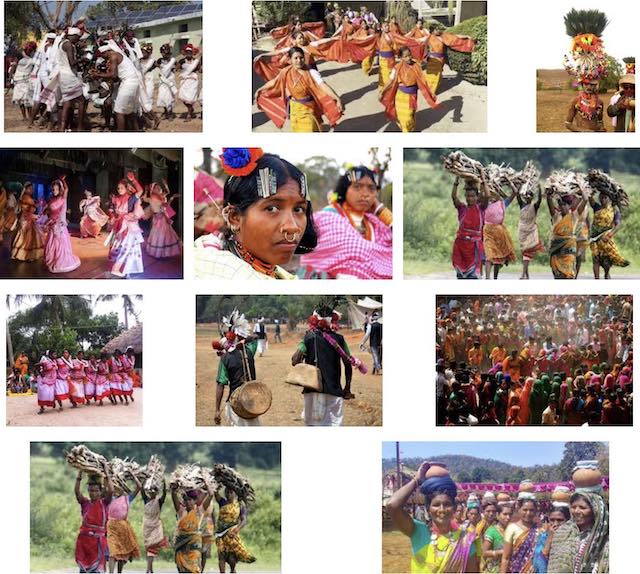
Indian online periodicals and platforms | Images view >>
~ ~ ~
Personalize your CustomSearch by combining other search words >>
(e.g. name of a tribal community and region, a craft, or dance and puppetry)
Research: explore PhD theses from all over India
Shodhganga (Open Access)