The Indian Herbal Therapy and Research Foundation, founded by Mr. Mathews, has turned into a place of solace for many children with spastic and motor neuron diseases, including cerebral palsy. […]
“Although my consultation in Thiruvananthapuram started only a year ago, I have been providing herbal remedies for children affected by cerebral palsy, autism, and allied diseases for the past 20 years at Mannarkkad [in Palakkad], my native place,” Mr. Mathews said. […]
His treatment basically involves the application of medicines made from herbs collected from the Attappady forests of the Silent Valley. The herbs are made into medicines under the personal supervision of Mr. Mathews, who learnt this traditional system of medicine from his mother-in-law, Rangamma, a tribal healer.
The herbal remedy, coupled with a strict diet regimen, has provided relief for many children, Mr. Mathews said.
“We cannot afford to waste the medicine. So I am very particular about my patients following the diet and medicine regimen strictly. That, along with the mercy of God, can only cure these diseases,” he said. […]
In recognition of his work, the Thiruvananthapuram district panchayat is planning financial assistance to children from below-the-poverty-line families who seek treatment from Mr. Mathews. This was announced by district panchayat president Remani P. Nair at the felicitation.
“I have also been approached by the Department of Ayush of the Government of India, for associating in their research on herbal treatment. I am planning to construct a hospital at Mannarkkad where I would also like to give training in herbal remedies to neurologists, gynaecologists, and physiotherapists. Only through them can we bring the benefits of herbal remedies to the lakhs of suffering children,” Mr. Mathews said.
Source: “Holding out hope for ailing tiny tots”, The Hindu, Thiruvananthapuram, August 31, 2011
Address: https://www.thehindu.com/news/cities/Thiruvananthapuram/holding-out-hope-for-ailing-tiny-tots/article2414953.ece
Date Visited: 25 December 2020
[Bold typeface added above for emphasis]
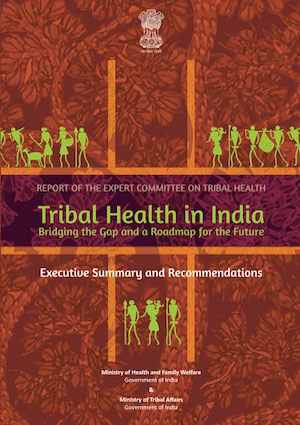
“It was assumed that tribal people have same health problems, similar needs and hence the uniform national pattern of rural health care would be applicable to them as well, albeit with some alteration in population: provider ratio. The different terrain and environment in which they live, different social systems, different culture and hence different health care needs were not addressed.”– Abhay Bang, Chairman, Expert Committee on Tribal health (2018 Report of the Expert Committee on Tribal Health) | Learn more >>
Download Tribal Health in India PDF (35 MB) >>
Searchable file (backup): PDF (OCR 70 MB) >>
Context | Health care for communities identified as “poorest of poor” (PVTGs)
India is designated as the melting pot of so many ethnic groups dwelling at the same time under the common umbrella of a unified nation. Among these varied ethnic groups, some of them have been categorized under article 342 (1) of the constitution and have been labelled as Scheduled Tribe. In the post independent scenario, several schemes for upliftment of STs were run by the government but it was found that all these groups did not come up to the same level of development. Some of them were at much lower strata than others. Thus, in order to ensure the development of these communities, they were, for the first time in 1975-76 (during 5th Five-year plan) and thereafter-in 1993, identified as poorest of poor among the STs and were designated as Primitive Tribal Groups and thereafter constitution of India renamed and declared as Particularly Vulnerable Tribal Groups (PVTGs). Out of the 75 particularly vulnerable tribal groups, 13 are residing in Odisha; they are becoming increasing vulnerable due to loss of their customary habitat. The health troubles of rural areas especially in the tribal areas need a unique concentration, because the tribal people have typical health problem.
Source: 2019 PhD thesis (Abstract) by Jayanta Kumar Nayak titled “Health Seeking Behaviour and Health Care Services among the Hill Kharia Mayurbhanj District Odisha”, Department of Anthropology, Central University of Orissa
URL: http://hdl.handle.net/10603/257651
Date Visited: 21 May 2025
Learn from M S Swaminathan – a world renowned scientist – how biological diversity contributes to public health, people’s livelihood and environmental security in addition to food security: his call on fellow citizens to use and share resources in a more sustainable and equitable manner; outlining the long journey from the 1992 Earth Summit to a commitment to foster inherited knowledge through India’s Biodiversity Act and Genome Saviour Award; an award intended to reward those who are “primary conservers” – guardians of biological diversity!
More about the work of his foundation which “aims to accelerate use of modern science and technology for agricultural and rural development to improve lives and livelihoods of communities.” – www.mssrf.org | Regarding the issues of food security raised above, and the nutritional value of indigenous grains, seeds and millets, read an in-depth report that concludes that “the tribal food basket has always been diverse and nutritious” >>
Up-to-date reports by Indian experts and journalists
List of sites covered by this Google SafeSearch engine
Academia.edu (platform for academics to share research papers) – www.academia.edu
Archive.org – https://archive.org
Centre for Science and Environment – https://www.cseindia.org
Current Conservation – https://www.currentconservation.org
Development and Cooperation (D+C) https://www.dandc.eu
Down To Earth (India) – www.downtoearth.org.in
India Environment Portal – www.indiaenvironmentportal.org.in
Harnessing Nature Magazine – https://harnessingnature.online
Kalpavriksh Environmental Action Group – https://kalpavriksh.org
Mongabay-India – https://india.mongabay.com
M S Swaminathan Research Foundation – www.mssrf.org
Navdanya (protecting India’s biodiversity based food heritage) – https://navdanya.org
People’s Archive of Rural India – https://ruralindiaonline.org/
Third World Network (Penang, Malaysia) – https://twn.my
The Shola Trust (nature conservation in the Nilgiri region) – www.thesholatrust.org
TribalConnect (“uplift and benefit the community without adversely affecting or changing their vernacular”) – https://tribalconnect.org.in
WorldCat (“the world’s largest library catalog, helping you find library materials online”) – https://worldcat.org
More SafeSearch on this website
Search tips
Combine the name of any particular state, language or region with that of any tribal (Adivasi) community.
Add keywords of special interest (music, poetry, dance just as health, sacred grove and biodiversity); learn about the rights of Scheduled Tribes such as the “Forest Rights Act” (FRA); and the United Nations “Declaration on the Rights of Indigenous Peoples”, “Universal Declaration of Human Rights”, “women’s rights”, or “children’s right to education”.
Ask a question that includes “tribal” or “Adivasi”, for instance: “Adivasi way of life better?” (or “tribal way of life worse?”)
Specify any particular issue or news item (biodiversity, bonded labour and human trafficking, climate change, ecology, economic development, ethnobotany, ethnomedicine, global warming, hunter-gatherers in a particular region or state, prevention of rural poverty, water access).
For official figures include “scheduled tribe ST” along with a union state or region: e.g. “Chhattisgarh ST community”, “Himalayan tribe”, “Scheduled tribe Tamil Nadu census”, “ST Kerala census”, “Particularly Vulnerable Tribal Group Jharkhand”, “PVTG Rajasthan”, “Adivasi ST Kerala”, “Adibasi ST West Bengal” etc.
SafeSearch browser tips
If your (mobile) browser fails to display “embedded” media contents, Google maps and SafeSearch windows
Try another browser like Firefox, Chrome or Safari available on your device
Ensure your favourite browser is up to date
Close your present browser
Check your browser and mobile (gsm) settings:
e.g. permission for video or JavaScript
(seen under Preferences >Security >Enable JavaSript)
Restart your computer (smartphone, tablet)
Reconnect to your wifi network or connect to a different one
On some iPhone models the following helps:
>Settings >Safari >scroll down to:
SETTING FOR WEBSITES
Enable “Request Desktop Website” (All Websites) temporarily
Return to the map-post in Safari and “Reload”
Return to >Settings and disable “Request Desktop Website” again
Return to the post in Safari and “Reload”which should now display “embedded” contents as intended (with the convenience of browsing the mobile version on a small screen)
Note: similar solutions may also work with other mobile operating systems.
What does it mean to be Indigenous?
Indigenous Peoples can be identified according to certain characteristics:
They are politically and socially marginalized.
Most importantly, they self-identify as Indigenous Peoples.
They share an ancestral link with those who inhabited a country or region before they were colonized or before other peoples became dominant.
They have a strong link to particular territories and the surrounding natural resources.
They have distinct social, economic or political systems, which they are resolved to maintain and reproduce.
They have a distinct language, culture and beliefs.
There are more than 5,000 different Indigenous Peoples around the world comprising 476 million people – around 6.2% of the global population. They are spread across more than 90 countries in every region and speak more than 4,000 languages. | Learn more (Amnesty International) >>
Source: “INDIGENOUS PEOPLES’ RIGHTS” by Amnesty International
URL: https://www.amnesty.org/en/what-we-do/indigenous-peoples/
Date Visited: 10 May 2025
Learn more on the Rights of Indigenous Peoples, their Languages & linguistic heritage & Tribal culture worldwide >>
Reports in the Indian press | List of periodicals included in this search >>
Search tips
Combine the name of any particular state, language or region with that of any tribal (Adivasi) community.
Add keywords of special interest (music, poetry, dance just as health, sacred grove and biodiversity); learn about the rights of Scheduled Tribes such as the “Forest Rights Act” (FRA); and the United Nations “Declaration on the Rights of Indigenous Peoples”, “Universal Declaration of Human Rights”, “women’s rights”, or “children’s right to education”.
Ask a question that includes “tribal” or “Adivasi”, for instance: “Adivasi way of life better?” (or “tribal way of life worse?”)
Specify any particular issue or news item (biodiversity, bonded labour and human trafficking, climate change, ecology, economic development, ethnobotany, ethnomedicine, global warming, hunter-gatherers in a particular region or state, prevention of rural poverty, water access).
For official figures include “scheduled tribe ST” along with a union state or region: e.g. “Chhattisgarh ST community”, “Himalayan tribe”, “Scheduled tribe Tamil Nadu census”, “ST Kerala census”, “Particularly Vulnerable Tribal Group Jharkhand”, “PVTG Rajasthan”, “Adivasi ST Kerala”, “Adibasi ST West Bengal” etc.
SafeSearch browser tips
If your (mobile) browser fails to display “embedded” media contents, Google maps and SafeSearch windows
Try another browser like Firefox, Chrome or Safari available on your device
Ensure your favourite browser is up to date
Close your present browser
Check your browser and mobile (gsm) settings:
e.g. permission for video or JavaScript
(seen under Preferences >Security >Enable JavaSript)
Restart your computer (smartphone, tablet)
Reconnect to your wifi network or connect to a different one
On some iPhone models the following helps:
>Settings >Safari >scroll down to:
SETTING FOR WEBSITES
Enable “Request Desktop Website” (All Websites) temporarily
Return to the map-post in Safari and “Reload”
Return to >Settings and disable “Request Desktop Website” again
Return to the post in Safari and “Reload”which should now display “embedded” contents as intended (with the convenience of browsing the mobile version on a small screen)
Note: similar solutions may also work with other mobile operating systems.
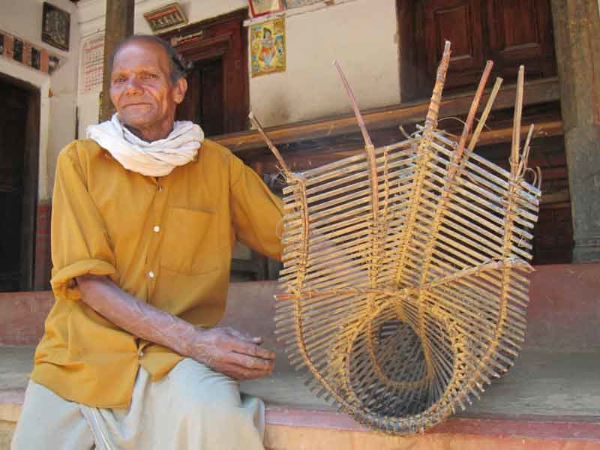
Photo © Arun VC >>
The tribal food basket has always been diverse and nutritious, including maize, minor millets like kodo and kutki, oil seeds like ramtila, along with fruits, leaves, rhizomes, mushrooms, meat and fish. […] We have pushed them out of their complementary relationship with ecology, way of life and time-tested nutrition >>
See also
Biodiversity and development – Kerala
Childhood – Kerala | Childrens rights: Education | UNICEF India | Safe search
Childrens rights: English or Malayalam (UNICEF India)
eBook | Background guide for education
Kerala | State wise ST list (Scheduled Tribes)
Recommendations by the Expert Committee on Tribal Health
Tribal schools and educational projects – Kerala
Video | M.S. Swaminathan on Biodiversity and the sharing of resources
Video | Trailer to “Have you seen the arana?” – Kerala
Vulnerable tribal groups – Kerala
Women | Safe search | President Droupadi Murmu on women’s empowerment