Context | Health care for communities identified as “poorest of poor” (PVTGs)
India is designated as the melting pot of so many ethnic groups dwelling at the same time under the common umbrella of a unified nation. Among these varied ethnic groups, some of them have been categorized under article 342 (1) of the constitution and have been labelled as Scheduled Tribe. In the post independent scenario, several schemes for upliftment of STs were run by the government but it was found that all these groups did not come up to the same level of development. Some of them were at much lower strata than others. Thus, in order to ensure the development of these communities, they were, for the first time in 1975-76 (during 5th Five-year plan) and thereafter-in 1993, identified as poorest of poor among the STs and were designated as Primitive Tribal Groups and thereafter constitution of India renamed and declared as Particularly Vulnerable Tribal Groups (PVTGs). Out of the 75 particularly vulnerable tribal groups, 13 are residing in Odisha; they are becoming increasing vulnerable due to loss of their customary habitat. The health troubles of rural areas especially in the tribal areas need a unique concentration, because the tribal people have typical health problem.
Source: 2019 PhD thesis (Abstract) by Jayanta Kumar Nayak titled “Health Seeking Behaviour and Health Care Services among the Hill Kharia Mayurbhanj District Odisha”, Department of Anthropology, Central University of Orissa
URL: http://hdl.handle.net/10603/257651
Date Visited: 21 May 2025Parallel session 6: Tribal Knowledge Systems, Values and Traditions
Chaired by: Mridula Rashmi Kindo, Dept of English, IGNOU, New Delhi
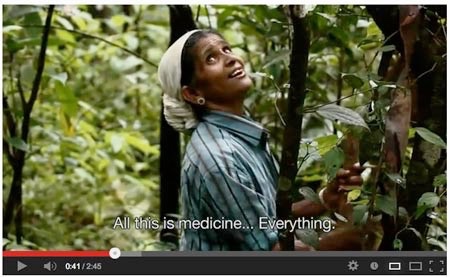
Paper Presenters: Arun Kumar Oraon (JNU, New Delhi), Sandesha Rayapa-Garbiyal (JNU, New Delhi), Teresa Tudu (BHU, Varanasi), Shimi Moni Doley (JMI, New Delhi).Arun Kumar Oraon presented a paper titled “Contribution of Tribal Society to Modern Medicine”. This paper focussed on the role of the upcoming foreign markets in research on indigenous medicine and unfortunate destruction of forest by mining companies. The indigenous knowledge has which mostly been in oral form is also being destroyed. The paper concluded with the idea of preserving forest, which is the abode of medicinal plants and tribal people and hence to make use of indigenous knowledge of medicine.
Sandesha Rayapa-Garbiyal presented a paper titled “Runglwo: Undergoing a much-awaited Paradigmatic Shift.” Runglwo is one the most endangered languages in India. There are only 8000 people who speak this language in three valleys: Chaudas, Darma and Byans. People migrate according to seasonal changes. The language faces acute problems of survival due to the influence of Hindi language and modern education system. The young now use new technology to preserve the language. The state government has recognized the language to teach in schools. This type of attempts is much awaited as the paradigm shift in preservation of the language.Teresa Tudu presented a paper titled “Tribal Literature: Santhals and their Cultural Anxiety.” As tribal life has become a popular discourse in academia, the alien and fascinating indigeneity of Santhals has been always appealing to the non-tribal and attracted researchers and writers. These tribal have been portrayed as object of analysis, as hunger-stricken and uncivilized. Consequently, the socio-political mainstream that is unaccustomed to accept them as civilized human being, tries to subjugate them. They agree to accept non-tribal intellectuals at the cost of betrayal to their self-identity. The paper analysedthe literary works with Santhals and Hindu religion and their despair on the segregation from their community and culture.
Shimi Moni Doley presented a paper titled “Text, Context and Reader: An Ideological Reading of Miri Jyori.” Miri Jyori is an Assamese novel written by Rajnikant Bordoloi, published in 1894. The story is based on a folktale of the ‘Mishing’ tribe involving the tragic love of Jonki and Panoi. The paper analyses ideological self-evidences that the narratorial voice expresses overtly and camouflages covertly in the novel. The interpretation of the text demonstrates a privileging of the dominant discourse and exoticization of the other. The frame of values articulated in the narrative installs the hierarchical distance between the narrator and tribal folktale retold.
(Student Rapporteur: Ms. Kanu Priya)
Read the inaugural Speech by Dr. Ivy Hansdak: “Is tribal identity relevant in today’s world?” delivered during the conference titled “Tribes In Transition-II: Reaffirming Indigenous Identity Through Narrative” | Conference report | Video presentation “Tribes in Transition III” (September 2021): Inaugural Session & Keynote Speech by Prof. Anvita Abbi >>
Search Worldcat.org for publications by reputed authors (select “Open Content/Open Access” for freely downloadable content)
Search tips
Combine the name of any particular state, language or region with that of any tribal (Adivasi) community.
Ask a question that includes “tribal” or “Adivasi”, for instance: “Adivasi way of life better?” (or “tribal way of life worse?”)
Add keywords of special interest (music, poetry, dance just as health, sacred grove and biodiversity); learn about the rights of Scheduled Tribes such as the “Forest Rights Act” (FRA); and the United Nations “Declaration on the Rights of Indigenous Peoples”, “Universal Declaration of Human Rights”, “women’s rights”, or “children’s right to education”.
Specify any particular issue or news item (biodiversity, bonded labour and human trafficking, climate change, ecology, economic development, ethnobotany, ethnomedicine, global warming, hunter-gatherers in a particular region or state, prevention of rural poverty, water access).
Find scholarly books, poetry and fiction relating to tribal culture – Indian publishers
List of sites covered by this Google SafeSearch engine
https://www.alephbookcompany.com
More SafeSearch on this website
Search tips
Combine the name of any particular state, language or region with that of any tribal (Adivasi) community.
Add keywords of special interest (music, poetry, dance just as health, sacred grove and biodiversity); learn about the rights of Scheduled Tribes such as the “Forest Rights Act” (FRA); and the United Nations “Declaration on the Rights of Indigenous Peoples”, “Universal Declaration of Human Rights”, “women’s rights”, or “children’s right to education”.
Ask a question that includes “tribal” or “Adivasi”, for instance: “Adivasi way of life better?” (or “tribal way of life worse?”)
Specify any particular issue or news item (biodiversity, bonded labour and human trafficking, climate change, ecology, economic development, ethnobotany, ethnomedicine, global warming, hunter-gatherers in a particular region or state, prevention of rural poverty, water access).
For official figures include “scheduled tribe ST” along with a union state or region: e.g. “Chhattisgarh ST community”, “Himalayan tribe”, “Scheduled tribe Tamil Nadu census”, “ST Kerala census”, “Particularly Vulnerable Tribal Group Jharkhand”, “PVTG Rajasthan”, “Adivasi ST Kerala”, “Adibasi ST West Bengal” etc.
SafeSearch browser tips
If your (mobile) browser fails to display “embedded” media contents, Google maps and SafeSearch windows
Try another browser like Firefox, Chrome or Safari available on your device
Ensure your favourite browser is up to date
Close your present browser
Check your browser and mobile (gsm) settings:
e.g. permission for video or JavaScript
(seen under Preferences >Security >Enable JavaSript)
Restart your computer (smartphone, tablet)
Reconnect to your wifi network or connect to a different one
On some iPhone models the following helps:
>Settings >Safari >scroll down to:
SETTING FOR WEBSITES
Enable “Request Desktop Website” (All Websites) temporarily
Return to the map-post in Safari and “Reload”
Return to >Settings and disable “Request Desktop Website” again
Return to the post in Safari and “Reload”which should now display “embedded” contents as intended (with the convenience of browsing the mobile version on a small screen)
Note: similar solutions may also work with other mobile operating systems.
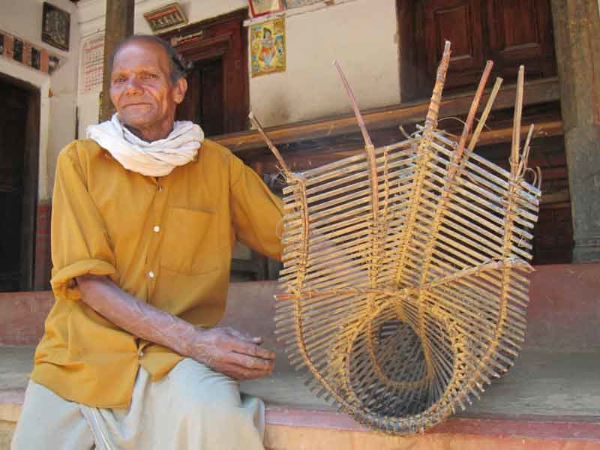
Photo © Arun VC >>
Learn more
Atree.org | Ashoka Trust for Research in Ecology & the Environment (posts)
Biodiversity | Hyderabad biodiversity pledge | Nilgiri Biosphere
Climate change | Audio | The Climate Question (BBC Podcast)
eJournals & eBooks | Background guide for education
eLearning: Center for World Indigenous Studies
Forest Rights Act (FRA) | Hunter-gatherers | Legal rights over forest land
Health and nutrition | Recommendations by the Expert Committee
“The tribal food basket has always been diverse and nutritious”
United Nations on climate change
What is the Forest Rights Act about?
Who is a forest dweller under this law, and who gets rights?