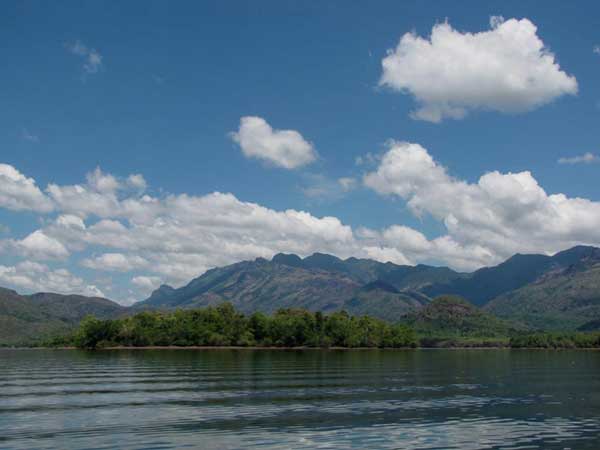
Photo courtesy Davidson Sargunam >>
Facts and figures: India’s biological, cultural and geographic diversity
Spread over 3,287,240 km2 and despite a total human population of over 1,210,000,000, India represents a wide spectrum of biological, cultural and geographic diversity. It has been identified as one of the top 12 global biodiversity hotspots and has 91 eco-cultural zones inhabited by 4,635 ethnic communities. India also has amongst the largest indigenous/tribal population, constituting 8.08% of the country’s population, representing 461 tribes. The term ‘Indigenous Peoples’ is not officially recognized in the country, instead the Constitution of India uses the term ‘Scheduled Tribes’. The total forest cover is estimated to be approximately 20% of the total area of the country. About 1,70,379 villages with a population of 10,674,334 inhabit areas in close proximity of forests.
Source: RECOGNITION AND SUPPORT OF ICCAs IN INDIA by Neema Pathak Broome and Tushar Dash, p. 4 | PDF-Repository
URL: https://kalpavriksh.org/wp-content/uploads/2021/01/IndiaICCARecognition_Final_SEPT2012-as-published.pdf
Date Visited: 10 March 2025
It is interesting to learn that a hill in Kanyakumari district is named after Tiruvalluvar. […]
The Kanyakumari Historical and Cultural Research Centre recently brought to light the existence of Valluvan Kal Potrai in Koovaikkadu hamlet, Surulodu panchayat, Kalkulam taluk, Kanyakumari district. The author, along with two others, went to the hilltop to speak to the 105-year-old leader of the Kaanis, Kaaliyan Kaani. […]
According to Kaaliyan Kaani, locals call him Moottukaani, Tiruvalluvar was a king who had ruled the area in ancient days. Both the king and his queen were fond of the Kaanis’ honey and Thinai (little millet) flour. The place where Tiruvalluvar was said to have taken rest is called Valluvan Kal Potrai and the adjoining hill was named after his wife as Valluvathi Potrai.
The inhabitants started worshipping him after his death and the footprints carved atop the Valluvan hill is revered by them. An inscription on the wall of a well at Koovaikkadu has the name of `Tiruvalluvar Kal Malai’ engraved on it. Tiruvalluvar is believed to have lived in a place surrounded by four kinds of land: kurinji (mountainous), mullai (pastoral), marutham (agricultural) and neithal (maritime). Tirukkural mentions the techniques people had employed in all the four kinds of land.
The couplets also speak of Puzhuthivithaippu or Podivithaippu that is practised by the farmers of the then Naanjilnaadu (present Kanyakumari district). Also, Tiruvalluvar’s birth place, Tirunayanarkurichi, lies between Muttom sea and an irrigation tank called Periyakulam. […]
Source: S. PADMANABHAN, The Hindu, 29 April 2005
URL: https://www.hinduonnet.com/fr/2005/04/29/stories/2005042900020300.htm
Date Visited: 1 mei 2005 17:59:49 GMT+02:00
“The tribes and castes in India are communities apart. Those who belong to castes belong to no tribes, and those who belong to tribes are outside the caste pyramid. What brings them together is probably their love for songs.” – Ganesh Devy in What unites Indians is a love for songs | Caste | Publications >>
Tips | Interactive map
For details and hyperlinks, click on the button seen on the left top of this map.
Scroll and click on one of the markers for information of special interest.
Explore India’s tribal cultural heritage with another interactive map >>