Indian J Med Res. 2005 Jul ;122 (1):43-7 16106089 Cit:8
Undernutrition & childhood morbidities among tribal preschool children.
[My paper] V G Rao, Rajeev Yadav, C K Dolla, Surendra Kumar, M K Bhondeley, Mahendra UkeyRegional Medical Research Centre for Tribals (ICMR), Jabalpur, India. drvgrao@rediffmail.com
BACKGROUND & OBJECTIVE:
Undernutrition and various morbidities go hand in hand, particularly in children. Nutritional status is a sensitive indicator of community health and nutrition. The present study is an attempt to assess the nutritional status of pre-school children of Gond tribal community in Madhya Pradesh.
METHODS:
The study was a community-based, cross- sectional survey carried out in tribal preschool children. Anthropometric measurements were taken. Various indices of nutritional status were expressed in standard deviation units (z scores) from the reference median. The children were examined for nutritional deficiencies and other morbidities. The haemoglobin concentration was measured and the children were classified into various grades of nutritional anaemias. Data on socio-cultural and hygienic practices were also collected. RESULTS: More than 60 per cent children were underweight. Micronutrient deficiency disorders such as anaemia and vitamin A deficiency were common among them. Unhygienic personal habits and adverse cultural practices relating to child rearing, breast-feeding and weaning were also prevalent among them.
INTERPRETATION & CONCLUSION:
The findings of the present study revealed the widespread prevalence of undernutrition among pre-school tribal children and highlight a need for an integrated approach towards improving the child health as well as nutritional status in this area.
Source: Papers: tribal
Address : http://lib.bioinfo.pl/find?field=Papers&query=tribal
Date Visited: Sat Jul 16 2011 21:03:00 GMT+0200 (CEST)
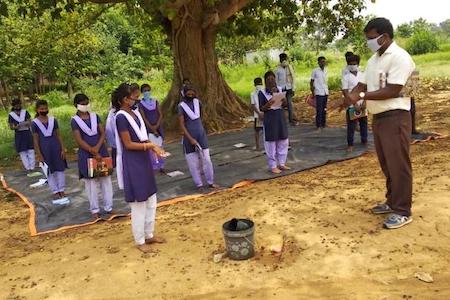
Even as the government is going full steam in containing Covid-19 which has claimed over 43,000 across the country, apathy and inaction on the recommendations of an expert committee have killed over 10 lakh tribals in India since August 2018.
The committee led by NGO Search’s founder Dr Abhay Bang, whose studies have shaped health care policies, had said health status and care in tribal areas were poorest in its report submitted on August 9, 2018.
The biggest causes of death include preventable illnesses such as malaria, malnutrition, childhood pneumonia and diarrhoea, neonatal morbidities, tuberculosis, snake bites, alcoholism, suicides and non-communicable diseases such as hypertension, stroke and cancer, which are rising rapidly among tribal people.
Dr Bang warned recently, the arrival of Covid-19 may play havoc because tribal people might be vulnerable due to lack of health care. […]
FINDINGS
30-80% doctor posts vacant, absenteeism common, morale low
Low input, low quality, low output and low outcome system
Record keeping and data on tribal health absent
Indices like infant mortality rate and life expectancy not calculated for tribals
Nobody in Centre or states care for these numbers
Indifference to tribal health, not counted, not published, not monitored or evaluatedRECOMMENDATIONS
Launch Tribal Health Action Plan to raise tribal health to state levels by 2027
8.6% of the health budget be spent on tribal health
Tribal Health Council, Tribal Health Directorate and Tribal Health Research Cell at national and state levels
Shift primary health care delivery system towards tribal communities
Facilitate integration of tribal medical system and modern medicine and public health systems
Generate knowledge and data on aspects of tribal health through surveys, epidemiological research, maternal and child death audits and create Tribal Health Index
Source: Times of India (Nagpur), 10 August 2020
URL: https://timesofindia.indiatimes.com/city/nagpur/govt-inaction-killed-10-lakh-tribals-of-treatable-diseases-malnutrition-since-aug-2018/articleshow/77453069.cms
Date visited: 26 July 2021
[Bold typeface added above for emphasis]
Tip: for recent reports, type “undernutrition childhood morbidities tribal children” or similar keywords in the search field below
Reports in the Indian press | List of periodicals included in this search >>
Search tips
Combine the name of any particular state, language or region with that of any tribal (Adivasi) community.
Add keywords of special interest (music, poetry, dance just as health, sacred grove and biodiversity); learn about the rights of Scheduled Tribes such as the “Forest Rights Act” (FRA); and the United Nations “Declaration on the Rights of Indigenous Peoples”, “Universal Declaration of Human Rights”, “women’s rights”, or “children’s right to education”.
Ask a question that includes “tribal” or “Adivasi”, for instance: “Adivasi way of life better?” (or “tribal way of life worse?”)
Specify any particular issue or news item (biodiversity, bonded labour and human trafficking, climate change, ecology, economic development, ethnobotany, ethnomedicine, global warming, hunter-gatherers in a particular region or state, prevention of rural poverty, water access).
For official figures include “scheduled tribe ST” along with a union state or region: e.g. “Chhattisgarh ST community”, “Himalayan tribe”, “Scheduled tribe Tamil Nadu census”, “ST Kerala census”, “Particularly Vulnerable Tribal Group Jharkhand”, “PVTG Rajasthan”, “Adivasi ST Kerala”, “Adibasi ST West Bengal” etc.
SafeSearch browser tips
If your (mobile) browser fails to display “embedded” media contents, Google maps and SafeSearch windows
Try another browser like Firefox, Chrome or Safari available on your device
Ensure your favourite browser is up to date
Close your present browser
Check your browser and mobile (gsm) settings:
e.g. permission for video or JavaScript
(seen under Preferences >Security >Enable JavaSript)
Restart your computer (smartphone, tablet)
Reconnect to your wifi network or connect to a different one
On some iPhone models the following helps:
>Settings >Safari >scroll down to:
SETTING FOR WEBSITES
Enable “Request Desktop Website” (All Websites) temporarily
Return to the map-post in Safari and “Reload”
Return to >Settings and disable “Request Desktop Website” again
Return to the post in Safari and “Reload”which should now display “embedded” contents as intended (with the convenience of browsing the mobile version on a small screen)
Note: similar solutions may also work with other mobile operating systems.
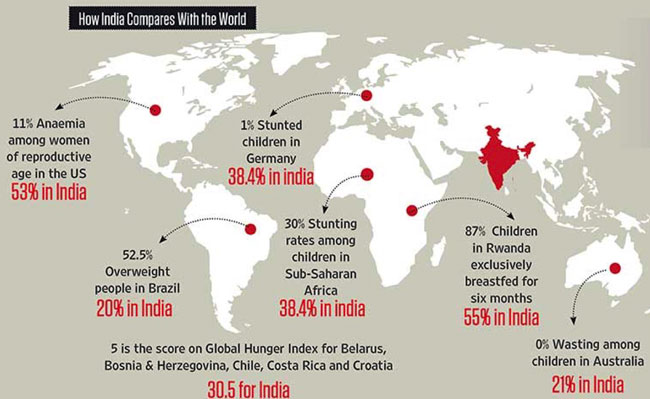
Graphic © Outlook India 26 August 2019 >>
The tribal food basket has always been diverse and nutritious >>
Childrens rights: UNICEF India | Childrens right to education >>
Health spending by the Indian government
“Health spending by the Indian government as percentage of GDP has long been one of the lowest for any major country, and the public health system is chronically dismal.” – Pranab Bardhan in “The two largest democracies in the world are the sickest now” | Learn more: Scroll.in, 24 August 2020 >>
Context | Health care for communities identified as “poorest of poor” (PVTGs)
India is designated as the melting pot of so many ethnic groups dwelling at the same time under the common umbrella of a unified nation. Among these varied ethnic groups, some of them have been categorized under article 342 (1) of the constitution and have been labelled as Scheduled Tribe. In the post independent scenario, several schemes for upliftment of STs were run by the government but it was found that all these groups did not come up to the same level of development. Some of them were at much lower strata than others. Thus, in order to ensure the development of these communities, they were, for the first time in 1975-76 (during 5th Five-year plan) and thereafter-in 1993, identified as poorest of poor among the STs and were designated as Primitive Tribal Groups and thereafter constitution of India renamed and declared as Particularly Vulnerable Tribal Groups (PVTGs). Out of the 75 particularly vulnerable tribal groups, 13 are residing in Odisha; they are becoming increasing vulnerable due to loss of their customary habitat. The health troubles of rural areas especially in the tribal areas need a unique concentration, because the tribal people have typical health problem.
Source: 2019 PhD thesis (Abstract) by Jayanta Kumar Nayak titled “Health Seeking Behaviour and Health Care Services among the Hill Kharia Mayurbhanj District Odisha”, Department of Anthropology, Central University of Orissa
URL: http://hdl.handle.net/10603/257651
Date Visited: 21 May 2025
Factchecker.in | Safe search examples with keywords:
“tribal rights unesco“ | “rural india unesco“ | “tribal education india unesco“
Search Worldcat.org for publications by reputed authors (select “Open Content/Open Access” for freely downloadable content)
Search tips
Combine the name of any particular state, language or region with that of any tribal (Adivasi) community.
Ask a question that includes “tribal” or “Adivasi”, for instance: “Adivasi way of life better?” (or “tribal way of life worse?”)
Add keywords of special interest (music, poetry, dance just as health, sacred grove and biodiversity); learn about the rights of Scheduled Tribes such as the “Forest Rights Act” (FRA); and the United Nations “Declaration on the Rights of Indigenous Peoples”, “Universal Declaration of Human Rights”, “women’s rights”, or “children’s right to education”.
Specify any particular issue or news item (biodiversity, bonded labour and human trafficking, climate change, ecology, economic development, ethnobotany, ethnomedicine, global warming, hunter-gatherers in a particular region or state, prevention of rural poverty, water access).
“It was assumed that tribal people have same health problems, similar needs and hence the uniform national pattern of rural health care would be applicable to them as well, albeit with some alteration in population: provider ratio. The different terrain and environment in which they live, different social systems, different culture and hence different health care needs were not addressed.” – Abhay Bang in Report of the Expert Committee on Tribal Health >>
Learn more
Books on tribal culture and related resources
Constitution and Supreme Court
eJournals, eBooks & reports | eLearning | Background guide for education
Forest Rights Act (FRA) | Illegal mining
Information provided by Indian government agencies and other organizations (FAQ)
Languages and linguistic heritage
Multilingual education is a pillar of intergenerational learning – Unesco
Particularly vulnerable tribal group
Scheduled Tribes under the Constitution of India: Literacy rates and characteristics
Unesco | Unicef | Unicef India | United Nations
United Nations International Days and Weeks
United Nations Permanent Forum on Indigenous Issues
Video | “Nations don’t make us human – languages make us human”: Ganesh Devy