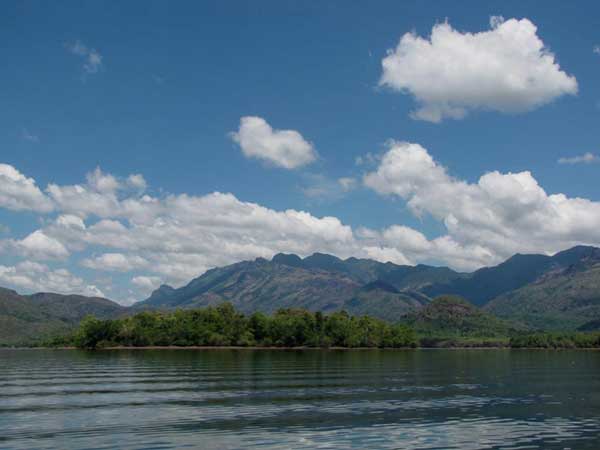
Photo courtesy Davidson Sargunam >>
Facts and figures: India’s biological, cultural and geographic diversity
Spread over 3,287,240 km2 and despite a total human population of over 1,210,000,000, India represents a wide spectrum of biological, cultural and geographic diversity. It has been identified as one of the top 12 global biodiversity hotspots and has 91 eco-cultural zones inhabited by 4,635 ethnic communities. India also has amongst the largest indigenous/tribal population, constituting 8.08% of the country’s population, representing 461 tribes. The term ‘Indigenous Peoples’ is not officially recognized in the country, instead the Constitution of India uses the term ‘Scheduled Tribes’. The total forest cover is estimated to be approximately 20% of the total area of the country. About 1,70,379 villages with a population of 10,674,334 inhabit areas in close proximity of forests.
Source: RECOGNITION AND SUPPORT OF ICCAs IN INDIA by Neema Pathak Broome and Tushar Dash, p. 4 | PDF-Repository
URL: https://kalpavriksh.org/wp-content/uploads/2021/01/IndiaICCARecognition_Final_SEPT2012-as-published.pdf
Date Visited: 10 March 2025
Costus speciosus (J. Koenig) Sm. (Costaceae) has long been considered an important medicinal plant in the Indian sub-continent and other countries of the world. The plant has been reported to have a wide array of ethnomedicinal uses [see Table 1: Ethnomedicinal uses]. Various parts of the plant including the rhizome are used by different tribal communities [e.g. for skin diseases by the Kaani tribe of Kanyakumari District] and folk medicinal practitioners, particularly of India, Nepal, and Bangladesh for treatment of rheumatism, diabetes, fever, respiratory tract illnesses, gastrointestinal disorders, leprosy, infertility, pain, urinary disorders, helminthiasis, eye and ear infections, hepatic problems, and sexually transmitted diseases. A perusal of ethnomedicinal reports on the uses of the plant suggest that the plant, at least in the Indian sub-continent, is used in a similar manner for treatment of several diseases (like diabetes) by ethnic groups of the southern and south central parts of India along with Bangladesh, and the northeast part and West Bengal State of India (both of which adjoins Bangladesh), but not east central or middle Indian regions. This suggests that there had been either ethnic contacts through possibly sea routes between the ethnic communities of southern India and northeast India (including Bangladesh), or there had been ethnic migrations from the southern parts of India to northeast India or the opposite. However, ethnomedicinal use of the plant against rheumatoid arthritis among diverse ethnic groups of the Indian sub-continent suggests that there could have been information transfer through land routes. It is concluded that research on ethnomedicinal uses of a given plant can provide suggestive information on possible migrations or contacts and exchange of information between indigenous communities and in the process make valuable contributions to both medicinal as well as anthropological literature.
Source: Abstract, “Tribal Cross-Talk as an Effective Way for Ethnobotanical Knowledge Transfer – Inference from Costus specious as a Case Study” (American-Eurasian Journal of Sustainable Agriculture, 15 February 2014) by Sophia Hossain, Shahnaz Rahman, Md. Tanvir Morshed, Mahbuba Haque, Sharmin Jahan, Rownak Jahan, Mohammed Rahmatullah
URL: https://www.academia.edu/6090970/
Date Visited: 18 June 2022
J Ethnopharmacol. 2005 Nov 14;102 (2):246-55 16054791 Rec:1 Cit:8 Traditional knowledge of Kani tribals in Kouthalai of Tirunelveli hills, Tamil Nadu, India.[My paper] M Ayyanar, S Ignacimuthu Entomology Research Institute, Loyola College, Chennai 600034, India.
An ethnobotanical survey was carried out among the ethnic groups (Kani/Kanikaran) in Southern Western Ghats of India. Traditional uses of 54 plant species belonging to 26 families are described under this study.
In this communication, the information got from the tribals were compared with the already existing literature on ethnobotany of India. The documented ethnomedicinal plants were mostly used to cure skin diseases, poison bites, wounds and rheumatism.
The medicinal plants used by kanis are arranged alphabetically followed by family name, local name, major chemical constituents, parts used, mode of preparation and medicinal uses.
Keywords: tribal; india; tamil; tamil nadu; nadu; traditional knowledge; nadu india; plant; hill; traditional; medicinal; bite wound; ghat; western ghat; ethnobotany;
Source: Traditional knowledge of Kani tribals in Kouthalai of Tirunelveli hills, Tamil Nadu, India.
Address : https://lib.bioinfo.pl/pmid:16054791
Date Visited: Sat Jul 16 2011 20:32:25 GMT+0200 (CEST)
[Bold typeface added above for emphasis]
“Cultivating and conserving diversity is no luxury in our times: it is a survival imperative.” – Vandana Shiva >>
Up-to-date reports by Indian experts and journalists
Search tips
Combine the name of any particular state, language or region with that of any tribal (Adivasi) community.
Add keywords of special interest (music, poetry, dance just as health, sacred grove and biodiversity); learn about the rights of Scheduled Tribes such as the “Forest Rights Act” (FRA); and the United Nations “Declaration on the Rights of Indigenous Peoples”, “Universal Declaration of Human Rights”, “women’s rights”, or “children’s right to education”.
Ask a question that includes “tribal” or “Adivasi”, for instance: “Adivasi way of life better?” (or “tribal way of life worse?”)
Specify any particular issue or news item (biodiversity, bonded labour and human trafficking, climate change, ecology, economic development, ethnobotany, ethnomedicine, global warming, hunter-gatherers in a particular region or state, prevention of rural poverty, water access).
For official figures include “scheduled tribe ST” along with a union state or region: e.g. “Chhattisgarh ST community”, “Himalayan tribe”, “Scheduled tribe Tamil Nadu census”, “ST Kerala census”, “Particularly Vulnerable Tribal Group Jharkhand”, “PVTG Rajasthan”, “Adivasi ST Kerala”, “Adibasi ST West Bengal” etc.
SafeSearch browser tips
If your (mobile) browser fails to display “embedded” media contents, Google maps and SafeSearch windows
Try another browser like Firefox, Chrome or Safari available on your device
Ensure your favourite browser is up to date
Close your present browser
Check your browser and mobile (gsm) settings:
e.g. permission for video or JavaScript
(seen under Preferences >Security >Enable JavaSript)
Restart your computer (smartphone, tablet)
Reconnect to your wifi network or connect to a different one
On some iPhone models the following helps:
>Settings >Safari >scroll down to:
SETTING FOR WEBSITES
Enable “Request Desktop Website” (All Websites) temporarily
Return to the map-post in Safari and “Reload”
Return to >Settings and disable “Request Desktop Website” again
Return to the post in Safari and “Reload”which should now display “embedded” contents as intended (with the convenience of browsing the mobile version on a small screen)
Note: similar solutions may also work with other mobile operating systems.
List of websites covered by this Google custom search engine
Academia.edu (platform for academics to share research papers) – www.academia.edu
Archive.org – https://archive.org
Centre for Science and Environment – https://www.cseindia.org
Current Conservation – https://www.currentconservation.org
Development and Cooperation (D+C) https://www.dandc.eu
Down To Earth (India) – www.downtoearth.org.in
India Environment Portal – www.indiaenvironmentportal.org.in
Harnessing Nature Magazine – https://harnessingnature.online
Mongabay-India – https://india.mongabay.com
M S Swaminathan Research Foundation – www.mssrf.org
Navdanya (protecting India’s biodiversity based food heritage) – https://navdanya.org
People’s Archive of Rural India – https://ruralindiaonline.org/
Third World Network (Penang, Malaysia) – https://twn.my
The Shola Trust (nature conservation in the Nilgiri region) – www.thesholatrust.org
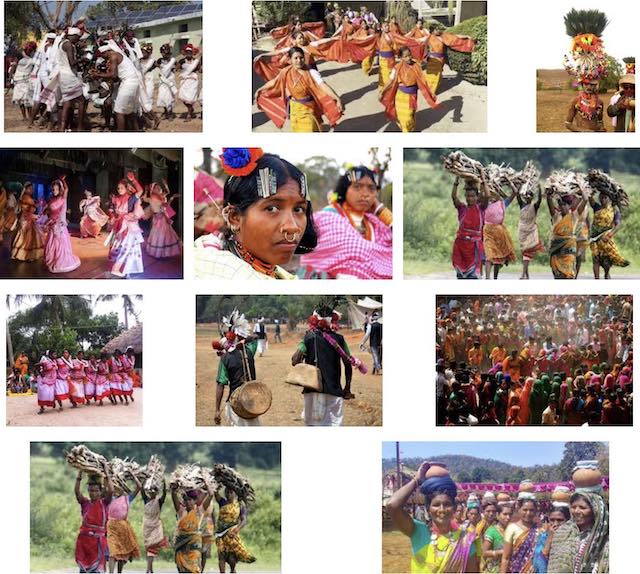
Indian online periodicals and platforms | Images view >>
~ ~ ~
Personalize your CustomSearch by combining other search words >>
(e.g. name of a tribal community and region, a craft, or dance and puppetry)
Research: explore PhD theses from all over India
Shodhganga (Open Access)
Learn more
Atree.org | Ashoka Trust for Research in Ecology & the Environment (posts)
Biodiversity | Hyderabad biodiversity pledge | Nilgiri Biosphere
Climate change | Audio | The Climate Question (BBC Podcast)
eJournals & eBooks | Background guide for education
eLearning: Center for World Indigenous Studies
Forest Rights Act (FRA) | Hunter-gatherers | Legal rights over forest land
Health and nutrition | Recommendations by the Expert Committee
“The tribal food basket has always been diverse and nutritious”
United Nations on climate change
What is the Forest Rights Act about?
Who is a forest dweller under this law, and who gets rights?