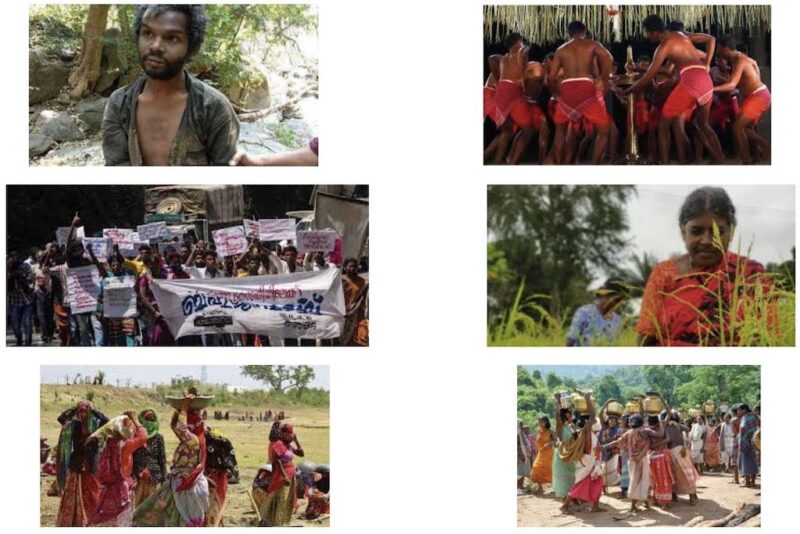
Photo © Arun VC >>
For the tribes
The Priyadarshini Tea Estate was begun as a cooperative society in 1985 to provide a means of livelihood for the Adivasis who were released from bonded labour. I was told the proceeds of our stay at the estate would go towards the welfare of the 120 Adivasi families living in the estate.
A majority of Adivasis still live in and around forests, depending on forest produce for food. They are among the poorest sections of Indian society, with the government doing precious little for their welfare. […]
My friend and I did a two kilometre trek up the tea garden slopes to an erumadam (adivasi tree house) set up at the highest point of the plantation. […]
Atop the hill, we climbed the erumadam gingerly, fearful of falling. Awaiting us, was a lovely bird’s eye view of the tea gardens, thick forests, Mananthavady town and countless hills dotting the distant horizon.
Next morning, we headed for the Kuruva Island. The island spread over 950 acres of jungle, is in reality split up into several ‘dweeps’ (islets) by the tributaries of the Kabini river flowing through it.
A part of Kuruva is open to the public between 9:00 a.m. and 4:00 p.m. and the visit involves crossing 12 rivulets and dweeps, one after another before returning via a changadam (bamboo raft).
Endangered
Adivasis who live on Kuruva, manage the tourist activities on the island. As we crossed each stream and dweep, I was distressed to see plastic and other waste strewn around in the ecologically fragile place by tourists.
A week ago, a deer had died on the island after consuming plastic. Can’t we be more responsible when we go sight-seeing?
The island used to be a haven for birds, but we could not hear the chirping or the sweet singing of even one bird. Instead, the not-so-sweet din of human voices pervaded!
A proposal to make the island a ‘whisper zone’ is on the cards. But will we humans co-operate? Will the sound of birds return to Kuruva? Let us indulge in sight-seeing with responsibility and have compassion for fellow beings.
Source: Holiday amidst nature by JIBY KATTAKAYAM (The Hindu, 3 May 2010)
Address : http://www.thehindu.com/life-and-style/kids/article420318.ece
Date Visited: Mon Oct 31 2011 20:18:56 GMT+0100 (CET)
Up-to-date reports by Indian experts and journalists
Search tips
Combine the name of any particular state, language or region with that of any tribal (Adivasi) community.
Add keywords of special interest (music, poetry, dance just as health, sacred grove and biodiversity); learn about the rights of Scheduled Tribes such as the “Forest Rights Act” (FRA); and the United Nations “Declaration on the Rights of Indigenous Peoples”, “Universal Declaration of Human Rights”, “women’s rights”, or “children’s right to education”.
Ask a question that includes “tribal” or “Adivasi”, for instance: “Adivasi way of life better?” (or “tribal way of life worse?”)
Specify any particular issue or news item (biodiversity, bonded labour and human trafficking, climate change, ecology, economic development, ethnobotany, ethnomedicine, global warming, hunter-gatherers in a particular region or state, prevention of rural poverty, water access).
For official figures include “scheduled tribe ST” along with a union state or region: e.g. “Chhattisgarh ST community”, “Himalayan tribe”, “Scheduled tribe Tamil Nadu census”, “ST Kerala census”, “Particularly Vulnerable Tribal Group Jharkhand”, “PVTG Rajasthan”, “Adivasi ST Kerala”, “Adibasi ST West Bengal” etc.
SafeSearch browser tips
If your (mobile) browser fails to display “embedded” media contents, Google maps and SafeSearch windows
Try another browser like Firefox, Chrome or Safari available on your device
Ensure your favourite browser is up to date
Close your present browser
Check your browser and mobile (gsm) settings:
e.g. permission for video or JavaScript
(seen under Preferences >Security >Enable JavaSript)
Restart your computer (smartphone, tablet)
Reconnect to your wifi network or connect to a different one
On some iPhone models the following helps:
>Settings >Safari >scroll down to:
SETTING FOR WEBSITES
Enable “Request Desktop Website” (All Websites) temporarily
Return to the map-post in Safari and “Reload”
Return to >Settings and disable “Request Desktop Website” again
Return to the post in Safari and “Reload”which should now display “embedded” contents as intended (with the convenience of browsing the mobile version on a small screen)
Note: similar solutions may also work with other mobile operating systems.
List of websites covered by this Google custom search engine
Academia.edu (platform for academics to share research papers) – www.academia.edu
Archive.org – https://archive.org
Centre for Science and Environment – https://www.cseindia.org
Current Conservation – https://www.currentconservation.org
Development and Cooperation (D+C) https://www.dandc.eu
Down To Earth (India) – www.downtoearth.org.in
India Environment Portal – www.indiaenvironmentportal.org.in
Harnessing Nature Magazine – https://harnessingnature.online
Mongabay-India – https://india.mongabay.com
M S Swaminathan Research Foundation – www.mssrf.org
Navdanya (protecting India’s biodiversity based food heritage) – https://navdanya.org
People’s Archive of Rural India – https://ruralindiaonline.org/
Third World Network (Penang, Malaysia) – https://twn.my
The Shola Trust (nature conservation in the Nilgiri region) – www.thesholatrust.org
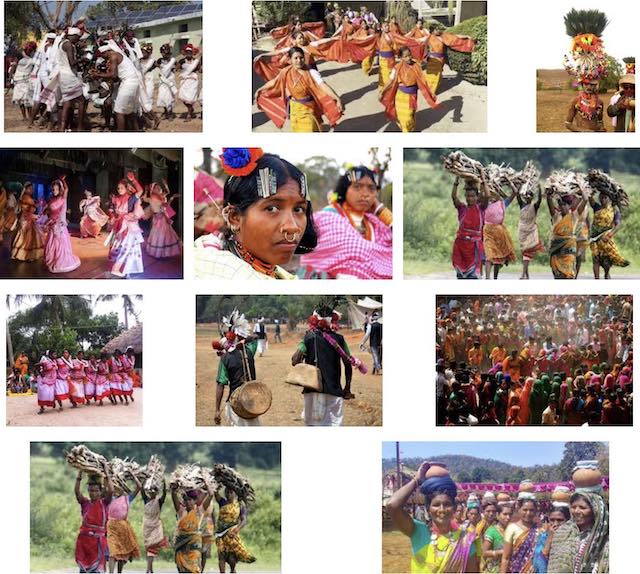
Indian online periodicals and platforms | Images view >>
~ ~ ~
Personalize your CustomSearch by combining other search words >>
(e.g. name of a tribal community and region, a craft, or dance and puppetry)
Research: explore PhD theses from all over India
Shodhganga (Open Access)
[Bold typeface added above for emphasis]
“Kerala: Path we’ve taken favours privileged” – Commentary by K.S. Madhavan (University of Calicut) in Times of India >>
See also
Biodiversity and development – Kerala
Childhood – Kerala | Childrens rights: UNICEF India | Safe search
Childrens rights: English or Malayalam (UNICEF India)
eBook | Background guide for education
Education and literacy | Right to education
Kerala | State wise ST list (Scheduled Tribes)
Recommendations by the Expert Committee on Tribal Health
Tribal schools and educational projects – Kerala
Video | M.S. Swaminathan on Biodiversity and the sharing of resources
Video | Trailer to “Have you seen the arana?” – Kerala
Vulnerable tribal groups – Kerala
Women | Safe search | President Droupadi Murmu on women’s empowerment