Eco-spirituality in the face of climate change >>
Kaani community >>
United Nations on climate change >>
ATREE at Biligiri Rangaswamy Wildlife Sanctuary
The process, while documenting and archiving a vast resource of places and stories, also provided a critical understanding of the ways Soligas interacted with the landscape. ATREE used formal cartographic instruments such as GIS-enabled devices, to locate places and names that Soligas identified with in mainstream maps. ATREE has developed maps – Kannada, English – presenting the Soliga narrative in consultation with Soligas. These are available as posters for wider dissemination. This is the first effort by Soligas to re-engage with the landscape after their displacement and curtailment of rights since the establishment of the protected area. […]
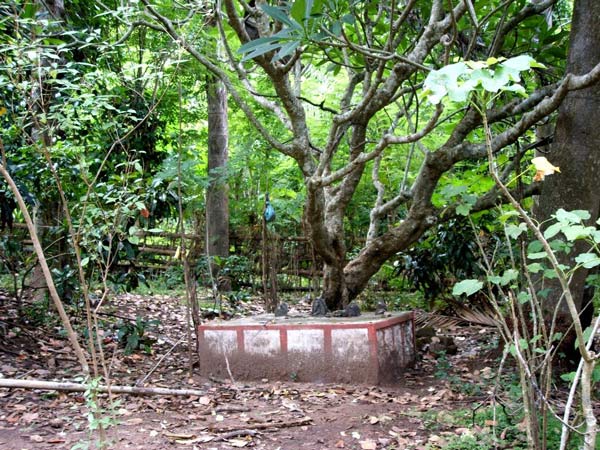
Mapping sacred natural sites (SNS) in BRT
ATREE mapped sacred natural sites in BRT wildlife sanctuary to understand the historical and cultural ecologies of the Soligas who have inhabited the landscape for centuries. The process, while documenting and archiving a vast resource of places and stories, also provided a critical understanding of the ways Soligas interacted with the landscape.
Recognition of Forest Rights Act (RFRA)
The Conservation and Livelihoods programme’s focus on co-management finds resonance in the recently enacted RFRA 2006, offering policy space to strengthen community initiatives in governance, while also providing for secure tenure for tribals and traditional forest dwellers to stake claims over land they have cultivated since centuries.
After the enactment of the RFRA in December 2006, several workshops and meetings were organized in BR Hills to disseminate information on the Act among community leaders and members. Among the significant initial workshops include a workshop organized in collaboration with Soliga Abhivruddhi Sangha (SAS), Vivekananda Girijan Kalyan Kendra (VGKK) and Kalpavriksh towards disseminating the key features of the Act among members of the Soliga community. Subsequently ATREE, in collaboration with SAS, organized several workshops to develop capacities of Soligas towards claiming rights under the Act. […]
As part of evidence and rights to access places of cultural importance, the mapping of sacred sites, initiated with ATREE, was also seen as an important activity that would provide evidence about Soliga presence in the landscape, their access to, and protection of sites of cultural importance. […]
Networks with other organisations have been a strong point of the BRT conservation education effort. Kalpavriksh, in collaboration with ATREE and VGKK, prepared a teacher resource handbook and CD on conservation education, called ‘Forests Alive’. The handbook represents participatory experiments and exercises carried out in BRT with the Soliga community. It can be easily adapted to different contexts too. […]
Source: “ATREE at Biligiri Rangaswamy Wildlife Sanctuary”, Ashoka Trust for Research in Ecology and the Environment (ATREE)
URL: http://atree.org/ccc_brt
Date visited: 25 December 2020
Sacred Natural Sites are the world’s oldest protected places. This book focuses on a wide spread of both iconic and lesser known examples such as sacred groves of the Western Ghats (India), Sagarmatha /Chomolongma (Mt Everest, Nepal, Tibet – and China), the Golden Mountains of Altai (Russia), Holy Island of Lindisfarne (UK) and the sacred lakes of the Niger Delta (Nigeria). The book illustrates that sacred natural sites, although often under threat, exist within and outside formally recognised protected areas, heritage sites. Sacred natural sites may well be some of the last strongholds for building resilient networks of connected landscapes. They also form important nodes for maintaining a dynamic socio-cultural fabric in the face of global change. The diverse authors bridge the gap between approaches to the conservation of cultural and biological diversity by taking into account cultural and spiritual values together with the socio-economic interests of the custodian communities and other relevant stakeholders. […]
“Is scientific knowledge in conflict with religious sentiment? This book answers the question through the various case studies cited from Africa, the Indian subcontinent, South America, Russia, China and the United Kingdom, [and] shows that knowledge enhances understanding, and deepens sentiment regarding nature.” – Manjusha Misra, School of Planning and Architecture, Bhopal, International Journal of Environmental Studies.
Source: Sacred Natural Sites: Conserving Nature and Culture (Routledge, 2010)
URL: https://www.routledge.com/Sacred-Natural-Sites-Conserving-Nature-and-Culture/Verschuuren-Wild-Mcneely-Oviedo/p/book/9781849711678
Date visited: 25 December 2020
“The educational establishment has entrenched interests within it for whom the improvement of Adivasi education is not a priority and who may even look down upon them as second-class citizens.” – Amman Madan, Rama Sastry and B Ramdas in “Social Movements and Educational Change: A Case Study of the Adivasi Munnetra Sangam” | Learn more >>
Search Worldcat.org for publications by reputed authors (select “Open Content/Open Access” for freely downloadable content)
Search tips
Combine the name of any particular state, language or region with that of any tribal (Adivasi) community.
Ask a question that includes “tribal” or “Adivasi”, for instance: “Adivasi way of life better?” (or “tribal way of life worse?”)
Add keywords of special interest (music, poetry, dance just as health, sacred grove and biodiversity); learn about the rights of Scheduled Tribes such as the “Forest Rights Act” (FRA); and the United Nations “Declaration on the Rights of Indigenous Peoples”, “Universal Declaration of Human Rights”, “women’s rights”, or “children’s right to education”.
Specify any particular issue or news item (biodiversity, bonded labour and human trafficking, climate change, ecology, economic development, ethnobotany, ethnomedicine, global warming, hunter-gatherers in a particular region or state, prevention of rural poverty, water access).
[Bold typeface added above for emphasis]
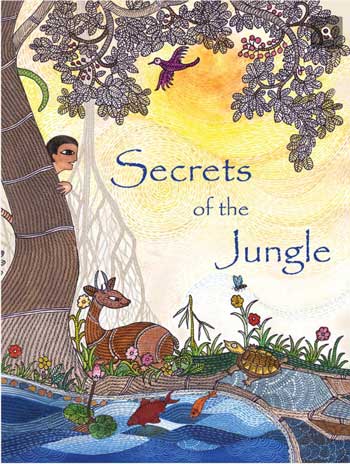
An activity book about the Central Indian forests, its wildlife and its people
https://kalpavriksh.org/our-store/secrets-of-the-jungle/
More about Kalpavriksh >>
Resources for educators >>
Find scholarly books, poetry and fiction relating to tribal culture – Indian publishers
List of sites covered by this Google SafeSearch engine
https://www.alephbookcompany.com
More SafeSearch on this website
Search tips
Combine the name of any particular state, language or region with that of any tribal (Adivasi) community.
Add keywords of special interest (music, poetry, dance just as health, sacred grove and biodiversity); learn about the rights of Scheduled Tribes such as the “Forest Rights Act” (FRA); and the United Nations “Declaration on the Rights of Indigenous Peoples”, “Universal Declaration of Human Rights”, “women’s rights”, or “children’s right to education”.
Ask a question that includes “tribal” or “Adivasi”, for instance: “Adivasi way of life better?” (or “tribal way of life worse?”)
Specify any particular issue or news item (biodiversity, bonded labour and human trafficking, climate change, ecology, economic development, ethnobotany, ethnomedicine, global warming, hunter-gatherers in a particular region or state, prevention of rural poverty, water access).
For official figures include “scheduled tribe ST” along with a union state or region: e.g. “Chhattisgarh ST community”, “Himalayan tribe”, “Scheduled tribe Tamil Nadu census”, “ST Kerala census”, “Particularly Vulnerable Tribal Group Jharkhand”, “PVTG Rajasthan”, “Adivasi ST Kerala”, “Adibasi ST West Bengal” etc.
SafeSearch browser tips
If your (mobile) browser fails to display “embedded” media contents, Google maps and SafeSearch windows
Try another browser like Firefox, Chrome or Safari available on your device
Ensure your favourite browser is up to date
Close your present browser
Check your browser and mobile (gsm) settings:
e.g. permission for video or JavaScript
(seen under Preferences >Security >Enable JavaSript)
Restart your computer (smartphone, tablet)
Reconnect to your wifi network or connect to a different one
On some iPhone models the following helps:
>Settings >Safari >scroll down to:
SETTING FOR WEBSITES
Enable “Request Desktop Website” (All Websites) temporarily
Return to the map-post in Safari and “Reload”
Return to >Settings and disable “Request Desktop Website” again
Return to the post in Safari and “Reload”which should now display “embedded” contents as intended (with the convenience of browsing the mobile version on a small screen)
Note: similar solutions may also work with other mobile operating systems.
See also
Adverse inclusion | Casteism | Rural poverty
Anganwadi | Community facilities | Ekalavya
Demographic Status of Scheduled Tribe Population of India (Census figures 2011)
Fact checking | Figures, census and other statistics
Human Rights Commission (posts) | www.nhrc.nic.in (Government of India)
Search tips | Names of tribal communities, regions and states of India
“The world sells humans. What kind of world is this?” – Hindi Movie “Kamla” revisited
“What is the Forest Rights Act about?” – Campaign for Survival and Dignity
“Who are Scheduled Tribes?” – Government of India (National Commission for Scheduled Tribes, NCST)
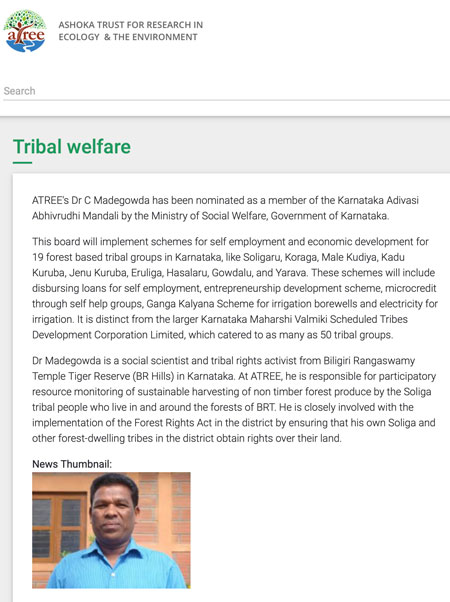
Learn more about Adivasi rights in Karnataka: Participatory resource monitoring, implementation of the Forest Rights Act and welfare schemes | Research on related issues undertaken by Azim Premji University (Bengaluru) >>
Learn more
Atree.org | Ashoka Trust for Research in Ecology & the Environment (posts)
Biodiversity | Biodiversity hotspot | Hyderabad biodiversity pledge
Climate change | Audio | The Climate Question (BBC Podcast)
eBook | Background guide for education
Ecology and environment | Eco tourism | Tourism | Wildlife tourism
Environmental history and what makes for a civilization – Romila Thapar
Equations blog (Equitable Tourism Options)
Forest Rights Act (FRA) | Hunter-gatherers | Illegal mining | Legal rights over forest land
Information provided by Indian government agencies and other organizations (FAQ)
Nature and wildlife | Crocodile | Elephant | Tiger | Mangrove forest | Trees
PARI’s tales from tiger territory | People’s Archive of Rural India (PARI)
Shola Trust | Nilgiri Biosphere
Water and development – India’s tribal communities
Western Ghats – tribal heritage & ecology
What is the Forest Rights Act about?
Who is a forest dweller under this law, and who gets rights?