Sample from the search results for “santal dance video”: Women and men practicing “Santal Folk Dance” together in a public park – Published by ansigovin on Nov 2, 2012
“Traditional Dance in South Asia” by Rolf Killius
Dance and music are the oldest and most original art forms in the world and especially numerous and developed in South Asia. Thus the present-day practice of dance relates to the most ancient past; one could say that it is contemporary and traditional at the same time. […] One could group South Asia Dance culture as follows:
The Adivasi – the indigenous communities of south Asia sometimes also called ‘tribal’ – community dances. Although there are some common cultural traits within the tribal communities in south Asia, there are, for instance, huge differences between groups in south India, the central tribal belt of India, the north-eastern regions of Pakistan, different parts of Bangladesh, or the north-east of India.
There are the rural community dances genres. These art forms – like the Adivasi dances – are nearly always related to life-cycle events (such as birth, puberty, marriage and death), to the cycle of the agricultural year, or are ritualistic as they relate to local religions, Hinduism, Islam, Christianity, or Buddhism. In contrast to the tribal dances, rural genres (as much as music) are often performed by professional or at least specialised artist groups.
Some dances, for instance the Chau dance of central and east India, have reached a regional importance and are generally more stylised than the village dances.
Finally there are highly stylised, specialised and structured art dances such as Kathakali, Bharatanatyam, Manipuri, Kathak, Odissi, Sattriya, Kuchipudi, Kudiyattam or Mohiniyattam. All of them have a regional origin, but they are regarded as national, classical or south Asian dances.
Especially within the tribal and rural traditions, musical performances often feature specialised dancers and community dance. In nearly all tribal villages, men, women and children dance together on many occasions. As with singing and the playing of musical instruments here the average knowledge and skills are generally higher than in any other south Asian communities.
Even in rural and tribal villages one can observe that participation in dance has been declining due to the impact of the massive film industry and television. […]
There are also positive developments such as the growing public interest in rural and tribal music and dance and an interaction of contemporary and traditional dancers and dance genres. […]
Source: “Traditional Dance in South Asia” by Rolf Killius
Address : https://www.rolfkillius.com/research_dance.html
Date Visited: 3 January 2023
The author’s Video channel: https://www.youtube.com/@RolfKillius/videos
[Bold typeface added above for emphasis]
Search Worldcat.org for publications by reputed authors (select “Open Content/Open Access” for freely downloadable content)
Search tips
Combine the name of any particular state, language or region with that of any tribal (Adivasi) community.
Ask a question that includes “tribal” or “Adivasi”, for instance: “Adivasi way of life better?” (or “tribal way of life worse?”)
Add keywords of special interest (music, poetry, dance just as health, sacred grove and biodiversity); learn about the rights of Scheduled Tribes such as the “Forest Rights Act” (FRA); and the United Nations “Declaration on the Rights of Indigenous Peoples”, “Universal Declaration of Human Rights”, “women’s rights”, or “children’s right to education”.
Specify any particular issue or news item (biodiversity, bonded labour and human trafficking, climate change, ecology, economic development, ethnobotany, ethnomedicine, global warming, hunter-gatherers in a particular region or state, prevention of rural poverty, water access).
Learn more
Find scholarly books, poetry and fiction relating to tribal culture – Indian publishers
List of sites covered by this Google SafeSearch engine
https://www.alephbookcompany.com
More SafeSearch on this website
Search tips
Combine the name of any particular state, language or region with that of any tribal (Adivasi) community.
Add keywords of special interest (music, poetry, dance just as health, sacred grove and biodiversity); learn about the rights of Scheduled Tribes such as the “Forest Rights Act” (FRA); and the United Nations “Declaration on the Rights of Indigenous Peoples”, “Universal Declaration of Human Rights”, “women’s rights”, or “children’s right to education”.
Ask a question that includes “tribal” or “Adivasi”, for instance: “Adivasi way of life better?” (or “tribal way of life worse?”)
Specify any particular issue or news item (biodiversity, bonded labour and human trafficking, climate change, ecology, economic development, ethnobotany, ethnomedicine, global warming, hunter-gatherers in a particular region or state, prevention of rural poverty, water access).
For official figures include “scheduled tribe ST” along with a union state or region: e.g. “Chhattisgarh ST community”, “Himalayan tribe”, “Scheduled tribe Tamil Nadu census”, “ST Kerala census”, “Particularly Vulnerable Tribal Group Jharkhand”, “PVTG Rajasthan”, “Adivasi ST Kerala”, “Adibasi ST West Bengal” etc.
SafeSearch browser tips
If your (mobile) browser fails to display “embedded” media contents, Google maps and SafeSearch windows
Try another browser like Firefox, Chrome or Safari available on your device
Ensure your favourite browser is up to date
Close your present browser
Check your browser and mobile (gsm) settings:
e.g. permission for video or JavaScript
(seen under Preferences >Security >Enable JavaSript)
Restart your computer (smartphone, tablet)
Reconnect to your wifi network or connect to a different one
On some iPhone models the following helps:
>Settings >Safari >scroll down to:
SETTING FOR WEBSITES
Enable “Request Desktop Website” (All Websites) temporarily
Return to the map-post in Safari and “Reload”
Return to >Settings and disable “Request Desktop Website” again
Return to the post in Safari and “Reload”which should now display “embedded” contents as intended (with the convenience of browsing the mobile version on a small screen)
Note: similar solutions may also work with other mobile operating systems.
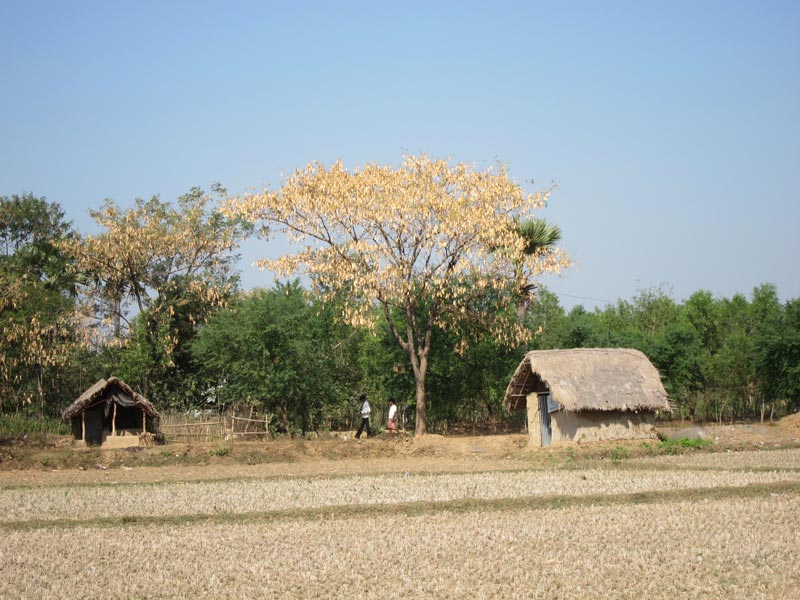
Photo © Ludwig Pesch
Learn more about a wide range of issues
including Education and literacy, Health and nutrition & Ethnobotany >>
UNESCO World Heritage Centre | Backup: PDF-Repository >>
Learn more about the status and spread of Santali in different regions of India: