In Padutola village, Chhattisgarh, the Gund tribals still carry out the age-old customs and practices that make their culture unique. […]
Scheduled Tribes of India comprise of 15% of the total population, varying anywhere between 0.04% (Goa) to 94% (Mizoram) of the state population. The Constitution of India recognizes 645 distinct tribes under the Scheduled Tribe category. This allows the members of these tribes access to various protective arrangements, benefits and resources that may help to bridge the gap between the disadvantaged and advantaged.
However, guaranteeing the preservation of tribal culture is more difficult than it sounds. With modernization well under way, developmental projects and commercial forestry have displaced over 10 million tribal people. Resulting in a loss of traditional livelihood, many disperse to cities where they hope to carve a future, at the same time losing out on their community life and heritage.
The members of the Gund community in Padutola have managed not only to keep their unique culture alive, but they celebrate it with a vigour that promises to keep it blooming. As Bhan Sahu mentions, “… the Gund tribals are an inspiration to the entire tribal community.”
Source: “Adivasi Traditions Re-Emerge” by Rajyashri Goody | IndiaUnheard
Address : http://indiaunheard.videovolunteers.org/bhan/adivasi-traditions-re-emerge/
Date Visited: Thu May 17 2012 19:57:28 GMT+0200 (CEST)
See also
Adverse inclusion | Casteism | Rural poverty
Anganwadi | Community facilities | Ekalavya
Demographic Status of Scheduled Tribe Population of India (Census figures 2011)
Fact checking | Figures, census and other statistics
Human Rights Commission (posts) | www.nhrc.nic.in (Government of India)
Search tips | Names of tribal communities, regions and states of India
“The world sells humans. What kind of world is this?” – Hindi Movie “Kamla” revisited
“What is the Forest Rights Act about?” – Campaign for Survival and Dignity
“Who are Scheduled Tribes?” – Government of India (National Commission for Scheduled Tribes, NCST)
Up-to-date reports by Indian journalists and commentators
To search Indian periodicals, magazines, web portals and other sources safely, click here. To find an Indian PhD thesis on a particular tribal community, region and related issues, click here >>
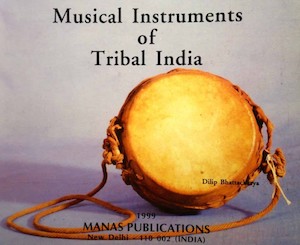
Musical Instruments of Tribal India
by Dilip Bhattacharya >>
See also
Audio | Santali Traditional and Fusion Songs: Ghosaldanga Bishnubati Adibasi Trust – West Bengal
Childhood | Child marriage | Children’s right to Education
Crafts and visual arts | Masks
India’s tribal, folk and devotional music: Secular and ceremonial songs
Memory of the World Programme – Unesco
Music and dance | Musicology | Adivasi music and the public stage by Jayasri Banerjee
Video | Banam lutes and fiddles of the Santal people – Jharkhand & West Bengal
Video | Celestial Dancers of Manipur
Video | Cultural traditions of the Halakki people – Karnataka
Video | Khasi musical heritage of Meghalaya
Video | Kota women’s dance: Shivaratri celebrations – Nilgiris – Tamil Nadu
Video | Santali video album “Ale Ato” (Our Village, Part 1 of 2) – West Bengal
Video | South Gujarat tribal music documentation by Bhasha – Gujarat
Video | Tribes in Transition-III: “Indigenous Cultures in the Digital Era”
Video | Safe contents for educational use on many topics (music, visual arts and more)
Research: explore PhD theses from all over India
Shodhganga (Open Access)