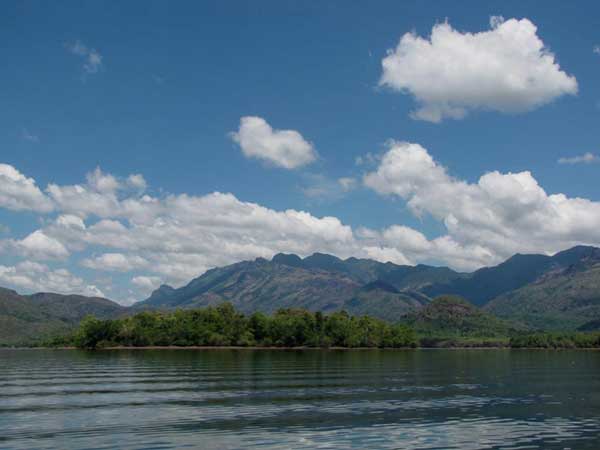
Photo courtesy Davidson Sargunam >>
Facts and figures: India’s biological, cultural and geographic diversity
Spread over 3,287,240 km2 and despite a total human population of over 1,210,000,000, India represents a wide spectrum of biological, cultural and geographic diversity. It has been identified as one of the top 12 global biodiversity hotspots and has 91 eco-cultural zones inhabited by 4,635 ethnic communities. India also has amongst the largest indigenous/tribal population, constituting 8.08% of the country’s population, representing 461 tribes. The term ‘Indigenous Peoples’ is not officially recognized in the country, instead the Constitution of India uses the term ‘Scheduled Tribes’. The total forest cover is estimated to be approximately 20% of the total area of the country. About 1,70,379 villages with a population of 10,674,334 inhabit areas in close proximity of forests.
Source: RECOGNITION AND SUPPORT OF ICCAs IN INDIA by Neema Pathak Broome and Tushar Dash, p. 4 | PDF-Repository
URL: https://kalpavriksh.org/wp-content/uploads/2021/01/IndiaICCARecognition_Final_SEPT2012-as-published.pdf
Date Visited: 10 March 2025
Kanyakumari: Calling for the preservation of Kaani dialect by all means, Sahadevan Kaani, a clan leader rued that the dialect is fast vanishing and the present generation is not aware of it due to non-usage in educational institutions and public discourses. […]
Environmental educator from tribal foundation, S S Davidson, who is documenting the Kaani dialect, said that the mother tongue of the tribe is not used in schools, but two other languages like Tamil and English are forced upon them. They speak an admixture of Tamil and Malayalam, called Kaani Pasha or Malam Pasha. […]
Full report: Times of India, Madurai, 23 February 2018
Kanyakumari: Calling for the preservation of Kaani dialect by all means, Sahadevan Kaani, a clan leader rued that the dialect is fast vanishing and the present generation is not aware of it due to non-usage in educational institutions and public discourses.
He was speaking during the International Mother Tongue Day, which was observed by the forest dwelling Kaani indigenous people at Thatchamalai tribal settlement at Pechipaarai in Kanyakumari district on February 21.
Sahadevan Kaani said that the shift in lifestyle with latest communication tools also had made immense metamorphism in the language that many words are not in usage among the indigenous communities.
He said that the language with its natural components should be preserved by all means.
Environmental educator from tribal foundation, S S Davidson, who is documenting the Kaani dialect, said that the mother tongue of the tribe is not used in schools, but two other languages like Tamil and English are forced upon them. They speak an admixture of Tamil and Malayalam, called Kaani Pasha or Malam Pasha.
He said that as per UN statistics, at least 43% of the estimated 6,000 languages spoken in the world are endangered. Only a few hundred languages have genuinely been given a place in education systems and public domain, and less than a hundred are used in the digital world.
International Mother Language Day has been observed every year since February 2000 to promote linguistic and cultural diversity and multilingualism, he said.
Source: https://timesofindia.indiatimes.com/city/madurai/vanishing-kaani-dialect-needs-to-be-preserved/articleshow/63035668.cms
Accessed: 25 February 2018
Search Worldcat.org for publications by reputed authors (select “Open Content/Open Access” for freely downloadable content)
Search tips
Combine the name of any particular state, language or region with that of any tribal (Adivasi) community.
Ask a question that includes “tribal” or “Adivasi”, for instance: “Adivasi way of life better?” (or “tribal way of life worse?”)
Add keywords of special interest (music, poetry, dance just as health, sacred grove and biodiversity); learn about the rights of Scheduled Tribes such as the “Forest Rights Act” (FRA); and the United Nations “Declaration on the Rights of Indigenous Peoples”, “Universal Declaration of Human Rights”, “women’s rights”, or “children’s right to education”.
Specify any particular issue or news item (biodiversity, bonded labour and human trafficking, climate change, ecology, economic development, ethnobotany, ethnomedicine, global warming, hunter-gatherers in a particular region or state, prevention of rural poverty, water access).
Research: explore PhD theses from all over India
Shodhganga (Open Access)
See also
Adivasi Academy & Museum of Adivasi Voice at Tejgadh | Lecture “A View of Higher Education in India”
Anganwadi | Community facilities | Ekalavya
Appropriate education for Adivasi children – the Vidyodaya School model at Gudalur
Bringing indigenous knowledge systems into a “pedagogy of the collective”
Childhood | Children’s books | Childrens rights: Education | UNICEF India | Safe search
People’s Linguistic Survey of India | Volumes (PLSI) | PeoplesLinguisticSurvey.org
Multi-lingual education | Residential school | Ekalavya
Multilingual education is a pillar of intergenerational learning – Unesco
Santali education | Teaching Santal children by Boro Baski
Unesco | Unicef | Unicef India | United Nations
United Nations International Days and Weeks
Video | “Nations don’t make us human – languages make us human”: Ganesh Devy
Women | Safe search | President Droupadi Murmu on women’s empowerment