Learn more about India’s tribal communities – their cultural heritage, current conditions and aspirations – with the help of the links seen below
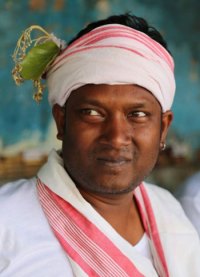
“We have to write our own stories, about our issues, from our own perspectives”
Abhay Xaxa >>
Despite their vast differences, anthropologists, including [Verrier] Elwin and [G.S.] Ghurye, as well as Srinivas and other Indian public figures and intellectuals, effectively erased or negated tribes’ worldviews and beliefs. When discussing the materialistic well-being of tribes, many anthropologists and other thinkers have also sometimes perpetuated a “saviour complex,” portraying tribes as bereft of the agency to express their own aspirations, and seeing it necessary to salvage tribal people from the clutches of their insubstantial living conditions without a deep consideration of how their ways of life have thrived in the past. […]
Interventions intending to impose religion onto tribes have attempted to assimilate them into mainstream society by diluting their uniqueness. For tribes, the links between culture and religion are integral to shaping their ways of life. […]
Source: “Uncivilising the Mind: How anthropology shaped the discourse on tribes in India” by Richard Kamei (Caravan Magazine, 1 March 2020)
URL: https://caravanmagazine.in/books/anthropologists-tribes-india
Date Visited: 6 July 2021
Find scholarly books, poetry and fiction relating to tribal culture – Indian publishers
List of sites covered by this Google SafeSearch engine
https://www.alephbookcompany.com
More SafeSearch on this website
Search tips
Combine the name of any particular state, language or region with that of any tribal (Adivasi) community.
Add keywords of special interest (music, poetry, dance just as health, sacred grove and biodiversity); learn about the rights of Scheduled Tribes such as the “Forest Rights Act” (FRA); and the United Nations “Declaration on the Rights of Indigenous Peoples”, “Universal Declaration of Human Rights”, “women’s rights”, or “children’s right to education”.
Ask a question that includes “tribal” or “Adivasi”, for instance: “Adivasi way of life better?” (or “tribal way of life worse?”)
Specify any particular issue or news item (biodiversity, bonded labour and human trafficking, climate change, ecology, economic development, ethnobotany, ethnomedicine, global warming, hunter-gatherers in a particular region or state, prevention of rural poverty, water access).
For official figures include “scheduled tribe ST” along with a union state or region: e.g. “Chhattisgarh ST community”, “Himalayan tribe”, “Scheduled tribe Tamil Nadu census”, “ST Kerala census”, “Particularly Vulnerable Tribal Group Jharkhand”, “PVTG Rajasthan”, “Adivasi ST Kerala”, “Adibasi ST West Bengal” etc.
SafeSearch browser tips
If your (mobile) browser fails to display “embedded” media contents, Google maps and SafeSearch windows
Try another browser like Firefox, Chrome or Safari available on your device
Ensure your favourite browser is up to date
Close your present browser
Check your browser and mobile (gsm) settings:
e.g. permission for video or JavaScript
(seen under Preferences >Security >Enable JavaSript)
Restart your computer (smartphone, tablet)
Reconnect to your wifi network or connect to a different one
On some iPhone models the following helps:
>Settings >Safari >scroll down to:
SETTING FOR WEBSITES
Enable “Request Desktop Website” (All Websites) temporarily
Return to the map-post in Safari and “Reload”
Return to >Settings and disable “Request Desktop Website” again
Return to the post in Safari and “Reload”which should now display “embedded” contents as intended (with the convenience of browsing the mobile version on a small screen)
Note: similar solutions may also work with other mobile operating systems.
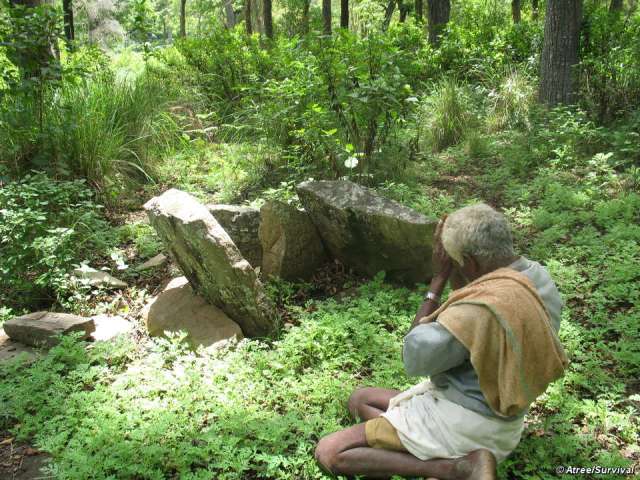
Learn more about the Soliga community in Karnataka >>
“We have a special responsibility to document, monitor and conserve our most precious asset” – Kamaljit S. Bawa in “Our biodiversity, our life, our future” >>
Facts and figures: India’s biological, cultural and geographic diversity
Spread over 3,287,240 km2 and despite a total human population of over 1,210,000,000, India represents a wide spectrum of biological, cultural and geographic diversity. It has been identified as one of the top 12 global biodiversity hotspots and has 91 eco-cultural zones inhabited by 4,635 ethnic communities. India also has amongst the largest indigenous/tribal population, constituting 8.08% of the country’s population, representing 461 tribes. The term ‘Indigenous Peoples’ is not officially recognized in the country, instead the Constitution of India uses the term ‘Scheduled Tribes’. The total forest cover is estimated to be approximately 20% of the total area of the country. About 1,70,379 villages with a population of 10,674,334 inhabit areas in close proximity of forests.
Source: RECOGNITION AND SUPPORT OF ICCAs IN INDIA by Neema Pathak Broome and Tushar Dash, p. 4 | PDF-Repository
URL: https://kalpavriksh.org/wp-content/uploads/2021/01/IndiaICCARecognition_Final_SEPT2012-as-published.pdf
Date Visited: 10 March 2025
“The practice of religious rituals, ceremonies and sanctions by specific cultural groups allow such sacred landscapes to be maintained, emphasizing that humans are intrinsically part of the ecosystem. Taboos, codes and customs specific to activities and community members restrict access to most sacred groves. […] The inclusion of local people’s needs and interests in conservation planning is increasingly accepted as essential, both to promote the well-being of human populations, and to ensure that biodiversity and conservation needs are met in the long-term.” – Nazir A. Pala, Ajeet K. Neg and N.P. Todaria in “The Religious, Social and Cultural Significance of Forest Landscapes in Uttarakhand Himalaya, India” (International Journal of Conservation Science, Vol. 5, Issue 2, April-June 2014) | Sacred groves | Biodiversity and development – Himalaya >>
Facts and figures: India’s biological, cultural and geographic diversity
Spread over 3,287,240 km2 and despite a total human population of over 1,210,000,000, India represents a wide spectrum of biological, cultural and geographic diversity. It has been identified as one of the top 12 global biodiversity hotspots and has 91 eco-cultural zones inhabited by 4,635 ethnic communities. India also has amongst the largest indigenous/tribal population, constituting 8.08% of the country’s population, representing 461 tribes. The term ‘Indigenous Peoples’ is not officially recognized in the country, instead the Constitution of India uses the term ‘Scheduled Tribes’. The total forest cover is estimated to be approximately 20% of the total area of the country. About 1,70,379 villages with a population of 10,674,334 inhabit areas in close proximity of forests.
Source: RECOGNITION AND SUPPORT OF ICCAs IN INDIA by Neema Pathak Broome and Tushar Dash, p. 4 | PDF-Repository
URL: https://kalpavriksh.org/wp-content/uploads/2021/01/IndiaICCARecognition_Final_SEPT2012-as-published.pdf
Date Visited: 10 March 2025
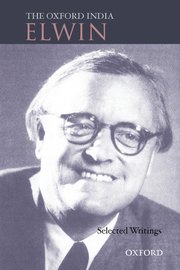
“Is it eccentric to live in beautiful scenery in the hills among some of the most charming people in the country, even though they may be ignorant and poor?” – Verrier Elwin quoted by G.N. Devy in The Oxford India Elwin >>
[Bold typeface added above for emphasis]
“Nehru was fascinated by the spontaneity of tribal culture and their capacity of joy and heroism in spite of their appalling poverty, destitution, and ignorance. […] In Nehru’s view, the process of modernization must not be taken as forcing a sudden break with the tribals past but help them build upon it and grow by a natural process of evolution.” – Dr. Chittaranjan Mishra in “Tribal Philosophy and Pandit Nehru” (Odisha Review, November 2017) | Learn more >>
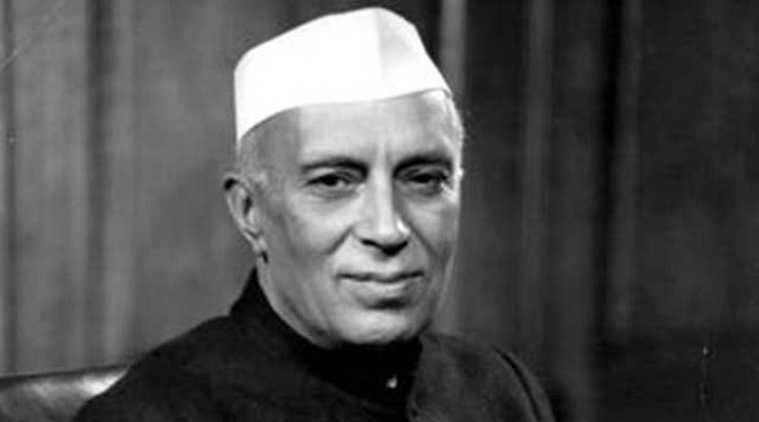
Photo © Indian Express
The current predicament of Adivasis
The current predicament of a vast majority of Adivasis is one of sharp erosion in their livelihoods and their life-worlds. Despite assurances of autonomy (the Fifth and Sixth Schedules, the Panchsheel, PESA 1996, Forests Rights Act 2006) and attempts of focused addressal of Adivasi and Tribal issues (including the establishment of an umbrella outfit, the National Council for Tribal Welfare), there are counter structures and programmes that defy the enabling of genuinely decentralised autonomy and the guarantee of democratic participation. For instance, the recently approved ‘Integrated Action Plan’ in Tribal areas overrides the representation of Adivasis in local issues in decision-making processes and arrogates powers of governance to bureaucrats and specialists.
In addition to such contradictory and conflicting measures, the forces of fast-expanding capital, along with the top-down deployment of development models have resulted in large scale displacement in Adivasi regions. Global capital’s access to mineral wealth has also intensified violence of various forms and degrees.
Source: Ch. 2, “Context and Conditions of Adivasi Life Worlds” (p. 5) in THE EDUCATION QUESTION’ FROM THE PERSPECTIVE OF ADIVASIS: CONDITIONS, POLICIES AND STRUCTURES by National Institute of Advanced Studies (Bangalore), March 2012 & UNICEF | Backup (PDF, 4 MB)
“National development and the development of tribal communities are linked to each other.” – Droupadi Murmu | Speeches by the President of India >>
Indian tribal cultural heritage: museum collections, eBooks, maps & more
Anthropological Survey | Anthropology
Books on tribal culture and related resources
Crafts and visual arts | Homes and utensils Crafts and visual arts | Masks
Cultural heritage | Revival of traditions
Dress and ornaments | Fashion | Tattoo
eBook | Background guide for education
eBook | Free catalogue: Banam: One of the ancient musical instruments of the Santals – West Bengal
eBook | Free catalogue: Museum of Santal Culture (Bishnubati) – West Bengal
Games and leisure time | Martial arts
India’s 28 States and 8 Union Territories – From Andhra Pradesh to West Bengal
Tribal customs, homes and ornaments in South India: Videos and photographs by Vicky Lakshmanan
Tips for using interactive maps
Toggle to normal view (from reader view) should the interactive map not be displayed by your tablet, smartphone or pc browser
For details and hyperlinks click on the rectangular button (left on the map’s header)
Scroll and click on one of the markers for information of special interest
Explore India’s tribal cultural heritage with the help of another interactive map >>