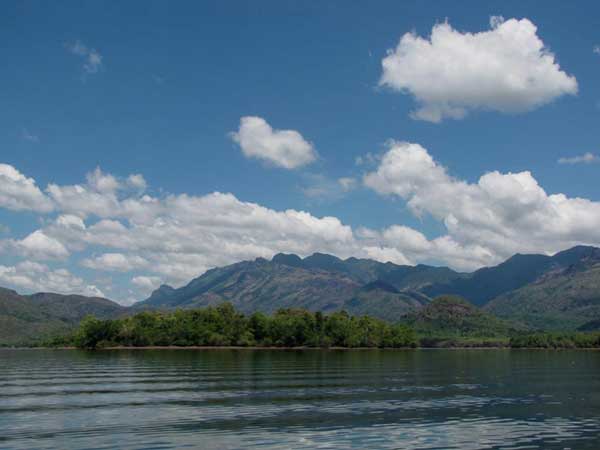
Photo courtesy Davidson Sargunam >>
Facts and figures: India’s biological, cultural and geographic diversity
Spread over 3,287,240 km2 and despite a total human population of over 1,210,000,000, India represents a wide spectrum of biological, cultural and geographic diversity. It has been identified as one of the top 12 global biodiversity hotspots and has 91 eco-cultural zones inhabited by 4,635 ethnic communities. India also has amongst the largest indigenous/tribal population, constituting 8.08% of the country’s population, representing 461 tribes. The term ‘Indigenous Peoples’ is not officially recognized in the country, instead the Constitution of India uses the term ‘Scheduled Tribes’. The total forest cover is estimated to be approximately 20% of the total area of the country. About 1,70,379 villages with a population of 10,674,334 inhabit areas in close proximity of forests.
Source: RECOGNITION AND SUPPORT OF ICCAs IN INDIA by Neema Pathak Broome and Tushar Dash, p. 4 | PDF-Repository
URL: https://kalpavriksh.org/wp-content/uploads/2021/01/IndiaICCARecognition_Final_SEPT2012-as-published.pdf
Date Visited: 10 March 2025
Citizens have become aware of the causes just as the impact, curative, quarantine, rehabilitative aspects of the virus and even become COVID literates by wearing masks, sanitizing and keeping social distance. Another noticeable change concerns food habits and a trend one may call ‘Back to Nature’: growing one’s own vegetables or else, preferring locally grown, fresh or organic fruit and vegetables to packaged and frozen supplies.
Kanyakumari District largely consists of hills and forests. Such an environment is conducive to indigenous medicine known as Siddha and Ayurveda. It is being practiced by over 4,000 physicians and has long been trusted by a majority of the local population. But due to globalization and the rapid spread of communication technology this cultural acceptance is on the decline.
At the same time, many practitioners of modern (allopathic) medicine seek to strengthen immunity among those exposed to the corona virus by also recommending herbal medicine with extracts from betel leaves (peper betle), ginger (zinzinber officinale), cinnamon (cinnamomum zeylanicum), lime (citrus aurantifolia), andrographis paniculata, ociiumum violaceum, pepper (piper nigrum), drum stick (moringa pterygosperma) and turmeric (curcuma domestica).
Source: summary of a report by Davidson Sargunam (emailed 24 December 2020)
ABSTRACT
The London Missionary Society was engaged in missionary service from 1806 in the Southernmost tip of India and later established a hospital, which bears the name of CSI Multi-specialty Hospital in Neyyoor, Tamil Nadu, India with 420 beds. It has a Nursing College with BSC and MSc Nursing degree courses. In India, total lockdown was announced form March 24 and later it was gradually lifted. India recorded only two cases of corona infection on March 2 and later it gained great momentum, having 764 thousand cases in Tamil Nadu with more than 11 thousand fatalities by mid-November, 2020. The Neyyoor hospital has a Covid -19 ward with doctors and health workers. The hospital manages bio-medical waste disposal according to the guidelines of the Indian and state governments. The hospital acts as per the government direction in dead body management of the infected persons and handles them to the relatives for the last rites. Consequent to the constant propagation of the awareness programs people have become Covid literates and a dip is noted in the virus infection. Behavioural modifications are noted in the in the people to live in consonance with Nature. As Kanyakumari district is with hills and forests people usually resort to indigenous forms of healthcare, but thrown away to the background owing to the modern sophistications. Presently, medical concoctions of herbs are recommended by physicians to augment the immunity power of the people to combat the impact of the corona virus.Keywords: Awareness, bio-medical waste, nursing, lockdown, corona, virus
Source: “Results” in the conference paper by Davidson Sargunam titled “A case study of Environmental Management for COID-19 with reference to the CSI Multi-specialty Hospital, Neyyoor, Tamil Nadu, India”
[Bold typeface added above for emphasis]
Learn from M S Swaminathan – a world renowned scientist – how biological diversity contributes to public health, people’s livelihood and environmental security in addition to food security: his call on fellow citizens to use and share resources in a more sustainable and equitable manner; outlining the long journey from the 1992 Earth Summit to a commitment to foster inherited knowledge through India’s Biodiversity Act and Genome Saviour Award; an award intended to reward those who are “primary conservers” – guardians of biological diversity!
More about the work of his foundation which “aims to accelerate use of modern science and technology for agricultural and rural development to improve lives and livelihoods of communities.” – www.mssrf.org | Regarding the issues of food security raised above, and the nutritional value of indigenous grains, seeds and millets, read an in-depth report that concludes that “the tribal food basket has always been diverse and nutritious” >>
Up-to-date reports by Indian experts and journalists
List of sites covered by this Google SafeSearch engine
Academia.edu (platform for academics to share research papers) – www.academia.edu
Archive.org – https://archive.org
Centre for Science and Environment – https://www.cseindia.org
Current Conservation – https://www.currentconservation.org
Development and Cooperation (D+C) https://www.dandc.eu
Down To Earth (India) – www.downtoearth.org.in
India Environment Portal – www.indiaenvironmentportal.org.in
Harnessing Nature Magazine – https://harnessingnature.online
Kalpavriksh Environmental Action Group – https://kalpavriksh.org
Mongabay-India – https://india.mongabay.com
M S Swaminathan Research Foundation – www.mssrf.org
Navdanya (protecting India’s biodiversity based food heritage) – https://navdanya.org
People’s Archive of Rural India – https://ruralindiaonline.org/
Third World Network (Penang, Malaysia) – https://twn.my
The Shola Trust (nature conservation in the Nilgiri region) – www.thesholatrust.org
TribalConnect (“uplift and benefit the community without adversely affecting or changing their vernacular”) – https://tribalconnect.org.in
WorldCat (“the world’s largest library catalog, helping you find library materials online”) – https://worldcat.org
More SafeSearch on this website
Search tips
Combine the name of any particular state, language or region with that of any tribal (Adivasi) community.
Add keywords of special interest (music, poetry, dance just as health, sacred grove and biodiversity); learn about the rights of Scheduled Tribes such as the “Forest Rights Act” (FRA); and the United Nations “Declaration on the Rights of Indigenous Peoples”, “Universal Declaration of Human Rights”, “women’s rights”, or “children’s right to education”.
Ask a question that includes “tribal” or “Adivasi”, for instance: “Adivasi way of life better?” (or “tribal way of life worse?”)
Specify any particular issue or news item (biodiversity, bonded labour and human trafficking, climate change, ecology, economic development, ethnobotany, ethnomedicine, global warming, hunter-gatherers in a particular region or state, prevention of rural poverty, water access).
For official figures include “scheduled tribe ST” along with a union state or region: e.g. “Chhattisgarh ST community”, “Himalayan tribe”, “Scheduled tribe Tamil Nadu census”, “ST Kerala census”, “Particularly Vulnerable Tribal Group Jharkhand”, “PVTG Rajasthan”, “Adivasi ST Kerala”, “Adibasi ST West Bengal” etc.
SafeSearch browser tips
If your (mobile) browser fails to display “embedded” media contents, Google maps and SafeSearch windows
Try another browser like Firefox, Chrome or Safari available on your device
Ensure your favourite browser is up to date
Close your present browser
Check your browser and mobile (gsm) settings:
e.g. permission for video or JavaScript
(seen under Preferences >Security >Enable JavaSript)
Restart your computer (smartphone, tablet)
Reconnect to your wifi network or connect to a different one
On some iPhone models the following helps:
>Settings >Safari >scroll down to:
SETTING FOR WEBSITES
Enable “Request Desktop Website” (All Websites) temporarily
Return to the map-post in Safari and “Reload”
Return to >Settings and disable “Request Desktop Website” again
Return to the post in Safari and “Reload”which should now display “embedded” contents as intended (with the convenience of browsing the mobile version on a small screen)
Note: similar solutions may also work with other mobile operating systems.
What does it mean to be Indigenous?
Indigenous Peoples can be identified according to certain characteristics:
They are politically and socially marginalized.
Most importantly, they self-identify as Indigenous Peoples.
They share an ancestral link with those who inhabited a country or region before they were colonized or before other peoples became dominant.
They have a strong link to particular territories and the surrounding natural resources.
They have distinct social, economic or political systems, which they are resolved to maintain and reproduce.
They have a distinct language, culture and beliefs.
There are more than 5,000 different Indigenous Peoples around the world comprising 476 million people – around 6.2% of the global population. They are spread across more than 90 countries in every region and speak more than 4,000 languages. | Learn more (Amnesty International) >>
Source: “INDIGENOUS PEOPLES’ RIGHTS” by Amnesty International
URL: https://www.amnesty.org/en/what-we-do/indigenous-peoples/
Date Visited: 10 May 2025
Learn more on the Rights of Indigenous Peoples, their Languages & linguistic heritage & Tribal culture worldwide >>
Learn more
Atree.org | Ashoka Trust for Research in Ecology & the Environment (posts)
Biodiversity | Hyderabad biodiversity pledge | Nilgiri Biosphere
Climate change | Audio | The Climate Question (BBC Podcast)
eJournals & eBooks | Background guide for education
eLearning: Center for World Indigenous Studies
Forest Rights Act (FRA) | Hunter-gatherers | Legal rights over forest land
Health and nutrition | Recommendations by the Expert Committee
“The tribal food basket has always been diverse and nutritious”
United Nations on climate change
What is the Forest Rights Act about?
Who is a forest dweller under this law, and who gets rights?