15 DAY EDUCATION PROGRAM (COURSE) TRADITIONAL SYSTEM OF MEDICINES
Rastriya Guni Mission (RGM) trust has been working in the domain of Traditional System of Medicine (TSM) since past 13 years. In order to fulfill its mandate of conservation and promotion of TSM, the trust has discovered and identified more than 1300 gunis in 8 states of India and is now working to re-establish and build capacities of these gunis. With a broad view of spreading the Traditional Knowledge Systmem (TKS) to the wider community, RGM has initiated a 15 days Training Course so that more and more people may become aware of TKS in a manner such that the trainees are able to play their valuable role in the sustainable coinservation and revitalization of Indian TSM
This program is offered to people,students, youth, Man, women, Families etc with an interest in traditional medicine system . The program explores ancient Indian methods for healing (Guni) tradition and maintaining good health.
Source: GUNI MISSION
Address : http://www.gunimission.org/courses.html
Date Visited: Wed Jul 25 2012 18:35:19 GMT+0200 (CEST)
Rashtriya Guni Mission
Rashtriya Guni Mission (RGM) has been working in 8 Northern state of India in the domain of traditional health system. It was established on 2nd march 1998 in Udaipur (Rajasthan). From 1998 to 2006 it has been working for conservation and promotion of traditional health systems as oral institution/ organization. It was legally registered under the National Trust Act 1882/ Registration No. 1863 from New Delhi /Date 21-2-2006 for its operation.All the people involved with RGM have been active in their area for work of promotion of traditional health system. The aim of RGM activities is to strengthen the traditional health systems and its Practitioners (Guni), develop community’s mentality towards traditional health systems, medicinal plants conservation, promote and aware the traditional community knowledge at local level and to inform community importance of knowledge.
Who are the Gunis?
Gunis do not practice any discrimination on basis of caste, religion, etc. They treat the patients either free of cost or at very nominal charges. They deem their skill and knowledge as social service and make no efforts to earn profit out of it. Gunis have full information about the name, identity, quantity and quality of medicinal plants and they acquire knowledge only through Guru – Shishya Parampara. Some exceptional Gunis gain expertise after long years of experiments and practice.
Source: GUNI MISSION
Address : http://www.gunimission.org/
Date Visited: Wed Jul 25 2012 18:27:57 GMT+0200 (CEST)
RGM Goal:
The goal is to provide low cost, easily accessible and effective health services by protection and promotion of Traditional Medicine System at the same time enabling biodiversity conservation by promoting Traditional Knowledge. […]
The Gunis make efforts to provide traditional health services and to empower the Traditional System of Medicine at local level. […]
Mission is supported by an advisory team of highly qualified experts in the fields of health, development, social and legal aspects. This team provides guidance to make the Mission’s management effective and also supports us to carry forward various TSM issues to state as well as national level. […]
RGM Objectives:
- To develop and revitalize community based health care system.
- To promote sustainable conservation and identification of medicinal plants and provide scientific base for validation of traditional health care practices.
- To re-organize the traditional knowledge and methods and re-establish them at community level
- To cater maximum health needs at community level on the basis of community initiative and traditional methods
These practitioners are known by different names at different places in India such as Vaidu, Vaidhyaraj, Amchis, Gaitas. Uche and Danga Bhagat. But by different literature in the world they are called as tribal doctors, bare footed doctors, herbal doctors, tribal medicine man (TMM), herbalist, folk healers, and folk and laymen practitioners.
The international organizations such as WHO, IUCN and WWF has recognized them as traditional health practitioners (THPs).
|
Source: GUNI MISSION
Address : http://www.gunimission.org/about-us.html
Date Visited: Wed Jul 25 2012 18:21:40 GMT+0200 (CEST)

Mongabay-India contributors >>
Mongabay-India is a nonprofit environment and conservation news platform that brings high-quality, original reports from nature’s frontline in India. We look at India’s development through the prism of environment and conservation >>
“From transforming barren lands into forests, to practicing planet-friendly organic farming in the backyards, the permaculture movement is led by youngsters who believe in reconnecting with the ancient roots and re-establishing a connect with nature.” – Babli Yadav (Mongabay-India) in India’s permaculture movement is being taken forward by young people >>
More about Biodiversity | Economy and development | Health and nutrition | Success stories | Women >>
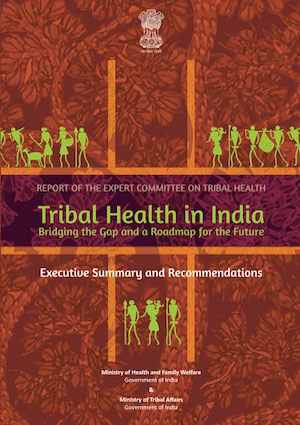
“It was assumed that tribal people have same health problems, similar needs and hence the uniform national pattern of rural health care would be applicable to them as well, albeit with some alteration in population: provider ratio. The different terrain and environment in which they live, different social systems, different culture and hence different health care needs were not addressed.”– Abhay Bang, Chairman, Expert Committee on Tribal health (2018 Report of the Expert Committee on Tribal Health) | Learn more >>
Download Tribal Health in India PDF (35 MB) >>
Searchable file (backup): PDF (OCR 70 MB) >>
Context | Health care for communities identified as “poorest of poor” (PVTGs)
India is designated as the melting pot of so many ethnic groups dwelling at the same time under the common umbrella of a unified nation. Among these varied ethnic groups, some of them have been categorized under article 342 (1) of the constitution and have been labelled as Scheduled Tribe. In the post independent scenario, several schemes for upliftment of STs were run by the government but it was found that all these groups did not come up to the same level of development. Some of them were at much lower strata than others. Thus, in order to ensure the development of these communities, they were, for the first time in 1975-76 (during 5th Five-year plan) and thereafter-in 1993, identified as poorest of poor among the STs and were designated as Primitive Tribal Groups and thereafter constitution of India renamed and declared as Particularly Vulnerable Tribal Groups (PVTGs). Out of the 75 particularly vulnerable tribal groups, 13 are residing in Odisha; they are becoming increasing vulnerable due to loss of their customary habitat. The health troubles of rural areas especially in the tribal areas need a unique concentration, because the tribal people have typical health problem.
Source: 2019 PhD thesis (Abstract) by Jayanta Kumar Nayak titled “Health Seeking Behaviour and Health Care Services among the Hill Kharia Mayurbhanj District Odisha”, Department of Anthropology, Central University of Orissa
URL: http://hdl.handle.net/10603/257651
Date Visited: 21 May 2025
Tribal languages are a treasure trove of knowledge about a region’s flora, fauna and medicinal plants
“Tribal languages are a treasure trove of knowledge about a region’s flora, fauna and medicinal plants. Usually, this information is passed from generation to generation. However, when a language declines, that knowledge system is completely gone.” – Ayesha Kidwai (Centre for Linguistics, School of Language, Literature and Culture Studies, Jawaharlal Nehru University, New Delhi) quoted by Abhijit Mohanty in “Seven decades after independence, many tribal languages in India face extinction threat” | Learn more about the work done by the People’s Linguistic Survey of India and endangered languages worldwide >>
“India’s geographic location at the confluence of three major biogeographic zones – i.e. the Indo-Malayan, the Eurasian and the Afro-Tropical – makes it extremely biodiverse in its genes, species and ecosystems. It is one of the world’s 17 megadiverse countries (Mittermeier et al. 1997). India can boast of over 8.1% of the world’s biodiversity supported on 2.4% of the earth’s surface. An estimated 47,000 identified plant species represent 11% of the world’s flora.” | Learn more: eBook | Disseminating environment related information to improve peoples’ livelihoods >>
“The notion of ‘mainstreaming’ needs to be challenged not just because Adivasi culture is being crushed, but also because Adivasi values and ways of life offer insights that the ‘mainstream’ needs. If we are to halt the destruction of ecosystems, we need to understand how closely biodiversity and cultural diversity are intertwined. Perhaps it is time to reverse the gaze and begin to learn afresh from Adivasis.” – Felix Padel & Malvika Gupta (The Hindu) | Learn more about the role of tribal communities in fostering biodiversity, ethnobotany and cultural diversity | Success stories | Tribal identity >>
“I think that by retaining one’s childhood love of such things as trees, fishes, butterflies and … toads, one makes a peaceful and decent future a little more probable, and that by preaching the doctrine that nothing is to be admired except steel and concrete, one merely makes it a little surer that human beings will have no outlet for their surplus energy except in hatred and leader worship.” – George Orwell | Learn more: Childhood | Customs | Games and leisure time | Literature – fiction | Storytelling >>
Adivasi communities: stewards of India’s cultural heritage and biodiversity
[…] India’s tribal communities — over 104.5 million people, or 8.6 per cent of the population — remain among the most marginalised despite decades of welfare schemes and development promises. In states such as Chhattisgarh, Jharkhand, Bihar, Rajasthan and Odisha, tribal districts consistently record higher poverty levels than non-tribal areas, even as these regions supply land, forests and minerals for the country’s growth. These communities have often been compelled to relinquish their lands for large-scale infrastructure projects, resulting in the erosion of their identity, livelihoods, and future prospects.
It is crucial to recognise the value these communities bring, particularly their eco-friendly lifestyles, which offer important insights into addressing climate-related challenges. For instance, during the 2018 drought in Sundergarh, Odisha, a visit to a remote tribal village revealed thriving vegetation and effective water-harvesting systems. Kiri village in Lahunipara block of Sundergarh district, inhabited by the Paudi Bhuyan community — a Particularly Vulnerable Tribal Group (PVTG) — has demonstrated remarkable resilience.
This observation underscores the importance of learning from traditional ecological knowledge, especially sustainable farming practices that rely on drought-resistant and indigenous seeds.
Adivasi communities, as stewards of India’s cultural heritage and biodiversity, must be central to the nation’s development narrative. Their lives are intricately linked to land, forests and water, yet they face growing threats from climate change, livelihood insecurity and displacement. Addressing these challenges requires more than welfare initiatives; it demands robust enforcement of constitutional rights, substantial public investment and the strengthening of Gram Sabha–based governance. […]
Source: “Union Budget must shift from welfare to rights-based public investment for Adivasi communities” by Debabrat Patra, Sion Kongari & Saurabh Kumar, Down to Earth, 9 February 2026
URL: https://www.downtoearth.org.in/governance/union-budget-must-shift-from-welfare-to-rights-based-public-investment-for-adivasi-communities
Date Visited: 30 June 2026
Find up-to-date information provided by, for and about Indian authors, researchers, officials, and educators
List of sites covered by this Google SafeSearch engine
Ashoka Trust for Research in Ecology and the Environment (ATREE) – www.atree.org
Freedom United – www.freedomunited.org
Government of India (all websites ending on “.gov.in”)
Kalpavriksh Environmental Action Group – https://kalpavriksh.org
Shodhganga (a reservoir of Indian theses) – https://shodhganga.inflibnet.ac.in
Survival International – www.survivalinternational.org
UCLA Digital Library – https://digital.library.ucla.edu
Unesco – https://en.unesco.org
Unesco digital library – https://unesdoc.unesco.org
Unicef – www.unicef.org
United Nations – www.un.org/en
Video Volunteers – www.videovolunteers.org
WorldCat (“the world’s largest library catalog, helping you find library materials online”) – https://worldcat.org
Search tips
Combine the name of any particular state, language or region with that of any tribal (Adivasi) community.
Add keywords of special interest (music, poetry, dance just as health, sacred grove and biodiversity); learn about the rights of Scheduled Tribes such as the “Forest Rights Act” (FRA); and the United Nations “Declaration on the Rights of Indigenous Peoples”, “Universal Declaration of Human Rights”, “women’s rights”, or “children’s right to education”.
Ask a question that includes “tribal” or “Adivasi”, for instance: “Adivasi way of life better?” (or “tribal way of life worse?”)
Specify any particular issue or news item (biodiversity, bonded labour and human trafficking, climate change, ecology, economic development, ethnobotany, ethnomedicine, global warming, hunter-gatherers in a particular region or state, prevention of rural poverty, water access).
For official figures include “scheduled tribe ST” along with a union state or region: e.g. “Chhattisgarh ST community”, “Himalayan tribe”, “Scheduled tribe Tamil Nadu census”, “ST Kerala census”, “Particularly Vulnerable Tribal Group Jharkhand”, “PVTG Rajasthan”, “Adivasi ST Kerala”, “Adibasi ST West Bengal” etc.
SafeSearch browser tips
If your (mobile) browser fails to display “embedded” media contents, Google maps and SafeSearch windows
Try another browser like Firefox, Chrome or Safari available on your device
Ensure your favourite browser is up to date
Close your present browser
Check your browser and mobile (gsm) settings:
e.g. permission for video or JavaScript
(seen under Preferences >Security >Enable JavaSript)
Restart your computer (smartphone, tablet)
Reconnect to your wifi network or connect to a different one
On some iPhone models the following helps:
>Settings >Safari >scroll down to:
SETTING FOR WEBSITES
Enable “Request Desktop Website” (All Websites) temporarily
Return to the map-post in Safari and “Reload”
Return to >Settings and disable “Request Desktop Website” again
Return to the post in Safari and “Reload”which should now display “embedded” contents as intended (with the convenience of browsing the mobile version on a small screen)
Note: similar solutions may also work with other mobile operating systems.