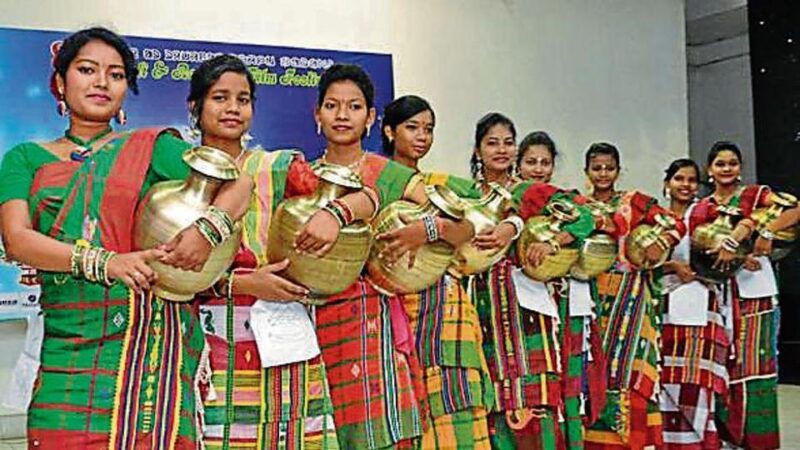
Tribal women walk the ramp in Jharkhand to break stereotypes An independent tribal filmmaking body organised India’s first indigenous beauty pageant, which portrayed tribal women as progressive yet inclined towards their tribal roots. | To read the full article, click here >>
In a bid to break the stereotypes about tribal culture , an independent tribal filmmaking body organised India’s first indigenous beauty pageant, which portrayed tribal women as progressive yet inclined towards their tribal roots.
The Adivasi Moolvasi Janjatiya Miss India (Miss India indigenous) was organised in Jharkhand’s Jamshedpur by the All India Santhali Film Association (AISFA) to showcase tribal culture through its women.
Around 20 tribal women from all around the country participated in the contest. […]
Film director Vinod Kumar said tribal youth were highly talented and with proper training they could get due space in the glamour and fashion world. […]
Tip: For up-to-date information on any of the above topics and persons, use the search window seen below (e.g. “All India Santhali Film Association”, “Indian tribal fashion”, “Adivasi women”, “tribal stereotypes”, “film tribal woman”):
Combine the name of any particular state, language or region with that of any tribal (Adivasi) community.
Add keywords of special interest (music, poetry, dance just as health, sacred grove and biodiversity); learn about the rights of Scheduled Tribes such as the “Forest Rights Act” (FRA); and the United Nations “Declaration on the Rights of Indigenous Peoples”, “Universal Declaration of Human Rights”, “women’s rights”, or “children’s right to education”.
Ask a question that includes “tribal” or “Adivasi”, for instance: “Adivasi way of life better?” (or “tribal way of life worse?”)
Specify any particular issue or news item (biodiversity, bonded labour and human trafficking, climate change, ecology, economic development, ethnobotany, ethnomedicine, global warming, hunter-gatherers in a particular region or state, prevention of rural poverty, water access).
For official figures include “scheduled tribe ST” along with a union state or region: e.g. “Chhattisgarh ST community”, “Himalayan tribe”, “Scheduled tribe Tamil Nadu census”, “ST Kerala census”, “Particularly Vulnerable Tribal Group Jharkhand”, “PVTG Rajasthan”, “Adivasi ST Kerala”, “Adibasi ST West Bengal” etc.
SafeSearch browser tips
If your (mobile) browser fails to display “embedded” media contents, Google maps and SafeSearch windows
Try another browser like Firefox, Chrome or Safari available on your device
Ensure your favourite browser is up to date
Close your present browser
Check your browser and mobile (gsm) settings: e.g. permission for video or JavaScript (seen under Preferences >Security >Enable JavaSript)
Restart your computer (smartphone, tablet)
Reconnect to your wifi network or connect to a different one
On some iPhone models the following helps:
>Settings >Safari >scroll down to: SETTING FOR WEBSITES
Return to >Settings and disable “Request Desktop Website” again
Return to the post in Safari and “Reload”which should now display “embedded” contents as intended (with the convenience of browsing the mobile version on a small screen)
Note: similar solutions may also work with other mobile operating systems.