Integrated Child Development Services (ICDS) is the only major national programme that addresses the health and nutrition needs of children under the age of six. It seeks to provide young children with an integrated package of services, including supplementary nutrition, health care and pre-school education. Since the needs of a young child cannot be addressed in isolation from those of his or her mother, the programme also extends to adolescent girls, pregnant women and nursing mothers. ICDS services are provided through a vast network of ICDS centres, better known as “Anganwadis”.
This section of the website presents a range of action-oriented documents on ICDS, including a reader-friendly “primer”, the “FOCUS report” on children under six, Supreme Court orders, extracts from Commissioners’ reports, government documents, research articles, survey findings, and much more. […]
Source: Right to Food Campaign: Integrated Child Development Services (ICDS)
Address : http://www.righttofoodindia.org/icds/icds_index.html
Date Visited: Sat Sep 10 2011 20:33:18 GMT+0200 (CEST)
Research following children over time finds that being from a Scheduled Caste or a backward tribe substantially increases the probability of a child being stunted — and persistently so.
If the underlying context is not strong for economic growth to generate undernutrition reduction, can India’s nutrition interventions overcome these barriers? […]
This lack of data and strategic analysis also diminishes the effectiveness of Indian civil society to mobilise around nutrition. For example, the Right to Food Campaign’s push for a National Food Security Act makes important demands, but even if some of them are met, they will need transparent monitoring of resource flows to promote accountability of all stakeholders. […]
Source: The Hindu : Opinion / Op-Ed : Transforming child nutrition
Address : http://www.thehindu.com/opinion/op-ed/article2400601.ece
Date Visited: Sat Sep 10 2011 20:53:32 GMT+0200 (CEST)
Learn more
Adivasi Academy & Museum of Adivasi Voice at Tejgadh | Lecture “A View of Higher Education in India”
Anganwadi | Community facilities | Ekalavya
Appropriate education for Adivasi children – the Vidyodaya School model at Gudalur
Childhood | Children’s books | Childrens rights: Education | UNICEF India | Safe search
eBook | Background guide for education
Santali education | Teaching Santal children by Boro Baski
Unesco | Unicef | Unicef India | United Nations
United Nations International Days and Weeks
We cannot let our culture and society stop (interview)
Home, shelter and security as well as music, education, nature, and books for every child
In 1911, the American poet and novelist James Oppenheim wrote the now infamous poem “Bread and Roses“, inspired by the women’s suffrage activist Helen Todd. Working as a factory inspector for the state of Illinois, Todd spent her days listening to women’s accounts of low pay, inequality, and the drudgery of their work. Along with four other women from the Chicago Women’s Club, an association of wealthy middle-class women that had recently established some of the first kindergartens in Chicago, Todd began organising Illinois automobile workers for women’s right to vote in the summer of 1910. Inspired by a discussion she had with a young woman the night before giving a speech, Todd pronounced that the women’s “vote will go toward helping forward the time when life’s Bread, which is home, shelter and security, and the Roses of life, music, education, nature, and books, shall be the heritage of every child that is born in the country“. More than 70 years after the Seneca Falls convention declared women’s universal suffrage as its goal, the seemingly impossible became inevitable, and in 1920 Congress past the Nineteenth amendment to the US Constitution.
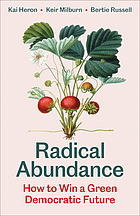
Source: Radical Abundance: How to Win a Green Democratic Future >>
“If a man cannot enjoy the return of spring, why should he be happy in a labour-saving Utopia? … I think that by retaining one’s childhood love of such things as trees, fishes, butterflies and … toads, one makes a peaceful and decent future a little more probable, and that by preaching the doctrine that nothing is to be admired except steel and concrete, one merely makes it a little surer that human beings will have no outlet for their surplus energy except in hatred and leader worship.”
George Orwell quoted in Two Cheers for Democracy (London: Penguin Books 1976), p. 76 | Learn more about Childhood | Childrens rights: UNICEF India | Safe search | Ecology and environment | Misconceptions | Modernity | Seasons and festivals | Social conventions >>
The house, in which British novelist George Orwell was born more than 110 years ago, has been converted into a museum by the Bihar Government >>
SafeSearch: Find educational and children’s books on tribal culture published in India
List of sites covered by this Google SafeSearch engine
https://books.katha.org (Katha Books)
https://publicationsdivision.nic.in
Search tips
Combine the name of any particular state, language or region with that of any tribal (Adivasi) community.
Add keywords of special interest (music, poetry, dance just as health, sacred grove and biodiversity); learn about the rights of Scheduled Tribes such as the “Forest Rights Act” (FRA); and the United Nations “Declaration on the Rights of Indigenous Peoples”, “Universal Declaration of Human Rights”, “women’s rights”, or “children’s right to education”.
Ask a question that includes “tribal” or “Adivasi”, for instance: “Adivasi way of life better?” (or “tribal way of life worse?”)
Specify any particular issue or news item (biodiversity, bonded labour and human trafficking, climate change, ecology, economic development, ethnobotany, ethnomedicine, global warming, hunter-gatherers in a particular region or state, prevention of rural poverty, water access).
For official figures include “scheduled tribe ST” along with a union state or region: e.g. “Chhattisgarh ST community”, “Himalayan tribe”, “Scheduled tribe Tamil Nadu census”, “ST Kerala census”, “Particularly Vulnerable Tribal Group Jharkhand”, “PVTG Rajasthan”, “Adivasi ST Kerala”, “Adibasi ST West Bengal” etc.
SafeSearch browser tips
If your (mobile) browser fails to display “embedded” media contents, Google maps and SafeSearch windows
Try another browser like Firefox, Chrome or Safari available on your device
Ensure your favourite browser is up to date
Close your present browser
Check your browser and mobile (gsm) settings:
e.g. permission for video or JavaScript
(seen under Preferences >Security >Enable JavaSript)
Restart your computer (smartphone, tablet)
Reconnect to your wifi network or connect to a different one
On some iPhone models the following helps:
>Settings >Safari >scroll down to:
SETTING FOR WEBSITES
Enable “Request Desktop Website” (All Websites) temporarily
Return to the map-post in Safari and “Reload”
Return to >Settings and disable “Request Desktop Website” again
Return to the post in Safari and “Reload”which should now display “embedded” contents as intended (with the convenience of browsing the mobile version on a small screen)
Note: similar solutions may also work with other mobile operating systems.
More SafeSearch on this website