Forests mean different things to different people, for biologists and conservationists, an ecosystem has to adhere to certain scientific norms to qualify it as a forest. For strategic planners, forests are “an administrative category implying a desired land use” whether or not trees are included, but it is useful in making claims to “extend the control of the forest service” (Blaikie and Springate-Baginiski, 2007:9). To tribal people, forests involve habitat and identity (Blaikie and Springate- Baginiski, 2007) and are thus inseparably linked to their lives and livelihoods. Because of this reality, several inter-disciplinarians see forests as something linked to human rights for indigenous communities (Brockington et al., 2006).
Advocates of recent forestry sector policy initiatives such as Social Forestry and Joint Forest Management have “professed a deepening concern” for the livelihoods of forest dwellers; yet, the outcomes indicate that “while forests may be improving under state-initiated, participatory programmes, forest dwellers livelihoods have not improved appreciably” (Dasgupta, 2010:5). The situation has only worsened because of increased regulation and reduced local control and access (Springate-Baginski and Blaikie, 2007). […]
There are three important stakeholders on whom rests the successful implementation of the Act [Forest Rights Act (2006)]. This includes the Gram Sabha itself, the Forest Department and the Ministry of Tribal Affairs (Tribal Department in various states); the Tribal Departments are the nodal agencies responsible for the implementation of the Act. Revenue officers at the District and Block level also have a role to play in the finalization of titles, making changes in the official revenue maps etc. Apart from this an institutional framework has been created at different levels of checks and balances, management and redressed structures from the village to the state level. This involves the Forest Rights Committee at the village level, the Sub-Divisional and District level Committees and a final appellate authority of the State Level Monitoring Committee.
Websites:
CG-Net Swara: http://cgnetswara.org/
The Forest Right Act: https://www.forestrightsact.com/home
Forest Rights Act: https://www.fra.org.in
Ministry of Environment and Forests: http://envfor.nic.in/
Source: “An analysis of the impact of the Forest Rights Act (2006) in three states of India” by Rebecca S . David (Edited version of the author’s MPhil Dissertation at the University of Cambridge, UK completed in the year 2014, pp. 1 & 10
URL: https://www.academia.edu/30648733/
Date visited: 11 October 2020
[Bold typeface added above for emphasis]
Ministry of Tribal Affairs: set up with the objective of integrated socio-economic development of the Scheduled Tribes (STs), “the most underprivileged of the Indian Society” | Learn more >>
“Nehru was fascinated by the spontaneity of tribal culture and their capacity of joy and heroism in spite of their appalling poverty, destitution, and ignorance. […] In Nehru’s view, the process of modernization must not be taken as forcing a sudden break with the tribals past but help them build upon it and grow by a natural process of evolution.” – Dr. Chittaranjan Mishra in “Tribal Philosophy and Pandit Nehru” (Odisha Review, November 2017) | Learn more >>
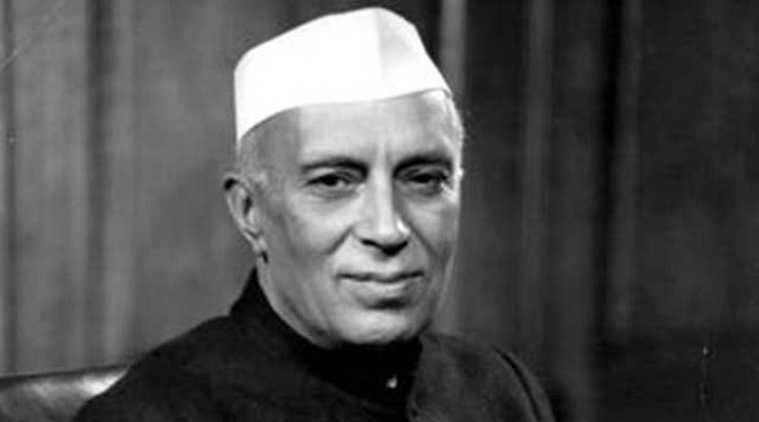
Photo © Indian Express
The current predicament of Adivasis
The current predicament of a vast majority of Adivasis is one of sharp erosion in their livelihoods and their life-worlds. Despite assurances of autonomy (the Fifth and Sixth Schedules, the Panchsheel, PESA 1996, Forests Rights Act 2006) and attempts of focused addressal of Adivasi and Tribal issues (including the establishment of an umbrella outfit, the National Council for Tribal Welfare), there are counter structures and programmes that defy the enabling of genuinely decentralised autonomy and the guarantee of democratic participation. For instance, the recently approved ‘Integrated Action Plan’ in Tribal areas overrides the representation of Adivasis in local issues in decision-making processes and arrogates powers of governance to bureaucrats and specialists.
In addition to such contradictory and conflicting measures, the forces of fast-expanding capital, along with the top-down deployment of development models have resulted in large scale displacement in Adivasi regions. Global capital’s access to mineral wealth has also intensified violence of various forms and degrees.
Source: Ch. 2, “Context and Conditions of Adivasi Life Worlds” (p. 5) in THE EDUCATION QUESTION’ FROM THE PERSPECTIVE OF ADIVASIS: CONDITIONS, POLICIES AND STRUCTURES by National Institute of Advanced Studies (Bangalore), March 2012 & UNICEF | Backup (PDF, 4 MB)
“The forest was never far away from habitation. For instance, excavations of the settlements at Atranjikhera and Hastinapur, which are not too far from Delhi, have yielded evidence of a large variety of forest trees. The Buddhist Canon states that aside from the village and its outskirts, the rest of the land is jungle. Travelling from one town to another meant going through a forest. Therefore, when in exile, the forest was not a physically distant place, although distant in concept.“ – Romila Thapar (Emeritus Professor of History, Jawaharlal Nehru University) in “Forest dwellers in early India – myths and ecology in historical perspective” | Learn more >>
Ādivāsi [ādibāsi] may be used in accordance with local conventions; and increasingly so for official purposes (e.g. in “Conserving Tradition and Practices of Adivasi Communities in India” published on NIDM.gov.in); Dr. Ivy Hansdak clarifies:
“Adivasi – which is derived from Sanskrit – is applied to the dark-skinned or Austro-Asiatic indigenous groups of India (usually those from Eastern India). It is a commonly-used term in Jharkhand, Bihar, West Bengal and Odisha. It is also used by the local Mongoloid tribes of North Eastern India for the migrant workers who were brought in as indentured labourers to work in tea plantations during the colonial period. ‘Tribal’ is a very broad term in the English language and includes all the different indigenous groups of India. The terms ‘indigenous’ and ‘aboriginal’ are not used often as the government claims most groups are indigenous in India. ‘Denotified Tribes’ is only used for those nomadic tribes who were notified as ‘criminal tribes’ during the British Raj [colonial rule]; later they were ‘denotified’ but still bear the stigma.” (emails dated 2020 & 2023)
“Tribal groups (adivasis) in India have often been excluded, marginalized and oppressed by ‘mainstream’ society. In many ways this exclusion, marginalization and oppression is fostered by the way in which ‘mainstream’ society looks at the adivasis – as exotic, dangerous, or ‘primitive’ others.” – Ganesh [G.N.] Devy in A Nomad Called Thief: Reflections on Adivasi Silence and Voice | Classifications in different states >>
“Tribals are subject to oppression and cruelty even after independence and still picked up by the investigating officers to cover up shoddy investigations.” – D.Y. Chandrachud (Chief Justice of India since 9 November 2022) quoted in “Members of De-Notified Tribes Picked Up to Cover Up Shoddy Investigations” | Learn more >>
“Since the Indian Constitution uses the term ‘Scheduled Tribes’ or ‘tribals’ to refer to indigenous communities in India and the colloquial reference used by several indigenous communities themselves is ‘adivasis’ these two terms shall be used interchangeably.” – Rebecca S . David in “An analysis of the impact of the Forest Rights Act (2006) in three states of India” (MPhil University of Cambridge, UK, 2014), p. 1 | Learn more | Classifications in different states >>
“Adivasis are not a homogeneous group; there are over 200 distinct peoples speaking more than 100 languages, and varying greatly in ethnicity and culture.” – Source: World Directory of Minorities and Indigenous Peoples – India | Learn more | Classifications in different states >>
Reports in the Indian press | List of periodicals included in this search >>
Search tips
Combine the name of any particular state, language or region with that of any tribal (Adivasi) community.
Add keywords of special interest (music, poetry, dance just as health, sacred grove and biodiversity); learn about the rights of Scheduled Tribes such as the “Forest Rights Act” (FRA); and the United Nations “Declaration on the Rights of Indigenous Peoples”, “Universal Declaration of Human Rights”, “women’s rights”, or “children’s right to education”.
Ask a question that includes “tribal” or “Adivasi”, for instance: “Adivasi way of life better?” (or “tribal way of life worse?”)
Specify any particular issue or news item (biodiversity, bonded labour and human trafficking, climate change, ecology, economic development, ethnobotany, ethnomedicine, global warming, hunter-gatherers in a particular region or state, prevention of rural poverty, water access).
For official figures include “scheduled tribe ST” along with a union state or region: e.g. “Chhattisgarh ST community”, “Himalayan tribe”, “Scheduled tribe Tamil Nadu census”, “ST Kerala census”, “Particularly Vulnerable Tribal Group Jharkhand”, “PVTG Rajasthan”, “Adivasi ST Kerala”, “Adibasi ST West Bengal” etc.
SafeSearch browser tips
If your (mobile) browser fails to display “embedded” media contents, Google maps and SafeSearch windows
Try another browser like Firefox, Chrome or Safari available on your device
Ensure your favourite browser is up to date
Close your present browser
Check your browser and mobile (gsm) settings:
e.g. permission for video or JavaScript
(seen under Preferences >Security >Enable JavaSript)
Restart your computer (smartphone, tablet)
Reconnect to your wifi network or connect to a different one
On some iPhone models the following helps:
>Settings >Safari >scroll down to:
SETTING FOR WEBSITES
Enable “Request Desktop Website” (All Websites) temporarily
Return to the map-post in Safari and “Reload”
Return to >Settings and disable “Request Desktop Website” again
Return to the post in Safari and “Reload”which should now display “embedded” contents as intended (with the convenience of browsing the mobile version on a small screen)
Note: similar solutions may also work with other mobile operating systems.
Tips for using interactive maps
Toggle to normal view (from reader view) should the interactive map not be displayed by your tablet, smartphone or pc browser
For details and hyperlinks click on the rectangular button (left on the map’s header)
Scroll and click on one of the markers for information of special interest
Explore India’s tribal cultural heritage with the help of another interactive map >>
See also
Adverse inclusion | Casteism | Rural poverty
Anganwadi | Community facilities | Ekalavya
Demographic Status of Scheduled Tribe Population of India (Census figures 2011)
Fact checking | Figures, census and other statistics
Human Rights Commission (posts) | www.nhrc.nic.in (Government of India)
Search tips | Names of tribal communities, regions and states of India
“The world sells humans. What kind of world is this?” – Hindi Movie “Kamla” revisited
“What is the Forest Rights Act about?” – Campaign for Survival and Dignity
“Who are Scheduled Tribes?” – Government of India (National Commission for Scheduled Tribes, NCST)
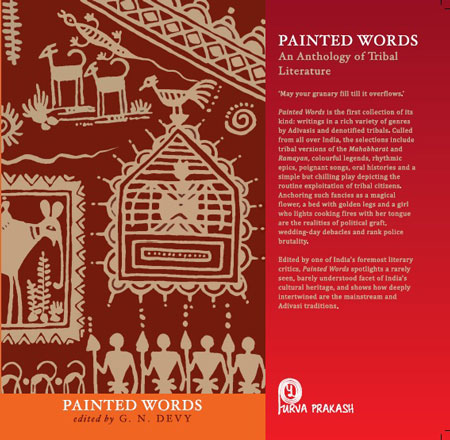
Tribal Literature by G.N. Devy >>
Free eBooks & Magazine: Adivasi literature and languages >>
“India, a union of states, is a Sovereign, Secular, Democratic Republic with a Parliamentary system of Government. The President is the constitutional head of Executive of the Union. In the states, the Governor, as the representative of the President, is the head of Executive. The system of government in states closely resembles that of the Union. There are 28 states and 8 Union territories in the country. Union Territories are administered by the President through an Administrator appointed by him/her. From the largest to the smallest, each State/UT of India has a unique demography, history and culture, dress, festivals, language etc. This section introduces you to the various States/UTs in the Country and urges you to explore their magnificent uniqueness…” – KnowIndia (Government), States and Union Territories (Visited: 2 September 2023)
Learn more about India’s 28 States and 8 Union Territories – From Andhra Pradesh to West Bengal | Nutrition >>