The draft notification of Western Ghats Ecologically Sensitive Area (ESA) covering about 56,825 sq. km has been put in public domain by the Union Environment and Forests Ministry. The notification, dated March 10 [2014], along the lines the Ministry had announced earlier, has left the demarcation of the ESA in Kerala to the State authorities by banking on their evaluation of the Western Ghats boundaries. […]This is slated to be the largest ESA declared under the Environment Protection Act, 1986 in the country. The draft notification signalled the penultimate round of a long lasting debate kicked off by the Union government when in 2010, Environment Minister Jairam Ramesh set up the Western Ghats Ecology Expert Panel headed by ecologist Madhav Gadgil. […]
Unlike the Gadgil report, the Kasturirangan panel took pains to delineate densely inhabited areas from forested patches and take a relative middle-path to balancing demands of development and maintaining the integrity of the biodiversity hotspot.
Jayanthi Natarajan, Environment Minister in 2013, passed orders implementing the panel’s report after the National Green Tribunal stepped in to pursue the case. She followed the Kasturirangan report in almost all its recommendations but keeping the protests in Kerala in mind clarified that agrarian practices and plantations would not be either stopped or restricted. But this did not assuage several powerful lobbies in Kerala leading to a political challenge for the Congress-led United Democratic Front government in the State.
Under pressure, the UPA government at the Centre relented and permitted the State to redraw the boundaries of the eco-sensitive zone with the third Environment Minister grappling with the issue in UPA2, Veerappa Moily accepting the new demarcation days before the election model code of conduct coming into force.
Source: Ministry issues draft notification on Western Ghats” by Nitin Sethi, The Hindu, 18 March 2014
Address : https://www.thehindu.com/news/national/ministry-issues-draft-notification-on-western-ghats/article5801370.ece
Date Visited: Wed Mar 19 2014 10:16:46 GMT+0100 (CET)
[…] The Ministry said the people from Kerala wishing to file any objections to the draft notification should consult the expert committee report of the State to verify the boundaries. But confusion prevailed in the State government with the Environment Ministry not having revoked the other previous order which has banned approval of any future polluting projects in the 123 villages of Kerala. Other eco-sensitive area curbs though would only come in to play once the notification is finalised and put through official gazette. […]
The Kasturirangan panel itself had screened out all villages where the density of population was more than 100 per square kilometre and where the eco-sensitive zone formed less than 20 per cent of the village area. It said while 29,691 sq km of the State fell within the Western Ghats area, 17,214 sq km of this was cultural landscape – with population densities of more than 100 per sq km and therefore recommended to be kept out and another 4,913 sq km were under national parks. But the Ministry has relied on the argument of the State that even this ESA with low population density is larger than the enumerated natural landscape and should therefore be shrunk.
Source: “Notification to have State’s version” by Nitin Sethi, The Hindu, 6 March 2014
Address : http://www.thehindu.com/news/national/kerala/notification-to-have-states-version/article5754262.ece
Date Visited: Wed Mar 19 2014 10:28:26 GMT+0100 (CET)
[Bold typeface added above for emphasis]
Up-to-date reports by Indian experts and journalists
Search tips
Combine the name of any particular state, language or region with that of any tribal (Adivasi) community.
Add keywords of special interest (music, poetry, dance just as health, sacred grove and biodiversity); learn about the rights of Scheduled Tribes such as the “Forest Rights Act” (FRA); and the United Nations “Declaration on the Rights of Indigenous Peoples”, “Universal Declaration of Human Rights”, “women’s rights”, or “children’s right to education”.
Ask a question that includes “tribal” or “Adivasi”, for instance: “Adivasi way of life better?” (or “tribal way of life worse?”)
Specify any particular issue or news item (biodiversity, bonded labour and human trafficking, climate change, ecology, economic development, ethnobotany, ethnomedicine, global warming, hunter-gatherers in a particular region or state, prevention of rural poverty, water access).
For official figures include “scheduled tribe ST” along with a union state or region: e.g. “Chhattisgarh ST community”, “Himalayan tribe”, “Scheduled tribe Tamil Nadu census”, “ST Kerala census”, “Particularly Vulnerable Tribal Group Jharkhand”, “PVTG Rajasthan”, “Adivasi ST Kerala”, “Adibasi ST West Bengal” etc.
SafeSearch browser tips
If your (mobile) browser fails to display “embedded” media contents, Google maps and SafeSearch windows
Try another browser like Firefox, Chrome or Safari available on your device
Ensure your favourite browser is up to date
Close your present browser
Check your browser and mobile (gsm) settings:
e.g. permission for video or JavaScript
(seen under Preferences >Security >Enable JavaSript)
Restart your computer (smartphone, tablet)
Reconnect to your wifi network or connect to a different one
On some iPhone models the following helps:
>Settings >Safari >scroll down to:
SETTING FOR WEBSITES
Enable “Request Desktop Website” (All Websites) temporarily
Return to the map-post in Safari and “Reload”
Return to >Settings and disable “Request Desktop Website” again
Return to the post in Safari and “Reload”which should now display “embedded” contents as intended (with the convenience of browsing the mobile version on a small screen)
Note: similar solutions may also work with other mobile operating systems.
List of websites covered by this Google custom search engine
Academia.edu (platform for academics to share research papers) – www.academia.edu
Archive.org – https://archive.org
Centre for Science and Environment – https://www.cseindia.org
Current Conservation – https://www.currentconservation.org
Development and Cooperation (D+C) https://www.dandc.eu
Down To Earth (India) – www.downtoearth.org.in
India Environment Portal – www.indiaenvironmentportal.org.in
Harnessing Nature Magazine – https://harnessingnature.online
Mongabay-India – https://india.mongabay.com
M S Swaminathan Research Foundation – www.mssrf.org
Navdanya (protecting India’s biodiversity based food heritage) – https://navdanya.org
People’s Archive of Rural India – https://ruralindiaonline.org/
Third World Network (Penang, Malaysia) – https://twn.my
The Shola Trust (nature conservation in the Nilgiri region) – www.thesholatrust.org
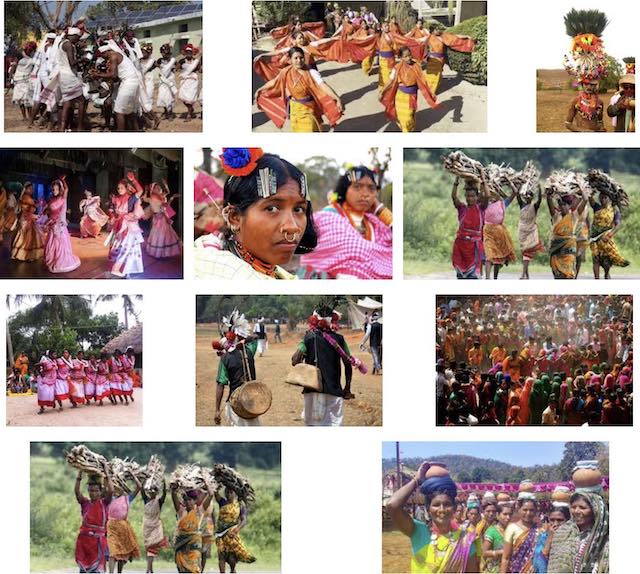
Indian online periodicals and platforms | Images view >>
~ ~ ~
Personalize your CustomSearch by combining other search words >>
(e.g. name of a tribal community and region, a craft, or dance and puppetry)
Research: explore PhD theses from all over India
Shodhganga (Open Access)
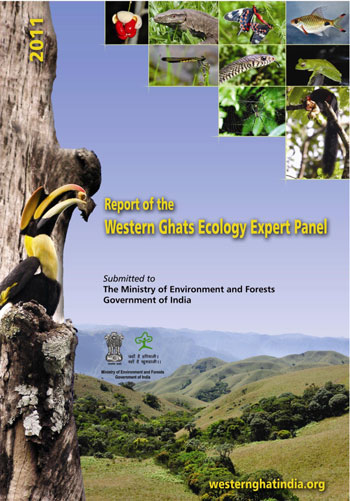
Celebrations and Convergence for
Conservation In Western Ghats (PDF, 3 MB) >>
Learn more
Western Ghats tribal heritage and ecology >>
Learn more
Atree.org | Ashoka Trust for Research in Ecology & the Environment (posts)
Biodiversity | Hyderabad biodiversity pledge | Nilgiri Biosphere
Climate change | United Nations on climate change
eBook | Background guide for education
eLearning: Center for World Indigenous Studies
Health and nutrition | Recommendations by the Expert Committee