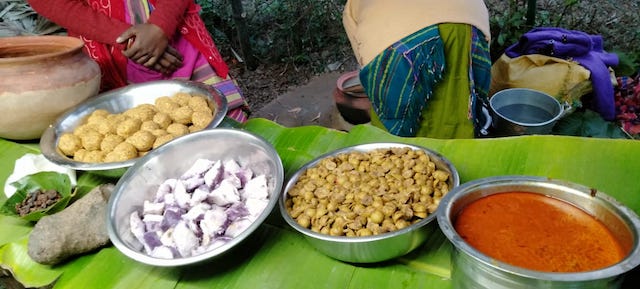
Learn more about tribal Health and Nutrition >>
Did you know? Three-quarters of the land-based environment and about 66% of the marine environment have been significantly altered by human actions. 1 million animal and plant species are now threatened with extinction. | Learn more: https://www.un.org/en/observances/biological-diversity-day >>
Acting locally for global impact: “We must act now”
As the global community is called to re-examine our relationship to the natural world, one thing is certain: despite all our technological advances we are completely dependent on healthy and vibrant ecosystems for our water, food, medicines, clothes, fuel, shelter and energy, just to name a few.
This involves respecting, protecting, and repairing our biological wealth.
In December 2022, the world came together and agreed on a global plan to transform our relationship with nature. The adoption of the Kunming-Montreal Global Biodiversity Framework, sets 23 targets for 2030 and four global goals for 2050 to stop and reverse the loss of nature . Among its goals: restore 30% of degraded ecosystems, conserve 30% of land, waters and seas, reduce the introduction or settlement of invasive alien species by 50%, and mobilize $200 billion per year for biodiversity, all by 2030.
This International Day for Biological Diversity, under the theme “Acting locally for global impact”, a powerful idea is placed at the center: major changes begin on a small, local scale. The success of this plan to reverse biodiversity loss depends on the strength of local actions—on the commitment of communities, organizations, and governments working together.
This campaign also aims to instill a sense of urgency. By 2026, only four years will remain to meet both the near-term targets of the Global Biodiversity Framework and the SDGs.
We must act now.Source: “International Day for Biological Diversity 22 May”, United Nations
URL: https://www.un.org/en/observances/biological-diversity-day
Date Visited: 30 May 2026
“Biological diversity resources are the pillars upon which we build civilizations”
When biodiversity has a problem, humanity has a problem
Biological diversity is often understood in terms of the wide variety of plants, animals and microorganisms, but it also includes genetic differences within each species — for example, between varieties of crops and breeds of livestock — and the variety of ecosystems (lakes, forest, deserts, agricultural landscapes) that host multiple kind of interactions among their members (humans, plants, animals).
Biological diversity resources are the pillars upon which we build civilizations. Fish provide 20 per cent of animal protein to about 3 billion people. Over 80 per cent of the human diet is provided by plants. As many as 80 per cent of people living in rural areas in developing countries rely on traditional plant‐based medicines for basic healthcare.
But loss of biodiversity threatens all, including our health. It has been proven that biodiversity loss could expand zoonoses – diseases transmitted from animals to humans- while, on the other hand, if we keep biodiversity intact, it offers excellent tools to fight against pandemics like those caused by coronaviruses.
While there is a growing recognition that biological diversity is a global asset of tremendous value to future generations, the number of species is being significantly reduced by certain human activities. Given the importance of public education and awareness about this issue, the UN decided to celebrate the International Day for Biological Diversity annually.
Source: “International Day for Biological Diversity 22 May”, United Nations
URL: https://www.un.org/en/observances/biological-diversity-day
Date Visited: 30 May 2026
“The practice of religious rituals, ceremonies and sanctions by specific cultural groups allow such sacred landscapes to be maintained, emphasizing that humans are intrinsically part of the ecosystem. Taboos, codes and customs specific to activities and community members restrict access to most sacred groves. […] The inclusion of local people’s needs and interests in conservation planning is increasingly accepted as essential, both to promote the well-being of human populations, and to ensure that biodiversity and conservation needs are met in the long-term.” – Nazir A. Pala, Ajeet K. Neg and N.P. Todaria in “The Religious, Social and Cultural Significance of Forest Landscapes in Uttarakhand Himalaya, India” (International Journal of Conservation Science, Vol. 5, Issue 2, April-June 2014) | Sacred groves | Biodiversity and development – Himalaya >>
Facts and figures: India’s biological, cultural and geographic diversity
Spread over 3,287,240 km2 and despite a total human population of over 1,210,000,000, India represents a wide spectrum of biological, cultural and geographic diversity. It has been identified as one of the top 12 global biodiversity hotspots and has 91 eco-cultural zones inhabited by 4,635 ethnic communities. India also has amongst the largest indigenous/tribal population, constituting 8.08% of the country’s population, representing 461 tribes. The term ‘Indigenous Peoples’ is not officially recognized in the country, instead the Constitution of India uses the term ‘Scheduled Tribes’. The total forest cover is estimated to be approximately 20% of the total area of the country. About 1,70,379 villages with a population of 10,674,334 inhabit areas in close proximity of forests.
Source: RECOGNITION AND SUPPORT OF ICCAs IN INDIA by Neema Pathak Broome and Tushar Dash, p. 4 | PDF-Repository
URL: https://kalpavriksh.org/wp-content/uploads/2021/01/IndiaICCARecognition_Final_SEPT2012-as-published.pdf
Date Visited: 10 March 2025
There is very little evidence that ecotourism in its present form is sustainable […] Tourism is inherently an exploitative industry, both ecologically and socially and we need to accept that. But the ill-effects of tourism on biodiversity conservation can be contained. What conservation needs today is a robust model, which restricts ecological and carbon footprint through a much more nuanced policy. We need participation and governance by the local communities in order to legitimise their local knowledge while empowering them economically. And we need wider discussion and debate about this among the general public.
Source: Smrity Ramavarapu in “Ecotourism-a yay or a nay for conservation?” | Ashoka Trust for Research in Ecology and the Environment (Bangalore)
URL: https://www.atree.org/news/ecotourism-yay-or-nay-conservation
Date visited: 2 May 2020
Ashoka Trust for Research in Ecology and the Environment (ATREE) is a global non-profit organisation which generates interdisciplinary knowledge to inform policy and practice towards conservation and sustainability.
For over two decades, ATREE has worked on social-environmental issues from local to global policy levels. ATREE envisions a society committed to environmental conservation and sustainable and socially just development.
Our mission is to generate rigorous interdisciplinary knowledge for achieving environmental conservation and sustainable development, to enable the use of this knowledge by policy makers and society, and to train the next generation of environmental leaders.
To deliver on our mission, we work across issues like biodiversity and conservation, climate change mitigation and development, land and water resources, forests and governance and ecosystem services and human well-being.
Source: Purpose | Ashoka Trust for Research in Ecology and the Environment (Bangalore)
URL: https://www.atree.org/news/ecotourism-yay-or-nay-conservation
Date visited: 2 May 2020
[Bold typeface added above for emphasis]
Up-to-date reports by Indian experts and journalists
Search tips
Combine the name of any particular state, language or region with that of any tribal (Adivasi) community.
Add keywords of special interest (music, poetry, dance just as health, sacred grove and biodiversity); learn about the rights of Scheduled Tribes such as the “Forest Rights Act” (FRA); and the United Nations “Declaration on the Rights of Indigenous Peoples”, “Universal Declaration of Human Rights”, “women’s rights”, or “children’s right to education”.
Ask a question that includes “tribal” or “Adivasi”, for instance: “Adivasi way of life better?” (or “tribal way of life worse?”)
Specify any particular issue or news item (biodiversity, bonded labour and human trafficking, climate change, ecology, economic development, ethnobotany, ethnomedicine, global warming, hunter-gatherers in a particular region or state, prevention of rural poverty, water access).
For official figures include “scheduled tribe ST” along with a union state or region: e.g. “Chhattisgarh ST community”, “Himalayan tribe”, “Scheduled tribe Tamil Nadu census”, “ST Kerala census”, “Particularly Vulnerable Tribal Group Jharkhand”, “PVTG Rajasthan”, “Adivasi ST Kerala”, “Adibasi ST West Bengal” etc.
SafeSearch browser tips
If your (mobile) browser fails to display “embedded” media contents, Google maps and SafeSearch windows
Try another browser like Firefox, Chrome or Safari available on your device
Ensure your favourite browser is up to date
Close your present browser
Check your browser and mobile (gsm) settings:
e.g. permission for video or JavaScript
(seen under Preferences >Security >Enable JavaSript)
Restart your computer (smartphone, tablet)
Reconnect to your wifi network or connect to a different one
On some iPhone models the following helps:
>Settings >Safari >scroll down to:
SETTING FOR WEBSITES
Enable “Request Desktop Website” (All Websites) temporarily
Return to the map-post in Safari and “Reload”
Return to >Settings and disable “Request Desktop Website” again
Return to the post in Safari and “Reload”which should now display “embedded” contents as intended (with the convenience of browsing the mobile version on a small screen)
Note: similar solutions may also work with other mobile operating systems.
List of websites covered by this Google custom search engine
Academia.edu (platform for academics to share research papers) – www.academia.edu
Archive.org – https://archive.org
Centre for Science and Environment – https://www.cseindia.org
Current Conservation – https://www.currentconservation.org
Development and Cooperation (D+C) https://www.dandc.eu
Down To Earth (India) – www.downtoearth.org.in
India Environment Portal – www.indiaenvironmentportal.org.in
Harnessing Nature Magazine – https://harnessingnature.online
Mongabay-India – https://india.mongabay.com
M S Swaminathan Research Foundation – www.mssrf.org
Navdanya (protecting India’s biodiversity based food heritage) – https://navdanya.org
People’s Archive of Rural India – https://ruralindiaonline.org/
Third World Network (Penang, Malaysia) – https://twn.my
The Shola Trust (nature conservation in the Nilgiri region) – www.thesholatrust.org
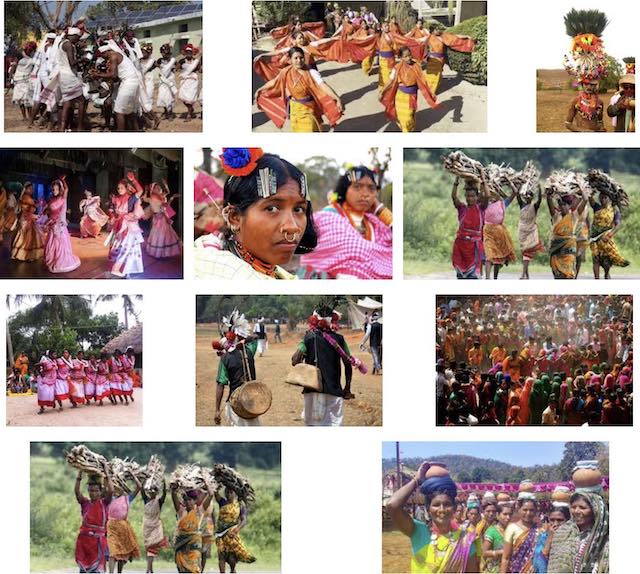
Indian online periodicals and platforms | Images view >>
~ ~ ~
Personalize your CustomSearch by combining other search words >>
(e.g. name of a tribal community and region, a craft, or dance and puppetry)
Research: explore PhD theses from all over India
Shodhganga (Open Access)
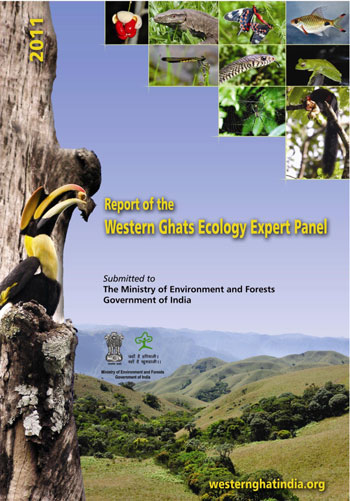
Celebrations and Convergence for
Conservation In Western Ghats (PDF, 3 MB) >>
Learn more
Western Ghats tribal heritage and ecology >>
For additional learning resources visit the website of the Centre for Science and Environment (CSE), “a public interest research and advocacy organisation based in New Delhi”:
Communication for Awareness
CSE’s publications and informational products have been its strength and they have always combined research and readability to get the message across.
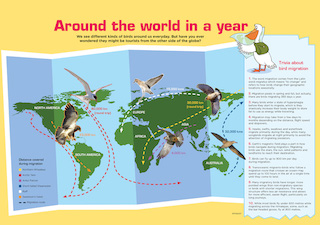
CSE’s tools for awareness raising are periodicals, publications, films/short spots, briefing papers, exhibitions, posters and other products. CSE’s informational products reach people in more diverse ways such as features service, website and e-news bulletins. […]
Source: About CSE
URL: https://www.cseindia.org
Date Visited: 10 July 2022
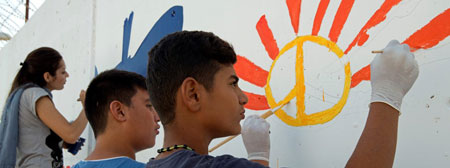
International Day of the World’s Indigenous People (9 August) >>
Learn more
Atree.org | Ashoka Trust for Research in Ecology & the Environment (posts)
Biodiversity | Biodiversity hotspot | Hyderabad biodiversity pledge
Climate change | Audio | The Climate Question (BBC Podcast)
eBook | Background guide for education
Ecology and environment | Eco tourism | Tourism | Wildlife tourism
Environmental history and what makes for a civilization – Romila Thapar
Equations blog (Equitable Tourism Options)
Forest Rights Act (FRA) | Hunter-gatherers | Illegal mining | Legal rights over forest land
Information provided by Indian government agencies and other organizations (FAQ)
Nature and wildlife | Crocodile | Elephant | Tiger | Mangrove forest | Trees
PARI’s tales from tiger territory | People’s Archive of Rural India (PARI)
Shola Trust | Nilgiri Biosphere
Water and development – India’s tribal communities
Western Ghats – tribal heritage & ecology
What is the Forest Rights Act about?
Who is a forest dweller under this law, and who gets rights?