Role of Sacred Groves and their current status in adivasi society
Conservation of natural resources has been an integral part of diverse cultures in different ways. Indigenous communities all over the world lived in harmony with the nature and conserved its valuable biodiversity. There were many traditional conservation practices of adivasis in many parts of the world, which contributed to the conservation and protection of biodiversity. A good example of such traditional practices is the conservation and protection of small forest patches called “sacred groves”. Sacred groves are patches of forest, water bodies, grasslands considered to be inhabited by gods and hence, strictly prohibited from resource extraction. […]
More news on educational and health matters
Higher studies that can result in a livelihood opportunity is within the reach of many students and their families now – a far cry from even a decade ago. […] tribal counselors also function as a good bridge between the government’s health system and the adivasi community, by informing everyone about the various government schemes and other possible assistance. They help monitor chronic patients and pregnant women regularly.
Importantly, they prove, once again, that given an opportunity, adivasis are capable of providing important services to our own community and are the best bet to mobilise the community and to take responsibility for their future.
Source: Adivasi.net – Newsletters, No.31 Apr – Jun 2011
Address : <http://www.adivasi.net/Newsletters/news.php>
Date Visited: Wed Jul 13 2011 16:49:29 GMT+0200 (CEST)
“Despite the restitution of community rights under the Forest Rights Act of 2006, the Adivasis are not able to supplement their diet with resources gathered from the forest as they did before.” – Priti David in “In the Nilgiris, an inheritance of malnutrition” (People’s Archive of Rural India) | Learn more about nutrition >>
Reports in the Indian press | List of periodicals included in this search >>
Search tips
Combine the name of any particular state, language or region with that of any tribal (Adivasi) community.
Add keywords of special interest (music, poetry, dance just as health, sacred grove and biodiversity); learn about the rights of Scheduled Tribes such as the “Forest Rights Act” (FRA); and the United Nations “Declaration on the Rights of Indigenous Peoples”, “Universal Declaration of Human Rights”, “women’s rights”, or “children’s right to education”.
Ask a question that includes “tribal” or “Adivasi”, for instance: “Adivasi way of life better?” (or “tribal way of life worse?”)
Specify any particular issue or news item (biodiversity, bonded labour and human trafficking, climate change, ecology, economic development, ethnobotany, ethnomedicine, global warming, hunter-gatherers in a particular region or state, prevention of rural poverty, water access).
For official figures include “scheduled tribe ST” along with a union state or region: e.g. “Chhattisgarh ST community”, “Himalayan tribe”, “Scheduled tribe Tamil Nadu census”, “ST Kerala census”, “Particularly Vulnerable Tribal Group Jharkhand”, “PVTG Rajasthan”, “Adivasi ST Kerala”, “Adibasi ST West Bengal” etc.
SafeSearch browser tips
If your (mobile) browser fails to display “embedded” media contents, Google maps and SafeSearch windows
Try another browser like Firefox, Chrome or Safari available on your device
Ensure your favourite browser is up to date
Close your present browser
Check your browser and mobile (gsm) settings:
e.g. permission for video or JavaScript
(seen under Preferences >Security >Enable JavaSript)
Restart your computer (smartphone, tablet)
Reconnect to your wifi network or connect to a different one
On some iPhone models the following helps:
>Settings >Safari >scroll down to:
SETTING FOR WEBSITES
Enable “Request Desktop Website” (All Websites) temporarily
Return to the map-post in Safari and “Reload”
Return to >Settings and disable “Request Desktop Website” again
Return to the post in Safari and “Reload”which should now display “embedded” contents as intended (with the convenience of browsing the mobile version on a small screen)
Note: similar solutions may also work with other mobile operating systems.
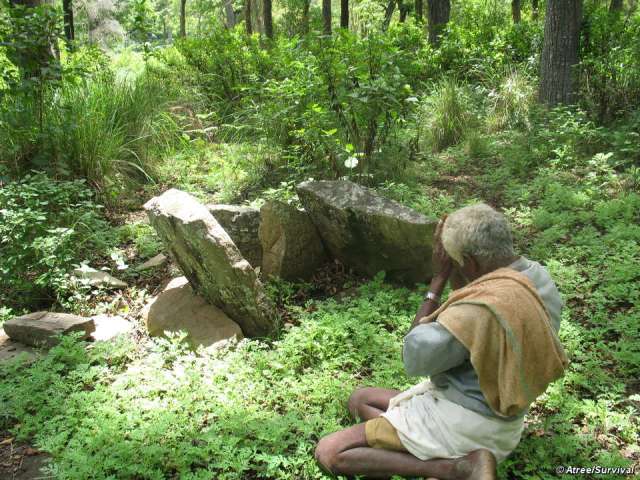
Learn more about the Soliga community in Karnataka >>
“We have a special responsibility to document, monitor and conserve our most precious asset” – Kamaljit S. Bawa in “Our biodiversity, our life, our future” >>
Facts and figures: India’s biological, cultural and geographic diversity
Spread over 3,287,240 km2 and despite a total human population of over 1,210,000,000, India represents a wide spectrum of biological, cultural and geographic diversity. It has been identified as one of the top 12 global biodiversity hotspots and has 91 eco-cultural zones inhabited by 4,635 ethnic communities. India also has amongst the largest indigenous/tribal population, constituting 8.08% of the country’s population, representing 461 tribes. The term ‘Indigenous Peoples’ is not officially recognized in the country, instead the Constitution of India uses the term ‘Scheduled Tribes’. The total forest cover is estimated to be approximately 20% of the total area of the country. About 1,70,379 villages with a population of 10,674,334 inhabit areas in close proximity of forests.
Source: RECOGNITION AND SUPPORT OF ICCAs IN INDIA by Neema Pathak Broome and Tushar Dash, p. 4 | PDF-Repository
URL: https://kalpavriksh.org/wp-content/uploads/2021/01/IndiaICCARecognition_Final_SEPT2012-as-published.pdf
Date Visited: 10 March 2025
Learn more
Atree.org | Ashoka Trust for Research in Ecology & the Environment (posts)
Biodiversity | Biodiversity hotspot | Hyderabad biodiversity pledge
Climate change | Audio | The Climate Question (BBC Podcast)
eBook | Background guide for education
Ecology and environment | Eco tourism | Tourism | Wildlife tourism
Environmental history and what makes for a civilization – Romila Thapar
Equations blog (Equitable Tourism Options)
Forest Rights Act (FRA) | Hunter-gatherers | Illegal mining | Legal rights over forest land
Information provided by Indian government agencies and other organizations (FAQ)
Nature and wildlife | Crocodile | Elephant | Tiger | Mangrove forest | Trees
PARI’s tales from tiger territory | People’s Archive of Rural India (PARI)
Shola Trust | Nilgiri Biosphere
Water and development – India’s tribal communities
Western Ghats – tribal heritage & ecology
What is the Forest Rights Act about?
Who is a forest dweller under this law, and who gets rights?