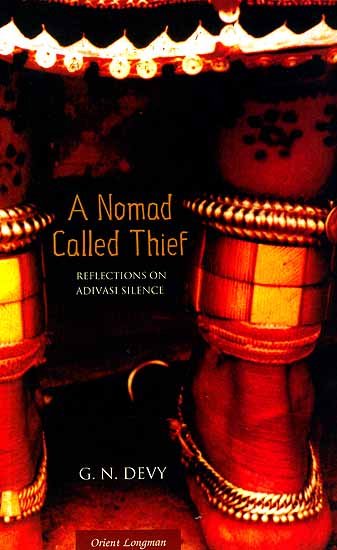
A Nomad Called Thief: Reflections on Adivasi Silence and Voice by GN Devy
A Report on Debt Bondage, Carpet-Making, and Child Slavery
In Disposable People: New Slavery in the Global Economy, Dr. Kevin Bales estimates that there are at least 27 million slaves in the world today – more than at any other time in human history. Slavery is on the rise around the world for the simple reason that unpaid, forced labor constitutes an excellent (though brutal) means to economic profit. For callous businessmen, slaves are disposable people who toil to meet the global market’s demand for goods. The lower a good’s production costs, the more competitive it will be on the global market.
Ironically, India, the world’s largest democracy, is also home to more slaves than all the other countries of the world combined. With roughly one billion inhabitants, India supports over 15% of the world’s population. And with more than half of India’s population living below the income poverty line3, nearly 40% of the population cannot afford a sufficient diet. As inadequate government expenditure on education, health, and welfare increases the high vulnerability of much of India’s vast population, exploitation – even enslavement – are everyday realities for many Indians.
Due in part to tremendous pressure to participate in the global market, India’s industries readily make use of cheap, even forced, labor. Because a developing country like India lacks the resources to modernize yet enjoys a large potential workforce, slave labor often becomes the preferred method for keeping costs low and profits high. And though India has many employment codes – outlawing child labor, exploitation of children, and bonded labor (a form of involuntary servitude) – slavery, especially that of children, persists unabated. […]
The most prevalent form of modern day slavery, known as debt bondage or bonded labor, occurs when a person becomes a security against a debt or small loan. In India, these loans range from $14 to $214, and are usually incurred for basic necessities like food, emergency needs (e.g. medical treatment), marriage dowry (a long-standing tradition), or funeral expenses. With exorbitant interest rates of up to 60%, these loans are difficult, if not impossible, to repay. Individuals thus become trapped within a system of debt bondage that forces them to repay loans by working unconditionally for their entire lives – even passing on the same debt for generations. Human rights groups estimate that 15 to 20 million slaves are represented by bonded labor in India, Pakistan, Bangladesh, and Nepal alone.
Debt bondage and other types of slavery are prevalent in both export-oriented and domestic industries. Both adults and children are enslaved, though the frequency of child slavery is much higher, as children are easier to exploit.
Trapping Children
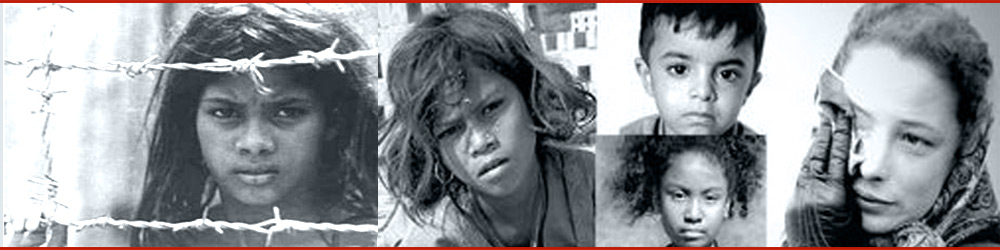
The extreme poverty of the harijans or untouchables (the lowest group in the traditional caste system) and the adivasis (the tribals or indigenous people) make them the most vulnerable groups for exploitation. 80% to 90% of all bonded laborers in India are harijans and adivasis. The absolute levels of poverty and the lack of social welfare, education, or alternatives make it very easy for the loom owners to exploit these groups. Within these groups, children are probably the most exploited. One justification for child labor in the carpet industry is the predominant “myth of nimble fingers, which claims that the small fingers of children are more productive than those of adults. (Nevertheless, the quality carpets that can be sold at the highest prices are often those made by adults.) […]
Some children become bonded laborers because they are given to the loom owners on the false promise of an education or good wages (to be sent back home to help the family). Others are simply sold to loom owners because their families cannot afford to feed them. Even more children are simply kidnapped and sold into slavery. […]
UNICEF also helps buy children out of bondage through its support of the Child Labour Abolition Support Scheme (CLASS). In 1996, UNICEF cited a program in which the district collector (administrative chief) in North Arcot bought children out of bondage with the help of CLASS. A UNICEF report states that: “The immediate objective of the project was to develop income-producing alternatives so that mothers could buy their children out of bondage and send them to school. Release fees were negotiated for working children, and their mothers joined self-help groups to raise money. The groups earned income by rearing dairy cows and selling their milk. Mothers qualified for a group buy-out loan and matching grant from the state of Tamil Nadu if they worked for the group and promised to keep their children in school once they were released.28 Buybacks programs, however, are not the solution to ending debt bondage. It would be impossible to pay off the debts of hundreds of thousands of child slaves. But these programs do bring hope to bonded individuals and their families while encouraging local communities to fight for a change in the existing system. Benefits of these programs include education, development, and reform. Nevertheless, the need for a larger solution remains.
Indigenous Peoples can be identified according to certain characteristics:
They are politically and socially marginalized.
Most importantly, they self-identify as Indigenous Peoples.
They share an ancestral link with those who inhabited a country or region before they were colonized or before other peoples became dominant.
They have a strong link to particular territories and the surrounding natural resources.
They have distinct social, economic or political systems, which they are resolved to maintain and reproduce.
They have a distinct language, culture and beliefs.
There are more than 5,000 different Indigenous Peoples around the world comprising 476 million people – around 6.2% of the global population. They are spread across more than 90 countries in every region and speak more than 4,000 languages. | Learn more (Amnesty International) >>
“Child marriage is not just an age-old social evil, but also a heinous crime that robs children of their childhood. Child marriage is a “crime against children” that violates basic human rights, minor girls are forced to marry and live a life of mental trauma, physical and biological stress, domestic violence including limited access to education and increased vulnerability to domestic violence. […] early pregnancies leading to complications and higher rate of maternal mortality and death of infants, malnutrition.” – Shakti Vahini’s campaign for a Child Marriage Free India >>
“As per a study on human trafficking, the state of Jharkhand has emerged as India’s trafficking hub with thousands of tribal women and girls being trafficked out of the state each year to Delhi, Punjab, Haryana and beyond [while] human traffickers are also involved in many cases of missing children.” – The Wire | Shakti Vahini | Tourism locations | Adivasi tribal bondage slavery trafficking (Safe search) >>
The National Human Right Commission (NHRC) describes “crimes like rape, molestation, torture, fake encounter in police custody as manifestations of a systemic failure to protect human rights”;
It reports that “rights of the people were violated or negligence was shown by a public servant in the prevention of such violations”; NHRC concludes:
“Atrocities against vulnerable sections of society – women, children, disabled and the elderly – are often compounded when they belong to the Scheduled Castes and Scheduled Tribes”; and therefore demands:
India must ratify the International Convention against Torture.
The Anti-Autocracy Handbook – A Scholars’ Guide to Navigating Democratic Backsliding Download | Backup (PDF, 500 KB) >>
“A call to action, resilience, and collective defence of democracy, truth, and academic freedom”
The Anti-Autocracy Handbook is a call to action, resilience, and collective defence of democracy, truth, and academic freedom in the face of mounting authoritarianism. […]
Because open inquiry and dissent are central to science and academia—qualities antithetical to authoritarian control—academia is often among the first targets of autocrats. To help scholars resist authoritarian developments, the handbook highlights both historic and contemporary measures aimed at attacking scholars, their institutional environments, and their scholarship.
The handbook also sets out a framework for action based on personal risk level—low, medium, high, or extreme. This is designed to help scholars think about their own risk and purposefully choose actions in line with it. The handbook considers tools for enhancing digital safety and highlights the importance of ongoing documentation, preserving imperilled data, and creating distributed archives as a defence against erasure. It also calls on scholars to tell their stories—publicly or anonymously—to inspire others, maintain accountability and preserve a historical record.
Accompanying the handbook is a living wiki that will continue to incorporate new developments and provide updates on global efforts by scholars to push back against authoritarianism and safeguard the democratic foundations that enable free inquiry.
Source: “The Anti-Autocracy Handbook: A Scholars’ Guide to Navigating Democratic Backsliding” by URL: https://zenodo.org/records/15696097 Date Visited: 20 April 2026
Albert Camus on service of truth and the service of liberty – Nobelprize.org
By the same token, the writer’s role is not free from difficult duties. By definition he cannot put himself today in the service of those who make history; he is at the service of those who suffer it. Otherwise, he will be alone and deprived of his art. Not all the armies of tyranny with their millions of men will free him from his isolation, even and particularly if he falls into step with them. But the silence of an unknown prisoner, abandoned to humiliations at the other end of the world, is enough to draw the writer out of his exile, at least whenever, in the midst of the privileges of freedom, he manages not to forget that silence, and to transmit it in order to make it resound by means of his art.
None of us is great enough for such a task. But in all circumstances of life, in obscurity or temporary fame, cast in the irons of tyranny or for a time free to express himself, the writer can win the heart of a living community that will justify him, on the one condition that he will accept to the limit of his abilities the two tasks that constitute the greatness of his craft: the service of truth and the service of liberty. Because his task is to unite the greatest possible number of people, his art must not compromise with lies and servitude which, wherever they rule, breed solitude. Whatever our personal weaknesses may be, the nobility of our craft will always be rooted in two commitments, difficult to maintain: the refusal to lie about what one knows and the resistance to oppression.
Educating for human rights and global citizenship
“Nearly sixty years after the Universal Declaration of Human Rights, in spite of progress on some fronts, we are in many cases as far away as ever from achieving an inclusive citizenship and human rights for all. While human rights violations continue to affect millions across the world, there are also ongoing contestations regarding citizenship. In response to these and related issues, the contributors to this book critique both historical and current practices and suggest several pragmatic options, highlighting the role of education in attaining these noble yet unachieved objectives. This book represents a welcome addition to the human rights and global citizenship literature and provides ideas for new platforms that are human rights friendly and expansively attuned toward global citizenship.”–Jacket.
Source: Educating for human rights and global citizenship (Book, 2008) [WorldCat.org] Address: http://www.worldcat.org/oclc/145732893 Date Visited: 9 February 2022
The Little Hands of Labour Behind your Smartphone
A joint report by ILO [International Labour Organization] and UNICEF warns that child labour has risen to 160 million – a significant increase in two decades. Governments, corporates, and customers have a responsibility to not remain ignorant. […]
According to ILO, around one million children work in various mines throughout the world. UNICEF estimates that approximately 20% of mine workers are children. They undergo exploitation and are exposed to life-threatening chemicals and gases. Children in gold mines get exposed to mercury which is highly toxic. […]
It is hard to overstate the importance of ‘the job’ in our current political economy of growth. Elevated to the raison d’etre of most of our waking hours, not having one leads to great anxiety and the race to get one. Survival without a job seems simply impossible. In short, it often defines us and how others think about who we are: whether its ‘managing’ people’s money, harvesting crops or collecting the garbage. Those who hold power over us are often those who can hire or fire us, those who own or control the places where we work. […]
The late anthropologist David Graeber, in the preface to his seminal work Bullshit Jobs: A Theory, concluded that: ‘We have become a civilization based on work – not even “productive work” but work as an end and meaning in itself… half the time we are engaged in utterly meaningless or counter-productive activities – usually under orders of a person we dislike… [and] we rankle with resentment that there may be others out there that are not in the same trap.’
It is hard to fathom in our job-obsessed culture but many people, particularly in the Global South, do not have anything like regular employment, scratching together a living in what economists call the informal sector. […]
Not that there isn’t work to be done – lots of it. But we need to carefully evaluate the content of that work to make sure it sustains rather than obliterates life. Work should help build social justice and ecological viability. Work needs to be organized so that it can be fairly distributed and reduced to what is necessary for modest convivial survival rather than unequal lopsided growth. Like it or not, an increasing number of ecological economists – along with a lively degrowth movement – believe this is where our future rests.
All the nations which succeeded in achieving inclusive growth in the Global South had land reforms combined with human capital, invested in infrastructure by promoting capitalism from below and began industrialisation in the rural sector. Only India lost on all three counts.
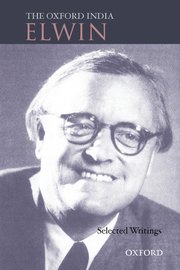
“Is it eccentric to live in beautiful scenery in the hills among some of the most charming people in the country, even though they may be ignorant and poor?” – Verrier Elwin quoted by G.N. Devy in The Oxford India Elwin >>
Up-to-date reports by Indian journalists and commentators
To search Indian periodicals, magazines, web portals and other sources safely, click here. To find an Indian PhD thesis on a particular tribal community, region and related issues, click here >>
“Tribal men and women mix freely, but with respect for each other [but] caste Hindu society in India is so convinced of its own superiority that it never stops to consider the nature of social organisation among tribal people. In fact it is one of the signs of the ‘educated’ barbarian of today that he cannot appreciate the qualities of people in any way different from himself – in looks or clothes, customs or rituals.” – Guest Column in India Today >>
Photo: Report on Women’s Rights, p. 15
Equality of Opportunity in matters of Public Employment Constitution Article 15
Prohibition of discrimination on grounds of religion, race, caste, sex or place of birth.—(1) The State shall not discriminate against any citizen on grounds only of religion, race, caste, sex, place of birth or any of them. (2) No citizen shall, on grounds only of religion, race, caste, sex, place of birth or any of them, be subject to any disability, liability, restriction or condition with regard to— (a) access to shops, public restaurants, hotels and places of public entertainment; or (b) the use of wells, tanks, bathing ghats, roads and places of public resort maintained wholly or partly out of State funds or dedicated to the use of the general public. (3) Nothing in this article shall prevent the State from making any special provision for women and children. 2 [(4) Nothing in this article or in clause (2) of article 29 shall prevent the State from making any special provision for the advancement of any socially and educationally backward classes of citizens or for the Scheduled Castes and the Scheduled Tribes.]
Source: pp. 9 & 16, “Women’s Rights in India: An Analytical Study of The United Nations Convention on the Elimination of All Forms of Discrimination against Women (CEDAW) and The Indian Constitution, Legislations, Schemes, Policies & Judgements 2021” by Research Division, National Human Rights Commission, India (www.nhrc.nic.in) | Learn more >> URL: https://www.jorhatjudiciary.gov.in Date Visited: 9 May 2023
“The contribution of [over 200,000] charities—which range from small concerns to vast India-wide networks—to development and the individual lives of millions of poor Indians is incalculable. Activist groups helped India gain independence in 1947 and have since helped restrain the state’s excesses and compensate for its weaknesses.” – Civil society in India >>
“Religion is a personal matter and should not be politicised.” – Invitation by the Bharat Jodo Abhiyan (BJA) – a civil society platform involving organisations from across 15 states – extended to all like-minded citizens “who take pride in our progressive, inclusive civilization and are committed to our constitutional values of fraternity, liberty, equality and justice” | TheWire (2 January 2024) >>
“Doctors in the region [Palakkad district] argue that while the proportion of people with mental illnesses is not unusually high, the problem is a crisis because of their socioeconomic vulnerability.” […] “The non-inclusivity of Adivasis is nothing but racial discrimination. Adivasis were always ruled.” | In-depth analysis (Scroll.in 5 April 2023) >>
“Casteism is the investment in keeping the hierarchy as it is in order to maintain your own ranking, advantage, privilege, or to elevate yourself above others or keep others beneath you. […] For this reason, many people—including those we might see as good and kind people—could be casteist, meaning invested in keeping the hierarchy as it is or content to do nothing to change it, but not racist in the classical sense, not active and openly hateful of this or that group.” | Learn more about the effects of “casteism” on tribal communities >>
Tribal languages are a treasure trove of knowledge about a region’s flora, fauna and medicinal plants
“Tribal languages are a treasure trove of knowledge about a region’s flora, fauna and medicinal plants. Usually, this information is passed from generation to generation. However, when a language declines, that knowledge system is completely gone.” – Ayesha Kidwai (Centre for Linguistics, School of Language, Literature and Culture Studies, Jawaharlal Nehru University, New Delhi) quoted by Abhijit Mohanty in “Seven decades after independence, many tribal languages in India face extinction threat” | Learn more about the work done by the People’s Linguistic Survey of India and endangered languages worldwide >>
“India’s geographic location at the confluence of three major biogeographic zones – i.e. the Indo-Malayan, the Eurasian and the Afro-Tropical – makes it extremely biodiverse in its genes, species and ecosystems. It is one of the world’s 17 megadiverse countries (Mittermeier et al. 1997). India can boast of over 8.1% of the world’s biodiversity supported on 2.4% of the earth’s surface. An estimated 47,000 identified plant species represent 11% of the world’s flora.” | Learn more: eBook | Disseminating environment related information to improve peoples’ livelihoods >>
“The notion of ‘mainstreaming’ needs to be challenged not just because Adivasi culture is being crushed, but also because Adivasi values and ways of life offer insights that the ‘mainstream’ needs. If we are to halt the destruction of ecosystems, we need to understand how closely biodiversity and cultural diversity are intertwined. Perhaps it is time to reverse the gaze and begin to learn afresh from Adivasis.” – Felix Padel & Malvika Gupta (The Hindu) | Learn more about the role of tribal communities in fostering biodiversity, ethnobotany and cultural diversity | Success stories | Tribal identity >>
“I think that by retaining one’s childhood love of such things as trees, fishes, butterflies and … toads, one makes a peaceful and decent future a little more probable, and that by preaching the doctrine that nothing is to be admired except steel and concrete, one merely makes it a little surer that human beings will have no outlet for their surplus energy except in hatred and leader worship.” – George Orwell | Learn more: Childhood | Customs | Games and leisure time | Literature – fiction | Storytelling >>
Adivasi communities: stewards of India’s cultural heritage and biodiversity
[…] India’s tribal communities — over 104.5 million people, or 8.6 per cent of the population — remain among the most marginalised despite decades of welfare schemes and development promises. In states such as Chhattisgarh, Jharkhand, Bihar, Rajasthan and Odisha, tribal districts consistently record higher poverty levels than non-tribal areas, even as these regions supply land, forests and minerals for the country’s growth. These communities have often been compelled to relinquish their lands for large-scale infrastructure projects, resulting in the erosion of their identity, livelihoods, and future prospects.
It is crucial to recognise the value these communities bring, particularly their eco-friendly lifestyles, which offer important insights into addressing climate-related challenges. For instance, during the 2018 drought in Sundergarh, Odisha, a visit to a remote tribal village revealed thriving vegetation and effective water-harvesting systems. Kiri village in Lahunipara block of Sundergarh district, inhabited by the Paudi Bhuyan community — a Particularly Vulnerable Tribal Group (PVTG) — has demonstrated remarkable resilience.
This observation underscores the importance of learning from traditional ecological knowledge, especially sustainable farming practices that rely on drought-resistant and indigenous seeds.
Adivasi communities, as stewards of India’s cultural heritage and biodiversity, must be central to the nation’s development narrative. Their lives are intricately linked to land, forests and water, yet they face growing threats from climate change, livelihood insecurity and displacement. Addressing these challenges requires more than welfare initiatives; it demands robust enforcement of constitutional rights, substantial public investment and the strengthening of Gram Sabha–based governance. […]