Nearly 70 per cent of the country’s population lives in rural areas where, for the first time since independence, the overall growth rate of population has sharply declined, according to the latest Census.
Of the 121 crore Indians, 83.3 crore live in rural areas while 37.7 crore stay in urban areas, said the Census of India’s 2011 Provisional Population Totals of Rural-Urban Distribution in the country, released by Union Home Secretary R.K. Singh.
“For the first time since independence, the absolute increase in population is more in urban areas than in rural areas. The rural-urban distribution is 68.84 per cent and 31.16 per cent respectively,” Registrar General of India and Census Commissioner C. Chandramouli said. […]
“The slowing down of the overall growth rate of population is due to the sharp decline in the growth rate in rural areas, while the growth rate in urban areas remains almost the same,” Mr. Chandramouli said. […]
Source: “About 70 per cent Indians live in rural areas: Census report” (The Hindu, 15 July 2011)
Address: https://www.thehindu.com/news/national/About-70-per-cent-Indians-live-in-rural-areas-Census-report/article13744351.ece
Date Visited: 26 May 2021
Please note: “India’s population forecast provided in the United Nations Population Fund (UNFPA) State of World Population report [2023] is an estimate since there has been no census in the country since 2011. After 140 years of uninterrupted census every 10 years, the 2021 census was cancelled because of Covid and postponed to 2022. Now it has been pushed back again to 2024.” – BBC News Delhi (19 April 2023) https://www.bbc.co.uk/news/world-asia-india-65320690 >>
As per 2011 census, the total ST [Scheduled Tribes] population is 10.42 crores [104 million], of which more than 50% or in excess of 6 [60 million] crores live in 5th Scheduled Area in Rajasthan, Gujarat, Maharashtra, Madhya Pradesh, Chhattisgarh, Andhra Pradesh, Telangana, Odisha, Jharkhand and Himachal Pradesh. The 5th Schedule forbids monetization of land by STs in Scheduled Areas.
Source: Indian Police Service (IPS) officer M Nageswara Rao in “Scheduled Tribes: Who are they? How to mainstream them?” (Times of India, 16 May 2020)
URL: https://timesofindia.indiatimes.com/blogs/voices/scheduled-tribes-who-are-they-how-to-mainstream-them/
Date Visited: 26 May 2021
Independent India’s first census to determine the caste-wise breakup of the country’s 1.21 billion people was launched here Wednesday.
It was launched in this remote tribal dominated village, 45 km north of Tripura capital Agartala.”In the general census 2011 (Feb 9-28), people belonging to the scheduled tribes and scheduled castes have been counted. In the caste census, there would be four categories — scheduled tribe, scheduled caste, others and no caste,” Registrar General and Census Commissioner of India C. Chandramauli told IANS. […]
Source: Hezamara in “Independent India’s first caste census kicks-off” (Deccan Herald, Tripura, 29 June 2o11 (IANS)
Address : http://www.deccanherald.com/content/172352/independent-indias-first-caste-census.html
Date Visited: Thu Mar 29 2012 23:54:40 GMT+0200 (CEST)
See also
Adverse inclusion | Casteism | Rural poverty
Anganwadi | Community facilities | Ekalavya
Demographic Status of Scheduled Tribe Population of India (Census figures 2011)
Fact checking | Figures, census and other statistics
Human Rights Commission (posts) | www.nhrc.nic.in (Government of India)
Search tips | Names of tribal communities, regions and states of India
“The world sells humans. What kind of world is this?” – Hindi Movie “Kamla” revisited
“What is the Forest Rights Act about?” – Campaign for Survival and Dignity
“Who are Scheduled Tribes?” – Government of India (National Commission for Scheduled Tribes, NCST)
[…] In light of what has happened during the pandemic, even the entitled middle class has been having the conversation that perhaps, we have overdone the way we have been living. Because of the nature of work that I do, I travelled quite a lot before the lockdown, to the nooks and corners of the country. I have met different types of people and come across new realities which always astonish me. […]
What the peasant was telling me was, ‘A civilisation that does not look after soil is a doomed civilisation. We are on borrowed time, because we are not looking after our soil properly’. You can call it neo-liberalisation, corporatisation, fertilising or short-sighted irrigation policy, but, ultimately what is happening is that the soil is losing all its nourishment. Any civilisation that doesn’t understand this basic truth is going to face the grave danger of just not being able to survive any more. The day after this conversation, we were at a meeting in Jalgaon and there experts were talking about greater productivity through more chemicals into the soil and how we needed to increase the number of crops we grow. What they do not understand is that only four companies dominate 75 per cent of the global trade in grains and only 17 plant species (out of 3,00,000) are providing the human race 90 per cent of its food. That stayed with me — that we need to try to preserve the planet as it was. […]
Source: Playwright Ramu Ramanathan interviewed by Dipanita Nath in “I know people who have chosen to be silent, some out of fear and others just out of being deadened” (Indian Express, 28 October 2020)
URL: https://indianexpress.com/article/cities/pune/i-know-people-who-have-chosen-to-be-silent-some-out-of-fear-and-others-just-out-of-being-deadened-6902500/
Date visited: 22 February 2021
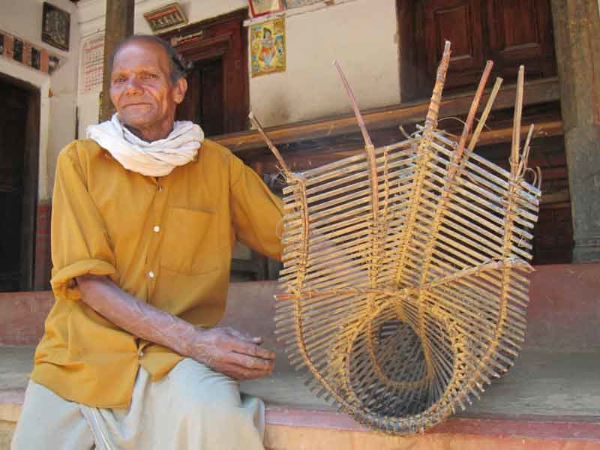
Photo © Arun VC >>
The tribal food basket has always been diverse and nutritious, including maize, minor millets like kodo and kutki, oil seeds like ramtila, along with fruits, leaves, rhizomes, mushrooms, meat and fish. […] We have pushed them out of their complementary relationship with ecology, way of life and time-tested nutrition >>
“Movements of farmers and farm labourers […] are headed for serious trouble if they do not factor in the problems of climate change (which have already devastated agriculture in India); if they do not locate themselves in, and link their battles to, an agroecological approach.” – P. Sainath in “We Didn’t Bleed Him Enough”: When Normal is the Problem (counterpunch.org, 12 August 2020, first published in Frontline magazine) | More about climate change | United Nations on climate change >>
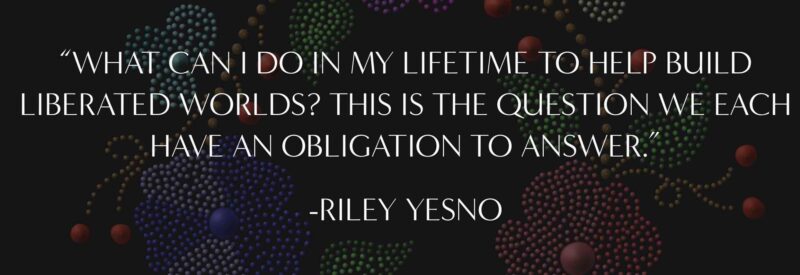
Listen to (Land) Back to the Future by Riley Yesno on the CBC Ideas website >>
“In less than 200 years, photography has gone from an expensive, complex process to an ordinary part of everyday life. From selfies to satellites, most of the technology we use and spaces we inhabit rely on cameras. […] While photographic documentation can aid in shaping history, it can also be a window into the horrors of the past.” – Read more or listen to Butterfly Effect 9 – The Camera on CBC Radio Spark 26 May 2023 >>
“Cover Your Country” by PARI: Rural people speak about their lives through photos, narratives, film, and audio materials >>
Video | “I saw women working 90 per cent of the time. They did backbreaking jobs for which you need an erect spine,” says P. Sainath in Visible Work, Invisible Women: Bricks, coal and stone | RuralIndiaOnline.org >>
In Marginalised but not Defeated, Tarun Kanti Bose (a seasoned public interest journalist) asserts that “the mainstream development paradigm is being questioned and new rainbows of collective, community reassertions are happening across the tribal belt in India. More so, in most cases, led by brave, empowered and resilient women.” | Learn more: https://countercurrents.org/2023/05/book-review-marginalised-but-not-defeated >>
“In less than 200 years, photography has gone from an expensive, complex process to an ordinary part of everyday life. From selfies to satellites, most of the technology we use and spaces we inhabit rely on cameras. […] While photographic documentation can aid in shaping history, it can also be a window into the horrors of the past.” – Read more or listen to Butterfly Effect 9 – The Camera on CBC Radio Spark 26 May 2023 >>
Find up-to-date information provided by, for and about Indian authors, researchers, officials, and educators
List of sites covered by this Google SafeSearch engine
Ashoka Trust for Research in Ecology and the Environment (ATREE) – www.atree.org
Freedom United – www.freedomunited.org
Government of India (all websites ending on “.gov.in”)
Kalpavriksh Environmental Action Group – https://kalpavriksh.org
Shodhganga (a reservoir of Indian theses) – https://shodhganga.inflibnet.ac.in
Survival International – www.survivalinternational.org
UCLA Digital Library – https://digital.library.ucla.edu
Unesco – https://en.unesco.org
Unesco digital library – https://unesdoc.unesco.org
Unicef – www.unicef.org
United Nations – www.un.org/en
Video Volunteers – www.videovolunteers.org
WorldCat (“the world’s largest library catalog, helping you find library materials online”) – https://worldcat.org
Search tips
Combine the name of any particular state, language or region with that of any tribal (Adivasi) community.
Add keywords of special interest (music, poetry, dance just as health, sacred grove and biodiversity); learn about the rights of Scheduled Tribes such as the “Forest Rights Act” (FRA); and the United Nations “Declaration on the Rights of Indigenous Peoples”, “Universal Declaration of Human Rights”, “women’s rights”, or “children’s right to education”.
Ask a question that includes “tribal” or “Adivasi”, for instance: “Adivasi way of life better?” (or “tribal way of life worse?”)
Specify any particular issue or news item (biodiversity, bonded labour and human trafficking, climate change, ecology, economic development, ethnobotany, ethnomedicine, global warming, hunter-gatherers in a particular region or state, prevention of rural poverty, water access).
For official figures include “scheduled tribe ST” along with a union state or region: e.g. “Chhattisgarh ST community”, “Himalayan tribe”, “Scheduled tribe Tamil Nadu census”, “ST Kerala census”, “Particularly Vulnerable Tribal Group Jharkhand”, “PVTG Rajasthan”, “Adivasi ST Kerala”, “Adibasi ST West Bengal” etc.
SafeSearch browser tips
If your (mobile) browser fails to display “embedded” media contents, Google maps and SafeSearch windows
Try another browser like Firefox, Chrome or Safari available on your device
Ensure your favourite browser is up to date
Close your present browser
Check your browser and mobile (gsm) settings:
e.g. permission for video or JavaScript
(seen under Preferences >Security >Enable JavaSript)
Restart your computer (smartphone, tablet)
Reconnect to your wifi network or connect to a different one
On some iPhone models the following helps:
>Settings >Safari >scroll down to:
SETTING FOR WEBSITES
Enable “Request Desktop Website” (All Websites) temporarily
Return to the map-post in Safari and “Reload”
Return to >Settings and disable “Request Desktop Website” again
Return to the post in Safari and “Reload”which should now display “embedded” contents as intended (with the convenience of browsing the mobile version on a small screen)
Note: similar solutions may also work with other mobile operating systems.
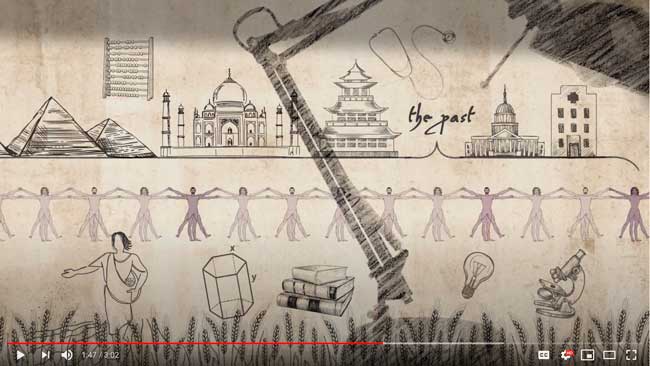
Watch “The Good Ancestor – The Legacies We Leave” (3 min.): An animation that explores the legacies we might leave for future generations >>
Links to some of the most important organisations, thinkers and doers that are leading the way and that have inspired the book The Good Ancestor by Roman Krznaric >>
Facts and figures: India’s biological, cultural and geographic diversity
Spread over 3,287,240 km2 and despite a total human population of over 1,210,000,000, India represents a wide spectrum of biological, cultural and geographic diversity. It has been identified as one of the top 12 global biodiversity hotspots and has 91 eco-cultural zones inhabited by 4,635 ethnic communities. India also has amongst the largest indigenous/tribal population, constituting 8.08% of the country’s population, representing 461 tribes. The term ‘Indigenous Peoples’ is not officially recognized in the country, instead the Constitution of India uses the term ‘Scheduled Tribes’. The total forest cover is estimated to be approximately 20% of the total area of the country. About 1,70,379 villages with a population of 10,674,334 inhabit areas in close proximity of forests.
Source: RECOGNITION AND SUPPORT OF ICCAs IN INDIA by Neema Pathak Broome and Tushar Dash, p. 4 | PDF-Repository
URL: https://kalpavriksh.org/wp-content/uploads/2021/01/IndiaICCARecognition_Final_SEPT2012-as-published.pdf
Date Visited: 10 March 2025
Tips for using interactive maps
Toggle to normal view (from reader view) should the interactive map not be displayed by your tablet, smartphone or pc browser
For details and hyperlinks click on the rectangular button (left on the map’s header)
Scroll and click on one of the markers for information of special interest
Explore India’s tribal cultural heritage with the help of another interactive map >>