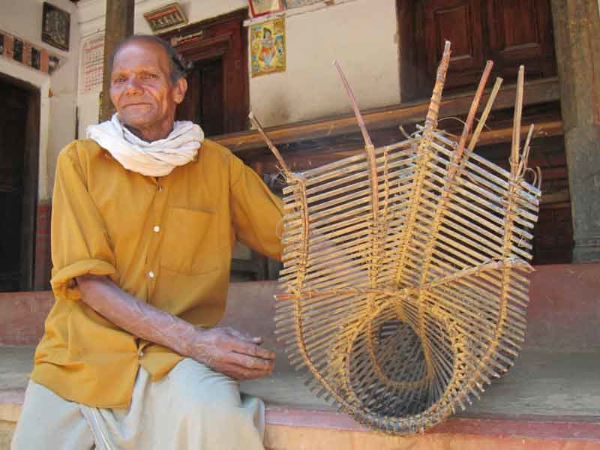
Photo © Arun VC >>
KOZHIKODE: Heavy summer rain has turned out to be manna from the skies for tribal honey hunters in Wayanad, the leading wild honey producing region in the state. The massive blooming of forest flora after the summer rain has given hopes of a bountiful harvest in the ongoing season that extends till September. […]
“We are looking forward to good harvest of over 20,000kg of wild honey as forest trees like Maruthu (Terminalia paniculata), Venthekku (Lagerstroemia microcarpa) Chadachi (Grewia tiliaefolia), Thanni (Terminalia bellerica) etc have bloomed in abundance this year following summer rain,” said OA Ramakrishnan, president of the Sultan Bathery Scheduled Tribes Cooperative Society at Kallur, the largest tribal society in the state. […]
The society had a dull season last year and could procure only 12,000kg, following adverse findings in the tests done by food safety authorities. Society officials said that subsequent tests conducted in laboratory in Mysuru had confirmed that the honey was of good quality.
“Timely summer showers saved us this season. We feared that this year’s scorching summer would dry up the honey yield and our main source of income. But, summer showers have become a blessing,” Mathan, a tribesman from the Ponkuzhi colony said.
Secretary of Thirunelly Scheduled Tribes Cooperative Society Sunoj EG, said that they have collected 5,000kg of honey and hope to collect over 8,000 more by the end of the season. Last year, the society had collected only 6,000kg.
The Kattunayikka tribesmen are master honey hunters, who make a living by collecting wild honey and other forest produce. Wild honey is mainly collected from the hives of rock bees on the branches of tall trees. The tribal wild honey collectors, who venture into the forests in groups of four or five members, gather honey by climbing the tall trees. The bees are driven away with the help of a smoker and the honey part of the hive is cut off.
State forest department, which procures and markets honey through eco-development committees inside Wayanad Wildlife Sanctuary, had taken steps to ensure sustainable harvesting of honey from forests.
Source: “Heatwave in kozhikode: Summer rain ensures bountiful harvest for tribal honey hunters” by K R Rajeev, Times of India, 18 May 2017
Address: https://timesofindia.indiatimes.com/city/kozhikode/summer-rain-ensures-bountiful-harvest-for-tribal-honey-hunters/articleshow/58726438.cms
Date Visited: 18 January 2022
[Bold typeface added above for emphasis]
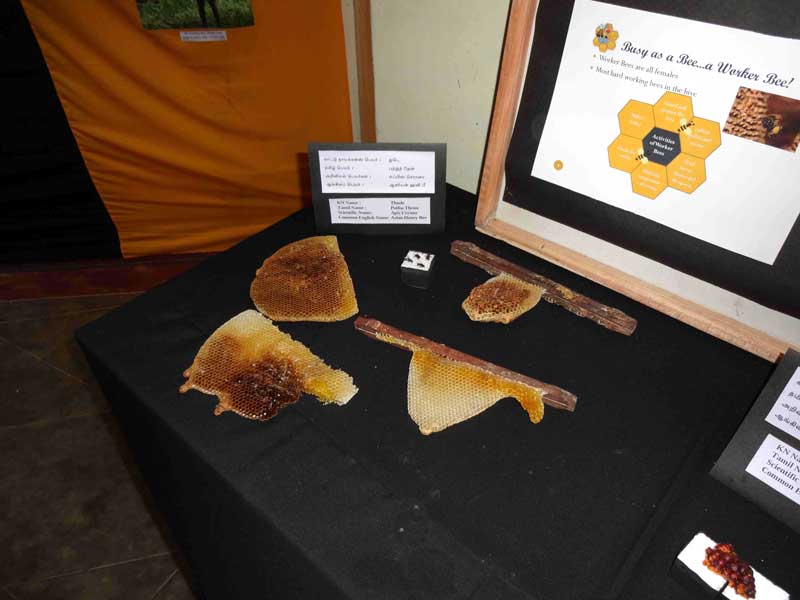
The Scheduled Tribes and Other Traditional Forest Dwellers (Forest Rights Act) gives members of tribal communities the right “to collect, use, and dispose of minor forest produce including bamboo, brush wood, stumps, cane, tussar, cocoons, honey, wax, lac, tendu or kendu leaves, medicinal plants and herbs, roots, tubers.” – Azim Premji University Team
Up-to-date reports by Indian experts and journalists
Search tips
Combine the name of any particular state, language or region with that of any tribal (Adivasi) community.
Add keywords of special interest (music, poetry, dance just as health, sacred grove and biodiversity); learn about the rights of Scheduled Tribes such as the “Forest Rights Act” (FRA); and the United Nations “Declaration on the Rights of Indigenous Peoples”, “Universal Declaration of Human Rights”, “women’s rights”, or “children’s right to education”.
Ask a question that includes “tribal” or “Adivasi”, for instance: “Adivasi way of life better?” (or “tribal way of life worse?”)
Specify any particular issue or news item (biodiversity, bonded labour and human trafficking, climate change, ecology, economic development, ethnobotany, ethnomedicine, global warming, hunter-gatherers in a particular region or state, prevention of rural poverty, water access).
For official figures include “scheduled tribe ST” along with a union state or region: e.g. “Chhattisgarh ST community”, “Himalayan tribe”, “Scheduled tribe Tamil Nadu census”, “ST Kerala census”, “Particularly Vulnerable Tribal Group Jharkhand”, “PVTG Rajasthan”, “Adivasi ST Kerala”, “Adibasi ST West Bengal” etc.
SafeSearch browser tips
If your (mobile) browser fails to display “embedded” media contents, Google maps and SafeSearch windows
Try another browser like Firefox, Chrome or Safari available on your device
Ensure your favourite browser is up to date
Close your present browser
Check your browser and mobile (gsm) settings:
e.g. permission for video or JavaScript
(seen under Preferences >Security >Enable JavaSript)
Restart your computer (smartphone, tablet)
Reconnect to your wifi network or connect to a different one
On some iPhone models the following helps:
>Settings >Safari >scroll down to:
SETTING FOR WEBSITES
Enable “Request Desktop Website” (All Websites) temporarily
Return to the map-post in Safari and “Reload”
Return to >Settings and disable “Request Desktop Website” again
Return to the post in Safari and “Reload”which should now display “embedded” contents as intended (with the convenience of browsing the mobile version on a small screen)
Note: similar solutions may also work with other mobile operating systems.
List of websites covered by this Google custom search engine
Academia.edu (platform for academics to share research papers) – www.academia.edu
Archive.org – https://archive.org
Centre for Science and Environment – https://www.cseindia.org
Current Conservation – https://www.currentconservation.org
Development and Cooperation (D+C) https://www.dandc.eu
Down To Earth (India) – www.downtoearth.org.in
India Environment Portal – www.indiaenvironmentportal.org.in
Harnessing Nature Magazine – https://harnessingnature.online
Mongabay-India – https://india.mongabay.com
M S Swaminathan Research Foundation – www.mssrf.org
Navdanya (protecting India’s biodiversity based food heritage) – https://navdanya.org
People’s Archive of Rural India – https://ruralindiaonline.org/
Third World Network (Penang, Malaysia) – https://twn.my
The Shola Trust (nature conservation in the Nilgiri region) – www.thesholatrust.org
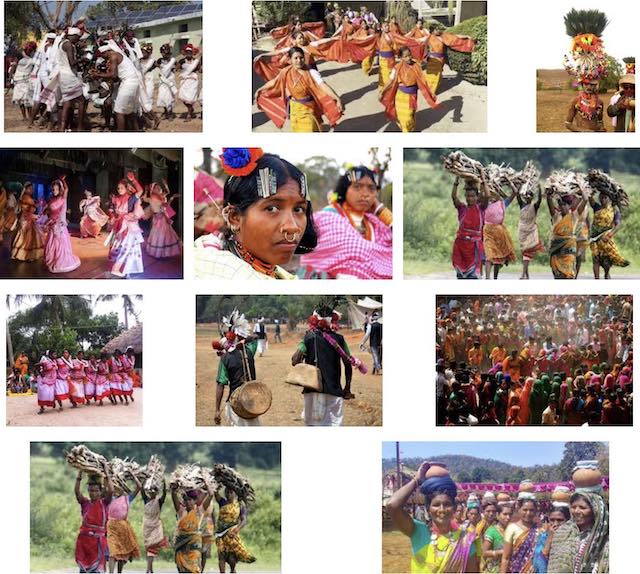
Indian online periodicals and platforms | Images view >>
~ ~ ~
Personalize your CustomSearch by combining other search words >>
(e.g. name of a tribal community and region, a craft, or dance and puppetry)
Research: explore PhD theses from all over India
Shodhganga (Open Access)
Suggested reading on thebetterindia.com:
Meet the Honey Hunters of the Nilgiris – the Men Who Risk Their Lives for Your Sweet Jar of Honey >>
See also
Biodiversity and development – Kerala
Childhood – Kerala | Childrens rights: UNICEF India | Safe search
Childrens rights: English or Malayalam (UNICEF India)
eBook | Background guide for education
Education and literacy | Right to education
Kerala | State wise ST list (Scheduled Tribes)
Recommendations by the Expert Committee on Tribal Health
Tribal schools and educational projects – Kerala
Video | M.S. Swaminathan on Biodiversity and the sharing of resources
Video | Trailer to “Have you seen the arana?” – Kerala
Vulnerable tribal groups – Kerala
Women | Safe search | President Droupadi Murmu on women’s empowerment
Tips for using interactive maps
Toggle to normal view (from reader view) should the interactive map not be displayed by your tablet, smartphone or pc browser
For details and hyperlinks click on the rectangular button (left on the map’s header)
Scroll and click on one of the markers for information of special interest
Explore India’s tribal cultural heritage with the help of another interactive map >>
Explore India’s tribal cultural heritage with the help of another interactive map >>