
How Tribal Women of Odisha Have Made Farming Organic, Profitable & Life-Changing | Read the full article and view more images >>
Basudev Mahapatra, Thebetterindia.com, July 13, 2017
Tribal communities in Sundargarh district of Odisha have revived the traditional practice of growing food without the help of chemical fertilisers and made it viable economically by making pragmatic changes. Basudev Mahapatra takes a closer look.
Nirmala Barla (40), a passionate farmer of Sundargarh district’s Brahmanamara village, is a proud woman because she feeds her family with a variety of safely grown food, and not just cereals grown by using lots of chemical fertilisers that are available in the market. In her 14 acres of land, both upland and relatively plain, she grows rice, millet and vegetables without using any inorganic fertilisers. After meeting consumption needs of the family, she is also able to earn a bit by selling the surplus farm produce. […]
From individual to collective farming
Now the women folk of these tribal communities do not keep themselves limited to individual farm activities in their own lands only. They have now formed groups comprising landholders and landless poor and taken up patches of land on lease to grow variety of nutrition-rich food crops including millets, pulses and vegetables.
This model is developed in line with the traditional tribal system of Panch, where a team of tribal males from the households work together for terracing, bounding and leveling the sloped land in the hilly terrain to make them farming-ready and building small water-harvesting structures for limited irrigation.
One of the best features of these collective models of women farmers is that even the landless poor member of the group has equal share of the harvest. So this concept has got wide acceptance and, as of now, 48 women farmers’ collectives operate in different villages.
The group of eight woman farmers from Oram tribal community of Budajharan village, named Oliva Women Farmers’ Collective, has received several accolades for growing about 12 crops including brinjal, chilly, onion, tomato, cow-pea, watermelon, beans, bitter-gourd, ladies finger, sunflower, pumpkin and leafy-vegetables, in one season by dedicating one row for each crop.
These groups are affiliated to the larger front of tribal communities called Athakoshia Adivasi Ekta Manch, which fights for their rights on forest land and the commons to expand the area under organic farming. […]
Adapted from an article originally published on VillageSquare.in. Subscribe to VillageSquare’s weekly update on the website for more stories from rural India.
Basudev Mahapatra is a journalist based in Bhubaneswar.
Source: How Tribal Women of Odisha Have Made Farming Organic, Profitable & Life-Changing
URL: https://www.thebetterindia.com/108128/tribal-women-sundargarh-make-organic-farming-life-changing-economic-activity/
Date visited: 11 October 2020
[Bold typeface added above for emphasis]
There are three important stakeholders on whom rests the successful implementation of the Act [Forest Rights Act (2006)]. This includes the Gram Sabha itself, the Forest Department and the Ministry of Tribal Affairs (Tribal Department in various states); the Tribal Departments are the nodal agencies responsible for the implementation of the Act. Revenue officers at the District and Block level also have a role to play in the finalization of titles, making changes in the official revenue maps etc. Apart from this an institutional framework has been created at different levels of checks and balances, management and redressed structures from the village to the state level. This involves the Forest Rights Committee at the village level, the Sub-Divisional and District level Committees and a final appellate authority of the State Level Monitoring Committee.
Websites:
CG-Net Swara: http://cgnetswara.org/
The Forest Right Act: https://www.forestrightsact.com/home
Forest Rights Act: https://www.fra.org.in
Ministry of Environment and Forests: http://envfor.nic.in/
Source: Rebecca S . David in “An analysis of the impact of the Forest Rights Act (2006) in three states of India” (MPhil University of Cambridge, UK, 2014), p. 1
URL: https://www.academia.edu/30648733/
Date visited: 11 October 2020
“The tribal households traditionally had a backyard garden that had multiple, multilayered and multipurpose indigenous trees, plants, herbs, and shrubs. […] The produce from this small garden was sufficient to meet the dietary and nutrition needs of a family for an entire year.” – Learn more about food crops that are resistant to pests, grow on poor soils, flourish under changed climatic conditions and offer high nutritive value | Food distribution >>
Adivasi communities: stewards of India’s cultural heritage and biodiversity
[…] India’s tribal communities — over 104.5 million people, or 8.6 per cent of the population — remain among the most marginalised despite decades of welfare schemes and development promises. In states such as Chhattisgarh, Jharkhand, Bihar, Rajasthan and Odisha, tribal districts consistently record higher poverty levels than non-tribal areas, even as these regions supply land, forests and minerals for the country’s growth. These communities have often been compelled to relinquish their lands for large-scale infrastructure projects, resulting in the erosion of their identity, livelihoods, and future prospects.
It is crucial to recognise the value these communities bring, particularly their eco-friendly lifestyles, which offer important insights into addressing climate-related challenges. For instance, during the 2018 drought in Sundergarh, Odisha, a visit to a remote tribal village revealed thriving vegetation and effective water-harvesting systems. Kiri village in Lahunipara block of Sundergarh district, inhabited by the Paudi Bhuyan community — a Particularly Vulnerable Tribal Group (PVTG) — has demonstrated remarkable resilience.
This observation underscores the importance of learning from traditional ecological knowledge, especially sustainable farming practices that rely on drought-resistant and indigenous seeds.
Adivasi communities, as stewards of India’s cultural heritage and biodiversity, must be central to the nation’s development narrative. Their lives are intricately linked to land, forests and water, yet they face growing threats from climate change, livelihood insecurity and displacement. Addressing these challenges requires more than welfare initiatives; it demands robust enforcement of constitutional rights, substantial public investment and the strengthening of Gram Sabha–based governance. […]
Source: “Union Budget must shift from welfare to rights-based public investment for Adivasi communities” by Debabrat Patra, Sion Kongari & Saurabh Kumar, Down to Earth, 9 February 2026
URL: https://www.downtoearth.org.in/governance/union-budget-must-shift-from-welfare-to-rights-based-public-investment-for-adivasi-communities
Date Visited: 30 June 2026
The tribal food basket has always been diverse and nutritious, including maize, minor millets like kodo and kutki, oil seeds like ramtila, along with fruits, leaves, rhizomes, mushrooms, meat and fish. […] We have pushed them out of their complementary relationship with ecology, way of life and time-tested nutrition >>
Tips for using interactive maps
Toggle to normal view (from reader view) should the interactive map not be displayed by your tablet, smartphone or pc browser
For details and hyperlinks click on the rectangular button (left on the map’s header)
Scroll and click on one of the markers for information of special interest
Explore India’s tribal cultural heritage with the help of another interactive map >>
See also
Adverse inclusion | Casteism | Rural poverty
Anganwadi | Community facilities | Ekalavya
Demographic Status of Scheduled Tribe Population of India (Census figures 2011)
Fact checking | Figures, census and other statistics
Human Rights Commission (posts) | www.nhrc.nic.in (Government of India)
Search tips | Names of tribal communities, regions and states of India
“The world sells humans. What kind of world is this?” – Hindi Movie “Kamla” revisited
“What is the Forest Rights Act about?” – Campaign for Survival and Dignity
“Who are Scheduled Tribes?” – Government of India (National Commission for Scheduled Tribes, NCST)
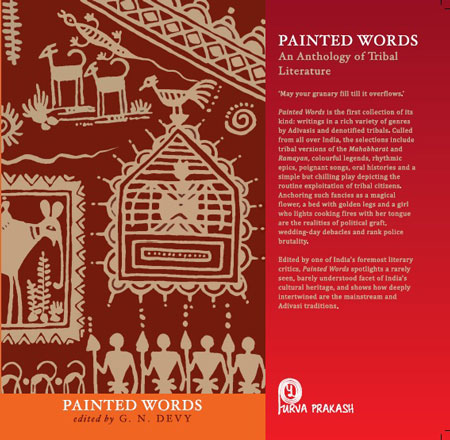
Tribal Literature by G.N. Devy >>
Free eBooks & Magazine: Adivasi literature and languages >>
“India, a union of states, is a Sovereign, Secular, Democratic Republic with a Parliamentary system of Government. The President is the constitutional head of Executive of the Union. In the states, the Governor, as the representative of the President, is the head of Executive. The system of government in states closely resembles that of the Union. There are 28 states and 8 Union territories in the country. Union Territories are administered by the President through an Administrator appointed by him/her. From the largest to the smallest, each State/UT of India has a unique demography, history and culture, dress, festivals, language etc. This section introduces you to the various States/UTs in the Country and urges you to explore their magnificent uniqueness…” – KnowIndia (Government), States and Union Territories (Visited: 2 September 2023)
Learn more about India’s 28 States and 8 Union Territories – From Andhra Pradesh to West Bengal | Nutrition >>