
Applied Environmental Research Foundation (AERF)
C-10, Natya Chitra Co-op Hsg. Soc. (Kalagram)
Bhusari Colony, Kothrud,
Pune – 411052 Maharashtra, INDIA
www.savethewesternghats.org
Applied Environmental Research Foundation (AERF)
Since 2009 a group of experienced activists and practitioners came together to revive the Save Western Ghats Movement that was initiated in 1987-88 with Save the Western Ghats March. This group worked hard in 2009 to organize the annual meeting of civil society representatives from Western Ghats and mobilized about 200 + organizations and individuals. Read more >>
Publications
The past is essential so that we could learn to build from it. In our efforts to move ahead, this conclave is also an avenue for us to understand our present and our future from the perspective of the goalposts and vision of the past. It will only be an enabling and enriching experience to comprehend how the SWG March of 1987/88 had formulated and pitched the concerns of the Western Ghats, 25 years back and to see how deep and how far have we been able to understand and address those concerns and problematic raised. Read more >>
North Western Ghats Conservation Network(NWCN)
Since last couple of years various groups and individuals working for conservation in the north Western Ghats region have been meeting to discuss the issues they are dealing with, need to plan and implement collective action and to strengthen the scientific understanding of this part of Western Ghats biodiversity hotspot. This group formed a network called North Western Ghats Conservation network in Sept.2011. Read more >>
Source: Save the Western Ghats Copyright @ 2012
Address : http://www.savethewesternghats.org/
Date Visited: Sun Sep 23 2012 15:52:10 GMT+0200 (CEST)
Find up-to-date information provided by, for and about Indian authors, researchers, officials, and educators
List of sites covered by this Google SafeSearch engine
Ashoka Trust for Research in Ecology and the Environment (ATREE) – www.atree.org
Freedom United – www.freedomunited.org
Government of India (all websites ending on “.gov.in”)
Kalpavriksh Environmental Action Group – https://kalpavriksh.org
Shodhganga (a reservoir of Indian theses) – https://shodhganga.inflibnet.ac.in
Survival International – www.survivalinternational.org
UCLA Digital Library – https://digital.library.ucla.edu
Unesco – https://en.unesco.org
Unesco digital library – https://unesdoc.unesco.org
Unicef – www.unicef.org
United Nations – www.un.org/en
Video Volunteers – www.videovolunteers.org
WorldCat (“the world’s largest library catalog, helping you find library materials online”) – https://worldcat.org
Search tips
Combine the name of any particular state, language or region with that of any tribal (Adivasi) community.
Add keywords of special interest (music, poetry, dance just as health, sacred grove and biodiversity); learn about the rights of Scheduled Tribes such as the “Forest Rights Act” (FRA); and the United Nations “Declaration on the Rights of Indigenous Peoples”, “Universal Declaration of Human Rights”, “women’s rights”, or “children’s right to education”.
Ask a question that includes “tribal” or “Adivasi”, for instance: “Adivasi way of life better?” (or “tribal way of life worse?”)
Specify any particular issue or news item (biodiversity, bonded labour and human trafficking, climate change, ecology, economic development, ethnobotany, ethnomedicine, global warming, hunter-gatherers in a particular region or state, prevention of rural poverty, water access).
For official figures include “scheduled tribe ST” along with a union state or region: e.g. “Chhattisgarh ST community”, “Himalayan tribe”, “Scheduled tribe Tamil Nadu census”, “ST Kerala census”, “Particularly Vulnerable Tribal Group Jharkhand”, “PVTG Rajasthan”, “Adivasi ST Kerala”, “Adibasi ST West Bengal” etc.
SafeSearch browser tips
If your (mobile) browser fails to display “embedded” media contents, Google maps and SafeSearch windows
Try another browser like Firefox, Chrome or Safari available on your device
Ensure your favourite browser is up to date
Close your present browser
Check your browser and mobile (gsm) settings:
e.g. permission for video or JavaScript
(seen under Preferences >Security >Enable JavaSript)
Restart your computer (smartphone, tablet)
Reconnect to your wifi network or connect to a different one
On some iPhone models the following helps:
>Settings >Safari >scroll down to:
SETTING FOR WEBSITES
Enable “Request Desktop Website” (All Websites) temporarily
Return to the map-post in Safari and “Reload”
Return to >Settings and disable “Request Desktop Website” again
Return to the post in Safari and “Reload”which should now display “embedded” contents as intended (with the convenience of browsing the mobile version on a small screen)
Note: similar solutions may also work with other mobile operating systems.
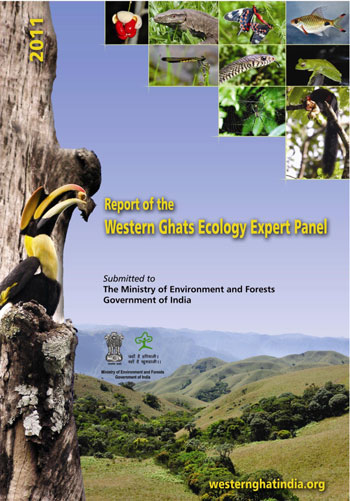
Celebrations and Convergence for
Conservation In Western Ghats (PDF, 3 MB) >>
Learn more
Western Ghats tribal heritage and ecology >>
Learn more
Atree.org | Ashoka Trust for Research in Ecology & the Environment (posts)
Biodiversity | Biodiversity hotspot | Hyderabad biodiversity pledge
Climate change | Audio | The Climate Question (BBC Podcast)
eBook | Background guide for education
Ecology and environment | Eco tourism | Tourism | Wildlife tourism
Environmental history and what makes for a civilization – Romila Thapar
Equations blog (Equitable Tourism Options)
Forest Rights Act (FRA) | Hunter-gatherers | Illegal mining | Legal rights over forest land
Information provided by Indian government agencies and other organizations (FAQ)
Nature and wildlife | Crocodile | Elephant | Tiger | Mangrove forest | Trees
PARI’s tales from tiger territory | People’s Archive of Rural India (PARI)
Shola Trust | Nilgiri Biosphere
Water and development – India’s tribal communities
Western Ghats – tribal heritage & ecology
What is the Forest Rights Act about?
Who is a forest dweller under this law, and who gets rights?
Tips for using interactive maps
Toggle to normal view (from reader view) should the interactive map not be displayed by your tablet, smartphone or pc browser
For details and hyperlinks click on the rectangular button (left on the map’s header)
Scroll and click on one of the markers for information of special interest
Explore India’s tribal cultural heritage with the help of another interactive map >>