Adivasi (a Hindi word that literally means the original inhabitants) is a term for a heterogeneous set of ethnic and tribal groups believed to be the aboriginal population of India. Adivasi societies are present in India, Nepal, Bangladesh, Bhutan and other South Asian nations.
Adivasi is officially recognized by the Indian government as “Scheduled Tribes” in the Fifth Schedule of the Constitution of India, which is eligible for certain affirmative action measures.
More on the names given to/adopted by Adivasi communities, their distinctive customs and histories: jharkhandi.com website >>
Source: Adivasis.com | Jharkhandi.com | Tribal India Group | Scheduled Tribes (ST) of India
Address : http://jharkhandi.com/Adivasi.aspx
Date Visited: Wed Mar 21 2012 10:55:12 GMT+0100 (CET)
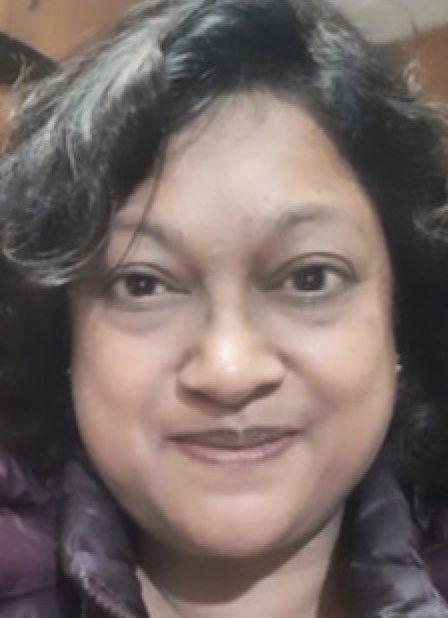
Ādivāsi [ādibāsi] may be used in accordance with local conventions; and increasingly so for official purposes (e.g. in “Conserving Tradition and Practices of Adivasi Communities in India” published on NIDM.gov.in); Dr. Ivy Hansdak clarifies:
“Adivasi – which is derived from Sanskrit – is applied to the dark-skinned or Austro-Asiatic indigenous groups of India (usually those from Eastern India). It is a commonly-used term in Jharkhand, Bihar, West Bengal and Odisha. It is also used by the local Mongoloid tribes of North Eastern India for the migrant workers who were brought in as indentured labourers to work in tea plantations during the colonial period. ‘Tribal’ is a very broad term in the English language and includes all the different indigenous groups of India. The terms ‘indigenous’ and ‘aboriginal’ are not used often as the government claims most groups are indigenous in India. ‘Denotified Tribes’ is only used for those nomadic tribes who were notified as ‘criminal tribes’ during the British Raj [colonial rule]; later they were ‘denotified’ but still bear the stigma.” (emails dated 2020 & 2023)
A Supreme Court judgment projects the historical thesis that India is largely a country of old immigrants and that pre-Dravidian aborigines, ancestors of the present Adivasis, rather than Dravidians, were the original inhabitants of India. – Comment “India, largely a country of immigrants” Photo © The Hindu >>
Excerpts from the 2011 Supreme Court judgment
India, largely a country of immigrants
A Supreme Court judgment projects the historical thesis that India is largely a country of old immigrants and that pre-Dravidian aborigines, ancestors of the present Adivasis, rather than Dravidians, were the original inhabitants of India.
If North America is predominantly made up of new immigrants, India is largely a country of old immigrants, which explains its tremendous diversity. It follows that tolerance and equal respect for all communities and sects are an absolute imperative if we wish to keep India united. If it was believed at one time that Dravidians were the original inhabitants of India, that view has since been considerably modified. Now the generally accepted belief is that the pre-Dravidian aborigines, that is, the ancestors of the present tribals or Adivasis (Scheduled Tribes), were the original inhabitants. This is the thesis put forward in a judgment delivered on January 5, 2011 by a Supreme Court of India Bench comprising Justice Markandey Katju and Justice Gyan Sudha Misra. This historical disquisition came in Criminal Appeal No. 11 of 2011, arising out of Special Leave Petition No. 10367 of 2010 in Kailas & Others versus State of Maharashtra TR. Taluka P.S.
eThe appeal was filed against a judgment and order passed by the Aurangabad Bench of Bombay High Court. The Supreme Court Bench saw in the appeal a typical instance of how many Indians treat the Scheduled Tribes, or Adivasis. The case related to Nandabai, 25, belonging to the Bhil tribe, a Scheduled Tribe in Maharashtra. […]
The Bhils are probably the descendants of some of the original inhabitants of India known as the ‘aborigines’ or Scheduled Tribes (Adivasis), who now comprise only about eight per cent of the population of India. The rest, 92 per cent, consists of descendants of immigrants. Thus India is broadly a country of immigrants, like North America.
While North America (USA and Canada) has new immigrants who came mainly from Europe over the last four or five centuries, India is a country of old immigrants in which people have been coming in over the last ten thousand years or so. Probably about 92 per cent of the people living in India today are descendants of immigrants, who came mainly from the North-West, and to a lesser extent from the North-East. Since this is a point of great importance for the understanding of our country, it is necessary to go into it in some detail.
People migrate from uncomfortable areas to comfortable areas. This is natural because everyone wants to live in comfort. Before the coming of modern industry there were agricultural societies everywhere, and India was a paradise for these because agriculture requires level land, fertile soil, plenty of water for irrigation and so on, which were in abundance in India. […]
India was a veritable paradise for pastoral and agricultural societies because it has level and fertile land, with hundreds of rivers, forests, etc., and is rich in natural resources. Hence for thousands of years people kept pouring into India because they found a comfortable life here in a country which was gifted by nature. […]
Who were the original inhabitants of India? At one time it was believed that the Dravidians were the original inhabitants. However, this view has been considerably modified subsequently, and now the generally accepted belief is that the original inhabitants of India were the pre-Dravidian aborigines, that is, the ancestors of the present tribals or Adivasis (Scheduled Tribes).
The Cambridge History of India (Volume I), Ancient India, says:
“It must be remembered, however, that, when the term ‘Dravidian’ is thus used ethnographically, it is nothing more than a convenient label. It must not be assumed that the speakers of the Dravidian languages are aborigines. In Southern India, as in the North, the same general distinction exists between the more primitive tribes of the hills and jungles and the civilised inhabitants of the fertile tracts; and some ethnologists hold that the difference is racial and not merely the result of culture. […]
“The theory that the Dravidian element is the most ancient which we can discover in the population of Northern India, must also be modified by what we now know of the Munda languages, the Indian representatives of the Austric family of speech, and the mixed languages in which their influence has been traced. Here, according to the evidence now available, it would seem that the Austric element is the oldest, and that it has been overlaid in different regions by successive waves of Dravidian and Indo-European on the one hand, and by Tibeto-Chinese on the other…
“At the same time, there can be little doubt that Dravidian languages were actually flourishing in the western regions of Northern India at the period when languages of the Indo-European type were introduced by the Aryan invasions from the north-west. Dravidian characteristics have been traced alike in Vedic and Classical Sanskrit, in the Prakrits, or early popular dialects, and in the modern vernaculars derived from them. The linguistic strata would thus appear to be arranged in the order-Austric, Dravidian, Indo-European.
“There is good ground, then, for supposing that, before the coming of the Indo-Aryans speakers the Dravidian languages predominated both in Northern and in Southern India; but, as we have seen, older elements are discoverable in the populations of both regions, and therefore the assumption that the Dravidians are aboriginal is no longer tenable. Is there any evidence to show whence they came into India?
“No theory of their origin can be maintained which does not account for the existence of Brahui, the large island of Dravidian speech in the mountainous regions of distant Baluchistan which lie near the western routes into India. […]
Thus the generally accepted view now is that the original inhabitants of India were not the Dravidians but the pre-Dravidian Munda aborigines whose descendants now live in parts of Chotanagpur (Jharkhand), Chhattisgarh, Orissa, West Bengal, etc., the Todas of the Nilgiris in Tamil Nadu, the tribals in the Andaman Islands, the Adivasis in various parts of India (especially in the forests and hills), for example the Gonds, Santhals, Bhils, etc.
These facts lend support to the view that about 92 per cent of the people living in India are descendants of immigrants (though more research is required).
It is for this reason that there is such tremendous diversity in India. This diversity is a significant feature of our country, and the only way to explain it is to accept that India is largely a country of immigrants.
There are a large number of religions, castes, languages, ethnic groups, cultures etc., in our country, which is due to the fact that India is a country of immigrants. Somebody is tall, somebody is short, some are dark, some are fair complexioned, with all kinds of shades in between, someone has Caucasian features, someone has Mongoloid features, someone has Negroid features, etc. There are differences in dress, food habits and various other matters. […]
Since India is a country of great diversity, it is absolutely essential if we wish to keep our country united to have tolerance and equal respect for all communities and sects. It was due to the wisdom of our founding fathers that we have a Constitution which is secular in character, and which caters to the tremendous diversity in our country.
Thus it is the Constitution of India which is keeping us together despite all our tremendous diversity, because the Constitution gives equal respect to all communities, sects, lingual and ethnic groups, etc. The Constitution guarantees to all citizens freedom of speech (Article 19), freedom of religion (Article 25), equality (Articles 14 to 17), liberty (Article 21), etc.
However, giving formal equality to all groups or communities in India would not result in genuine equality. The historically disadvantaged groups must be given special protection and help so that they can be uplifted from their poverty and low social status. It is for this reason that special provisions have been made in our Constitution in Articles 15(4), 15(5), 16(4), 16(4A), 46, etc., for the uplift of these groups. Among these disadvantaged groups, the most disadvantaged and marginalised in India are the Adivasis (STs), who, as already mentioned, are the descendants of the original inhabitants of India, and are the most marginalised and living in terrible poverty with high rates of illiteracy, disease, early mortality etc. Their plight has been described by this Court in Samatha vs. State of Andhra Pradesh and Ors. (AIR 1997 SC 3297, Para 12 to 15). Hence, it is the duty of all people who love our country to see that no harm is done to the Scheduled Tribes and that they are given all help to bring them up in their economic and social status, since they have been victimised for thousands of years by terrible oppression and atrocities. The mentality of our countrymen towards these tribals must change, and they must be given the respect they deserve as the original inhabitants of India.
The bravery of the Bhils was accepted by that great Indian warrior Rana Pratap, who held a high opinion of Bhils as part of his army.
The injustice done to the tribal people of India is a shameful chapter in our country’s history. The tribals were called ‘rakshas’ (demons), ‘asuras’, and what not. They were slaughtered in large numbers, and the survivors and their descendants were degraded, humiliated, and all kinds of atrocities inflicted on them for centuries. They were deprived of their lands, and pushed into forests and hills where they eke out a miserable existence of poverty, illiteracy, disease, etc. And now efforts are being made by some people to deprive them even of their forest and hill land where they are living, and the forest produce on which they survive. […]
Despite this horrible oppression on them, the tribals of India have generally (though not invariably) retained a higher level of ethics than the non-tribals. They normally do not cheat or tell lies, or commit other misdeeds, which many non-tribals do. They are generally superior in character to non-tribals.
It is time now to undo the historical injustice to them. […]
Source: Supreme Court judgment quoted in “India, largely a country of immigrants”, The Hindu (Comment), 12 January 2011
Address : https://www.thehindu.com/opinion/op-ed/article1081343.ece
Date Visited: 7 July 2022
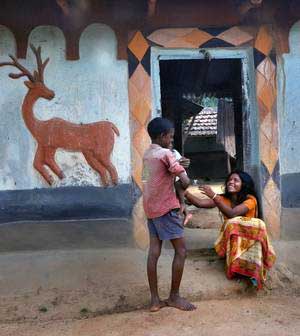
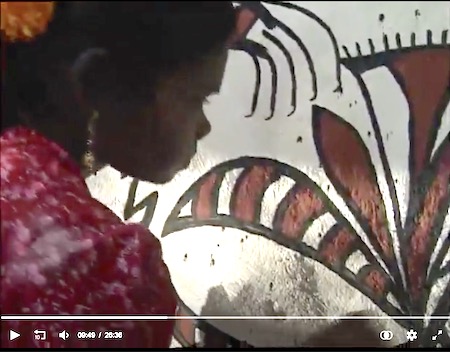
Watch all parts on Archive.org >>
Bihar | Jharkhand >>
Learn more
eBook | Background guide for education
Jawaharlal Nehru’s “five principles” for the policy to be pursued vis-a-vis the tribals
Tips for using interactive maps
Toggle to normal view (from reader view) should the interactive map not be displayed by your tablet, smartphone or pc browser
For details and hyperlinks click on the rectangular button (left on the map’s header)
Scroll and click on one of the markers for information of special interest
Explore India’s tribal cultural heritage with the help of another interactive map >>
See also
Adverse inclusion | Casteism | Rural poverty
Anganwadi | Community facilities | Ekalavya
Demographic Status of Scheduled Tribe Population of India (Census figures 2011)
Fact checking | Figures, census and other statistics
Human Rights Commission (posts) | www.nhrc.nic.in (Government of India)
Search tips | Names of tribal communities, regions and states of India
“The world sells humans. What kind of world is this?” – Hindi Movie “Kamla” revisited
“What is the Forest Rights Act about?” – Campaign for Survival and Dignity
“Who are Scheduled Tribes?” – Government of India (National Commission for Scheduled Tribes, NCST)
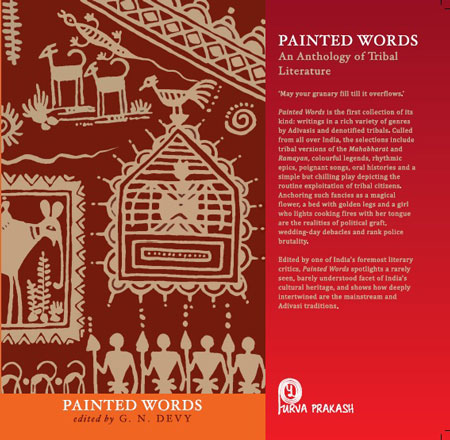
Tribal Literature by G.N. Devy >>
Free eBooks & Magazine: Adivasi literature and languages >>
“India, a union of states, is a Sovereign, Secular, Democratic Republic with a Parliamentary system of Government. The President is the constitutional head of Executive of the Union. In the states, the Governor, as the representative of the President, is the head of Executive. The system of government in states closely resembles that of the Union. There are 28 states and 8 Union territories in the country. Union Territories are administered by the President through an Administrator appointed by him/her. From the largest to the smallest, each State/UT of India has a unique demography, history and culture, dress, festivals, language etc. This section introduces you to the various States/UTs in the Country and urges you to explore their magnificent uniqueness…” – KnowIndia (Government), States and Union Territories (Visited: 2 September 2023)
Learn more about India’s 28 States and 8 Union Territories – From Andhra Pradesh to West Bengal | Nutrition >>