“Nehru was fascinated by the spontaneity of tribal culture and their capacity of joy and heroism in spite of their appalling poverty, destitution, and ignorance. […] In Nehru’s view, the process of modernization must not be taken as forcing a sudden break with the tribals past but help them build upon it and grow by a natural process of evolution.” – Dr. Chittaranjan Mishra in “Tribal Philosophy and Pandit Nehru” (Odisha Review, November 2017) | Learn more >>
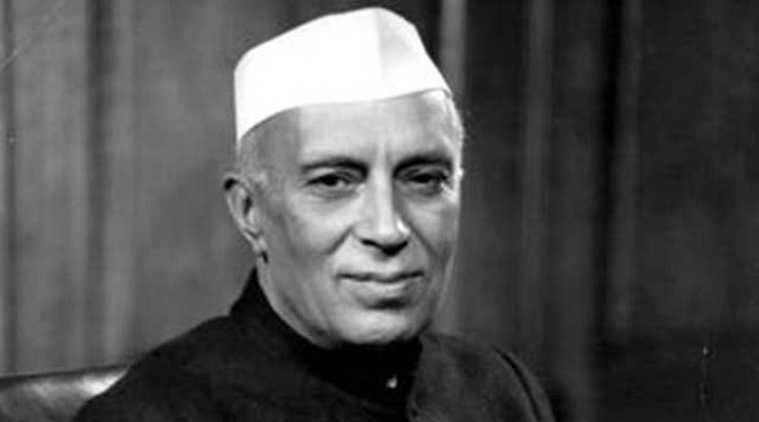
Photo © Indian Express
The current predicament of Adivasis
The current predicament of a vast majority of Adivasis is one of sharp erosion in their livelihoods and their life-worlds. Despite assurances of autonomy (the Fifth and Sixth Schedules, the Panchsheel, PESA 1996, Forests Rights Act 2006) and attempts of focused addressal of Adivasi and Tribal issues (including the establishment of an umbrella outfit, the National Council for Tribal Welfare), there are counter structures and programmes that defy the enabling of genuinely decentralised autonomy and the guarantee of democratic participation. For instance, the recently approved ‘Integrated Action Plan’ in Tribal areas overrides the representation of Adivasis in local issues in decision-making processes and arrogates powers of governance to bureaucrats and specialists.
In addition to such contradictory and conflicting measures, the forces of fast-expanding capital, along with the top-down deployment of development models have resulted in large scale displacement in Adivasi regions. Global capital’s access to mineral wealth has also intensified violence of various forms and degrees.
Source: Ch. 2, “Context and Conditions of Adivasi Life Worlds” (p. 5) in THE EDUCATION QUESTION’ FROM THE PERSPECTIVE OF ADIVASIS: CONDITIONS, POLICIES AND STRUCTURES by National Institute of Advanced Studies (Bangalore), March 2012 & UNICEF | Backup (PDF, 4 MB)
Welcome to NCST – National Commission for Scheduled Tribes
The framers of the Constitution took note of the fact that certain communities in the country were suffering from extreme social, educational and economic backwardness arising out of age-old practice of untouchability and certain others on account of this primitive agricultural practices, lack of infrastructure facilities and geographical isolation, and who need special consideration for safeguarding their interests and for their accelerated socio-economic development. These communities were notified as Scheduled Castes and Scheduled Tribes as per provisions contained in Clause 1 of Articles 341 and 342 of the Constitution respectively.
Socio Economic Development
For the Socio-economic and overall development of the Tribal people, special provisions and safeguards have been provided in the Constitution of India and some initiative have also been taken by the Government of India, including Tribal Sub Plan (TSP) strategy. The Tribal Sub Plan (TSP) strategy was aimed for the rapid socio-economic development of tribal people. The funds provided under the Tribal Sub Plan of the State have to be at least equal in proportion to the ST population of each State or UTs. Similarly Central Ministries/Departments are also required to earmark funds out of their budget for the Tribal Sub-Plan. As per guidelines issued by the Planning Commission, the Tribal Sub Plan funds are to be non-divertible and non-lapsable. The National Commission for Scheduled Tribes is vested with the duty to participate and advise in the planning process of socio-economic development of STs, and to evaluate the progress of their development under the Union and any State.
SOCIO-ECONOMIC DEVELOPMENT OF SCHEDULED TRIBES
Some excerpts | To download the full PDF document, click here >>1.1 Since the beginning of the Planning process, efforts have been made to ensure that the tribal people were included in the growth process. However, the strategy changed with each Five Year Plan as new lessons were learnt from various developmental efforts. […]
Programmes and important aspects related to Scheduled Tribes >>
which includes 16 “Centrally Sponsored Schemes” [see article 7] and a commitment “to overall development of the people belonging to Scheduled Tribes and to project the rights of such people and preserve and promote tribal culture and heritage has recently taken up a number of new initiatives towards their development’. [see article 9] besides an “Umbrella scheme for Education of ST Children” including “Establishing and strengthening of Ashram Schools“ [see article 9]; concluding with two more important regulations:
“Scheduled Tribe claims on migration” [see article 16.2] “Scheduled Tribe claims after marriage and status of their children” [see article 16.3]:
“The guiding principle is that no person who was not a Scheduled Tribe by birth will be deemed to be a member of Scheduled Tribe merely because he or she has married a person belonging to a Scheduled Tribe. Similarly a person who is a member of a Scheduled Tribe would continue to be a member of that Scheduled Tribe, even after his or her marriage with a person who does not belong to a Scheduled Tribes. However, status of the children born out of such marriages would depend on the particular caste status of the father.”
Source: Welcome to NCST [National Commission for Scheduled Tribes]
URL: https://www.ncst.gov.in/index.php
https://ncst.nic.in/sites/default/files/Socio-economic%20development%20for%20STs.pdf
Date visited: 31 May 2020
[Bold typeface added above for emphasis]
Search select websites: Govt. of India, NGOs, Indian universities and international organisations
Learn more about India’s tribal communities – their cultural heritage, current conditions and aspirations – with the help of the search windows seen below
See also
Adverse inclusion | Casteism | Rural poverty
Anganwadi | Community facilities | Ekalavya
Demographic Status of Scheduled Tribe Population of India (Census figures 2011)
Fact checking | Figures, census and other statistics
Human Rights Commission (posts) | www.nhrc.nic.in (Government of India)
Search tips | Names of tribal communities, regions and states of India
“The world sells humans. What kind of world is this?” – Hindi Movie “Kamla” revisited
“What is the Forest Rights Act about?” – Campaign for Survival and Dignity
“Who are Scheduled Tribes?” – Government of India (National Commission for Scheduled Tribes, NCST)
Find up-to-date information provided by, for and about Indian authors, researchers, officials, and educators
List of sites covered by this Google SafeSearch engine
Ashoka Trust for Research in Ecology and the Environment (ATREE) – www.atree.org
Freedom United – www.freedomunited.org
Government of India (all websites ending on “.gov.in”)
Kalpavriksh Environmental Action Group – https://kalpavriksh.org
Shodhganga (a reservoir of Indian theses) – https://shodhganga.inflibnet.ac.in
Survival International – www.survivalinternational.org
UCLA Digital Library – https://digital.library.ucla.edu
Unesco – https://en.unesco.org
Unesco digital library – https://unesdoc.unesco.org
Unicef – www.unicef.org
United Nations – www.un.org/en
Video Volunteers – www.videovolunteers.org
WorldCat (“the world’s largest library catalog, helping you find library materials online”) – https://worldcat.org
Search tips
Combine the name of any particular state, language or region with that of any tribal (Adivasi) community.
Add keywords of special interest (music, poetry, dance just as health, sacred grove and biodiversity); learn about the rights of Scheduled Tribes such as the “Forest Rights Act” (FRA); and the United Nations “Declaration on the Rights of Indigenous Peoples”, “Universal Declaration of Human Rights”, “women’s rights”, or “children’s right to education”.
Ask a question that includes “tribal” or “Adivasi”, for instance: “Adivasi way of life better?” (or “tribal way of life worse?”)
Specify any particular issue or news item (biodiversity, bonded labour and human trafficking, climate change, ecology, economic development, ethnobotany, ethnomedicine, global warming, hunter-gatherers in a particular region or state, prevention of rural poverty, water access).
For official figures include “scheduled tribe ST” along with a union state or region: e.g. “Chhattisgarh ST community”, “Himalayan tribe”, “Scheduled tribe Tamil Nadu census”, “ST Kerala census”, “Particularly Vulnerable Tribal Group Jharkhand”, “PVTG Rajasthan”, “Adivasi ST Kerala”, “Adibasi ST West Bengal” etc.
SafeSearch browser tips
If your (mobile) browser fails to display “embedded” media contents, Google maps and SafeSearch windows
Try another browser like Firefox, Chrome or Safari available on your device
Ensure your favourite browser is up to date
Close your present browser
Check your browser and mobile (gsm) settings:
e.g. permission for video or JavaScript
(seen under Preferences >Security >Enable JavaSript)
Restart your computer (smartphone, tablet)
Reconnect to your wifi network or connect to a different one
On some iPhone models the following helps:
>Settings >Safari >scroll down to:
SETTING FOR WEBSITES
Enable “Request Desktop Website” (All Websites) temporarily
Return to the map-post in Safari and “Reload”
Return to >Settings and disable “Request Desktop Website” again
Return to the post in Safari and “Reload”which should now display “embedded” contents as intended (with the convenience of browsing the mobile version on a small screen)
Note: similar solutions may also work with other mobile operating systems.