“I would urge you not to treat the issue of human rights in isolation and pay equal attention to nursing Mother Nature which is deeply wounded by the indiscretions of human beings.” – Droupadi Murmu | Speeches by the President of India >>
Indu Netam, an Adivasi leader from Chhattisgarh, on Monday, slammed the plantation of eucalyptus and other commercial varieties of trees in tribal forest areas under Green India Mission (GIM), saying this was impacting their livelihoods.
Addressing the media here on Monday, she said in the name of protecting the environment, fruit-bearing trees, medicinal and other plants on which the Adivasis were dependent for ages have been replaced by plants that were not useful to them. She also complained that the Forest Rights Act was only on paper and not being implemented.
Lands being taken away
Souparna Lahiri of the All India Forum of Forest Movement alleged that under the Green India Mission, undertaken in line with the Prime Minister’s climate action plan, lands of forest communities were being taken away. In Chhattisgarh [Chhattisgarh], jatropha was being planted under GIM. He said the forest department was being given the right to govern forests through the backdoor by launching joint forest management initiatives.
He claimed that the forest cover in 113 tribal areas was more than 33 per cent, against the national average of 21 per cent. […]
Meanwhile, several NGOs and Indigenous People’s Organisations (IPOs) from across the globe, in an open letter to the international donor community, have expressed concern about the way funds meant for forest conservation, restoration and poverty eradication were being misdirected towards REDD+ projects (Reduce Emissions from Deforestation and Forest Degradation and to enhance forest carbon stocks).
Source: “Green initiative detrimental to livelihood of tribal people” The Hindu, HYDERABAD, 9 October 2012
Address : http://www.thehindu.com/todays-paper/tp-national/tp-andhrapradesh/green-initiative-detrimental-to-livelihood-of-tribal-people/article3979799.ece
Date Visited: Sat Nov 03 2012 16:01:40 GMT+0100 (CET)
Up-to-date reports by Indian experts and journalists
List of sites covered by this Google SafeSearch engine
Academia.edu (platform for academics to share research papers) – www.academia.edu
Archive.org – https://archive.org
Centre for Science and Environment – https://www.cseindia.org
Current Conservation – https://www.currentconservation.org
Development and Cooperation (D+C) https://www.dandc.eu
Down To Earth (India) – www.downtoearth.org.in
India Environment Portal – www.indiaenvironmentportal.org.in
Harnessing Nature Magazine – https://harnessingnature.online
Kalpavriksh Environmental Action Group – https://kalpavriksh.org
Mongabay-India – https://india.mongabay.com
M S Swaminathan Research Foundation – www.mssrf.org
Navdanya (protecting India’s biodiversity based food heritage) – https://navdanya.org
People’s Archive of Rural India – https://ruralindiaonline.org/
Third World Network (Penang, Malaysia) – https://twn.my
The Shola Trust (nature conservation in the Nilgiri region) – www.thesholatrust.org
TribalConnect (“uplift and benefit the community without adversely affecting or changing their vernacular”) – https://tribalconnect.org.in
WorldCat (“the world’s largest library catalog, helping you find library materials online”) – https://worldcat.org
More SafeSearch on this website
Search tips
Combine the name of any particular state, language or region with that of any tribal (Adivasi) community.
Add keywords of special interest (music, poetry, dance just as health, sacred grove and biodiversity); learn about the rights of Scheduled Tribes such as the “Forest Rights Act” (FRA); and the United Nations “Declaration on the Rights of Indigenous Peoples”, “Universal Declaration of Human Rights”, “women’s rights”, or “children’s right to education”.
Ask a question that includes “tribal” or “Adivasi”, for instance: “Adivasi way of life better?” (or “tribal way of life worse?”)
Specify any particular issue or news item (biodiversity, bonded labour and human trafficking, climate change, ecology, economic development, ethnobotany, ethnomedicine, global warming, hunter-gatherers in a particular region or state, prevention of rural poverty, water access).
For official figures include “scheduled tribe ST” along with a union state or region: e.g. “Chhattisgarh ST community”, “Himalayan tribe”, “Scheduled tribe Tamil Nadu census”, “ST Kerala census”, “Particularly Vulnerable Tribal Group Jharkhand”, “PVTG Rajasthan”, “Adivasi ST Kerala”, “Adibasi ST West Bengal” etc.
SafeSearch browser tips
If your (mobile) browser fails to display “embedded” media contents, Google maps and SafeSearch windows
Try another browser like Firefox, Chrome or Safari available on your device
Ensure your favourite browser is up to date
Close your present browser
Check your browser and mobile (gsm) settings:
e.g. permission for video or JavaScript
(seen under Preferences >Security >Enable JavaSript)
Restart your computer (smartphone, tablet)
Reconnect to your wifi network or connect to a different one
On some iPhone models the following helps:
>Settings >Safari >scroll down to:
SETTING FOR WEBSITES
Enable “Request Desktop Website” (All Websites) temporarily
Return to the map-post in Safari and “Reload”
Return to >Settings and disable “Request Desktop Website” again
Return to the post in Safari and “Reload”which should now display “embedded” contents as intended (with the convenience of browsing the mobile version on a small screen)
Note: similar solutions may also work with other mobile operating systems.
What does it mean to be Indigenous?
Indigenous Peoples can be identified according to certain characteristics:
They are politically and socially marginalized.
Most importantly, they self-identify as Indigenous Peoples.
They share an ancestral link with those who inhabited a country or region before they were colonized or before other peoples became dominant.
They have a strong link to particular territories and the surrounding natural resources.
They have distinct social, economic or political systems, which they are resolved to maintain and reproduce.
They have a distinct language, culture and beliefs.
There are more than 5,000 different Indigenous Peoples around the world comprising 476 million people – around 6.2% of the global population. They are spread across more than 90 countries in every region and speak more than 4,000 languages. | Learn more (Amnesty International) >>
Source: “INDIGENOUS PEOPLES’ RIGHTS” by Amnesty International
URL: https://www.amnesty.org/en/what-we-do/indigenous-peoples/
Date Visited: 10 May 2025
Learn more on the Rights of Indigenous Peoples, their Languages & linguistic heritage & Tribal culture worldwide >>
For how long will I have to
Bear the pain of development
Or is it that I will be done to death
Before attaining development?
Ram Dayal Munda in “The Pain of Development” (Vikas Ka Dard) courtesy Dr. Ivy Hansdak >>
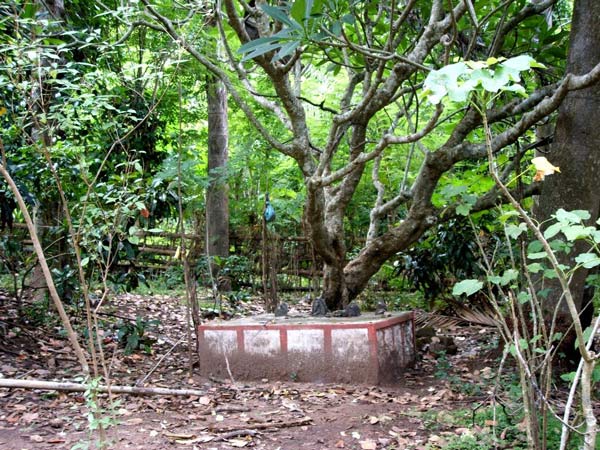
Eco-spirituality in the face of climate change >>
Kaani community >>
United Nations on climate change >>