Watch a video documentary on Santali marriage customs >>
The original inhabitants of South Asia are known as Adivasi. Their lifestyle is generally marked by a profound respect for nature. It is this sense of harmony that sustained the life of countless tribal communities for thousands of years. Today’s changes include carbon dioxide pollution caused by coal mines, deforestation and the impact of climate change. These factors threaten the social fabric of many Adivasi communities including the Santal. They constitute one of the largest communities whose settlements are spread across North-East India, Bangla Desh, Nepal and Bhutan. Their mother tongue is known as Santali.
Background information by documentary filmmaker Sigrun Schnarrenberger >>
“The forest was never far away from habitation. For instance, excavations of the settlements at Atranjikhera and Hastinapur, which are not too far from Delhi, have yielded evidence of a large variety of forest trees. The Buddhist Canon states that aside from the village and its outskirts, the rest of the land is jungle. Even as late as the seventh century A.D., the Chinese Buddhist monk Hsuan Tsang writes of forests close to Kausambi, as also of the extensively forested areas in the vicinity of Kapilavastu and Kusinagara in the terai and north Bihar. Travelling from one town to another meant going through a forest.” | Romila Thapar in Forest dwellers in early India – myths and ecology in historical perspective >>
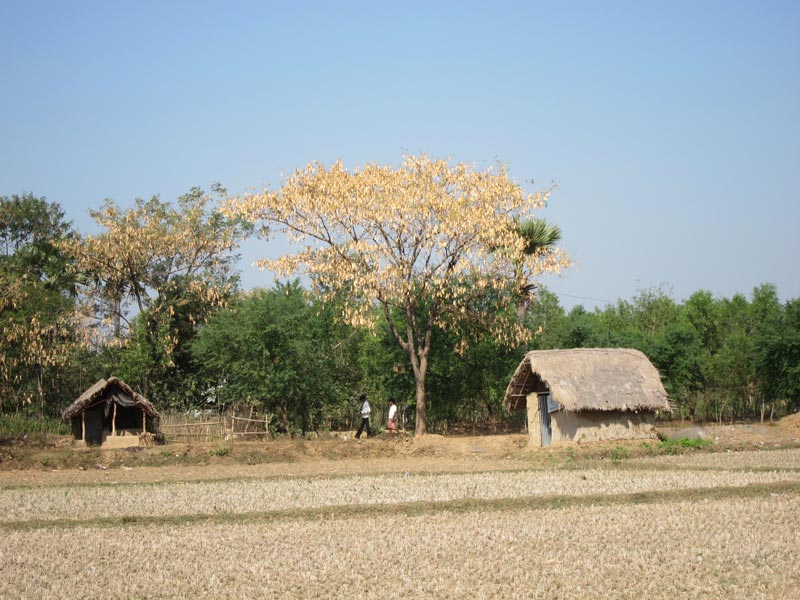
Photo © Ludwig Pesch
Learn more about a wide range of issues
including Education and literacy, Health and nutrition & Ethnobotany >>
UNESCO World Heritage Centre | Backup: PDF-Repository >>
Photo © Ludwig Pesch
Learn more about a wide range of issues
including Education and literacy, Health and nutrition & Ethnobotany >>
UNESCO World Heritage Centre | Backup: PDF-Repository >>
Learn more about the status and spread of Santali in different regions of India: