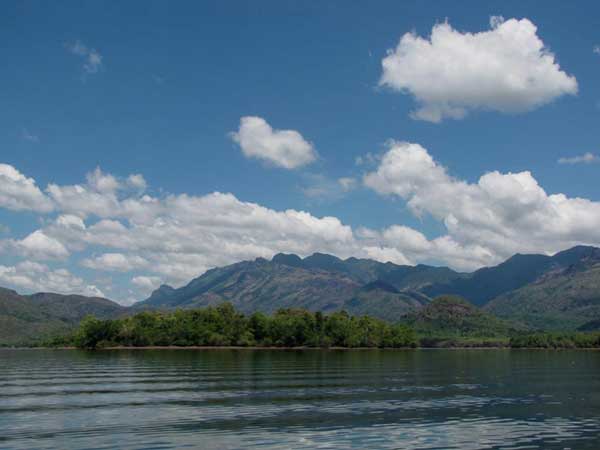
Photo courtesy Davidson Sargunam >>
Facts and figures: India’s biological, cultural and geographic diversity
Spread over 3,287,240 km2 and despite a total human population of over 1,210,000,000, India represents a wide spectrum of biological, cultural and geographic diversity. It has been identified as one of the top 12 global biodiversity hotspots and has 91 eco-cultural zones inhabited by 4,635 ethnic communities. India also has amongst the largest indigenous/tribal population, constituting 8.08% of the country’s population, representing 461 tribes. The term ‘Indigenous Peoples’ is not officially recognized in the country, instead the Constitution of India uses the term ‘Scheduled Tribes’. The total forest cover is estimated to be approximately 20% of the total area of the country. About 1,70,379 villages with a population of 10,674,334 inhabit areas in close proximity of forests.
Source: RECOGNITION AND SUPPORT OF ICCAs IN INDIA by Neema Pathak Broome and Tushar Dash, p. 4 | PDF-Repository
URL: https://kalpavriksh.org/wp-content/uploads/2021/01/IndiaICCARecognition_Final_SEPT2012-as-published.pdf
Date Visited: 10 March 2025
The hill tribal and rural communities of Kanyakumari district are heavily dependent on wild plants for their primary health care and treatment of diseases.
International Journal of Pharmacy and Pharmaceutical Sciences
ISSN- 0975-1491 Vol 4, Issue 1, 2012 | Backup copy (PDF, 300KB) >>
Received: 26 Aug 2011, Revised and Accepted: 10 Nov 2011
INDIGENOUS KNOWLEDGE OF MEDICINAL PLANTS USED FOR THE TREATMENT OF SKIN DISEASES BY THE KAANI TRIBAL OF KANYAKUMARI DISTRICT
Research article by G. JOHNSY1, S. DAVIDSON SARGUNAM2AND V. KAVIYARASAN1 johnsy_moses@yahoo.co.in. 1. Center for Advanced Studies in Botany, University of Madras, Guindy Campus, Chennai -600 025, India, 2. Environmental Educationist [late] Davidson Sargunam (Nagercoil)
ABSTRACT
The indigenous knowledge on medicinal plants is gaining recognition worldwide because of its support in discovery of new medicines and its importance for proper conservation of biodiversity. This paper documents the traditional knowledge of medicinal plants used for the treatment of skin diseases by the tribe, namely Kaani, of Kanyakumari District, Tamil Nadu, India. The present study was done through structured questionnaires in consultation with the tribal ethno-medical practitioners and has resulted in the documentation of 55 medicinal plant species belonging to 38 families. For curing the skin disease, the use of aboveground plant parts was higher (83.33%) than the underground plant parts (16.67%). Of the aboveground plant parts, leaves were used in the majority of cases (19 species), followed by whole plants (11 species). Different underground plant forms such as roots and rhizomes were also used by the tribe as medicine. The study thus underlines the potentials of the ethno-botanical research and the need for the documentation of traditional ecological knowledge pertaining to the medicinal plant utilization for the greater benefit of humankind.
Keywords: Kanyakumari, Questionnaires, Tribe, Skin diseases, Ethno-botany
Source: international journal of pharmacy and pharmaceutical sciences kaani davidson – Google Search
Address : http://www.ijppsjournal.com/Vol4Issue1/3003.pdf
Date Visited: Sat Feb 16 2013 21:41:01 GMT+0100 (CET)
EXCERPT: “INDIGENOUS KNOWLEDGE OF MEDICINAL PLANTS …”
The study revealed that whatever knowledge on plants exists with the people of the study area, is fast declining due to the lack of interest of local youth to acquire the traditional knowledge from the ancestors, who are indigenous physicians and traditional herbal healers. The highly interesting findings require further research, while the efficacy of the indigenous medical practices should be subjected to systematic pharmacological validation. Therefore, greater and constant efforts are required to document traditional knowledge of the Kaani tribal community to prepare a comprehensive account of it, which will throw open new vistas in plant research that can fulfill the purposes of biodiversity conservation and which are eco-friendly to the larger global community.
Chinese, Indian, Arabian and other traditional systems of medicines make extensive use of about 5,000 plants. India is proud to be rich in biological diversity and insert tenth among the plant rich countries of Asia, sixth as far as centers of diversity especially agro-diversity is concerned. Nearly three fourth of the drugs and perfumery products used in the world are available in natural state in the country. India possesses almost 8% of the estimated biodiversity of the world with around 126,000 species. It is one of the 12 mega biodiversity centers with two hot spots of biodiversity in Western Ghats and North-Eastern region. […]
A total of 24 informants, comprising 13 males and 11 females were identified between the ages of 52 and 74. They were selected based on their knowledge of medicinal plants either for self-medication or for treating others. Informants were asked to come to the habitat areas and identify the plants with local names; the species mentioned by the informants were taxonomically identified. […]
The forests of Kanyakumari District are rich in medicinal plants, many are still not known to us. Present investigation indicates that Kanyakumari District is blessed with magnificent diversity of ethno-medicinal plants used to cure many diseases. The present study gives new incentive to the traditional system of health care. Further, this approach for the treatment of skin diseases is a practical, cost effective and biologically safe method. The use of plant resources as remedies is probably as ancient as man himself. The aforesaid uses are practiced daily by the tribal people living in hills, deep forests and jungles. The use of the traditional medicine is widespread in this region with higher percentage of the population relying on it26.
According to the key informants we interviewed during our study, many medicinal plants have been disappearing from the forests. Because of this they have to walk or trek long distances to collect medicinal plants that had earlier been easily available in close proximity to their settlements. According to them, rapid deforestation, expansion of agricultural lands and destructive harvesting for commercial purposes are the main reasons for the dwindling and disappearance of medicinal plants.
The information presented in this research was collected from the senior members of the community who are still practicing the traditional healing methods. This study showed that the elderly persons and traditional healers have greater knowledge on the utilization of medicinal plants in comparison to the younger generation. During our study period, we found that the nearby villagers are seeking help from the traditional healers when their illness was not cured by modern medicines. Poor socio-economic status of the people has also compelled them to rely on traditional medicinal practices. When we interacted with the younger generation of the Kaani tribal community, they showed least interest in traditional practices mostly because of poor recognition of traditional healers and availability of modern health facilities. […]
[Bold typeface added above for emphasis]
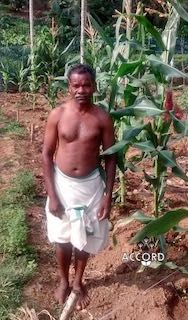
Photo © Accord Gudalur in
Gardening their way to Good Health >>
The healthier tribal ‘food basket’ >>
Adivasi communities traditionally depended on the forest for all their nutritional needs. They subsisted mainly on fruits, vegetables, tubers, fish, small game as well as the occasional crop they grew, predominantly coarse grains. However, as time passed and the nature of, as well as their access to, forests changed, their diet started becoming deficient. […]
This deficiency started manifesting in the form of rampant malnutrition, among adults and children alike, underweight babies as well as high maternal mortality [and] increased susceptibility to Tuberculosis among the Adivasis.
Source: blog post “Gardening their way to Good Health” by ACCORD – Action for Community Organisation, Rehabilitation and Development (Accordweb, 14 March 2017) | Backup file:
Up-to-date reports by Indian experts and journalists
List of sites covered by this Google SafeSearch engine
Academia.edu (platform for academics to share research papers) – www.academia.edu
Archive.org – https://archive.org
Centre for Science and Environment – https://www.cseindia.org
Current Conservation – https://www.currentconservation.org
Development and Cooperation (D+C) https://www.dandc.eu
Down To Earth (India) – www.downtoearth.org.in
India Environment Portal – www.indiaenvironmentportal.org.in
Harnessing Nature Magazine – https://harnessingnature.online
Kalpavriksh Environmental Action Group – https://kalpavriksh.org
Mongabay-India – https://india.mongabay.com
M S Swaminathan Research Foundation – www.mssrf.org
Navdanya (protecting India’s biodiversity based food heritage) – https://navdanya.org
People’s Archive of Rural India – https://ruralindiaonline.org/
Third World Network (Penang, Malaysia) – https://twn.my
The Shola Trust (nature conservation in the Nilgiri region) – www.thesholatrust.org
TribalConnect (“uplift and benefit the community without adversely affecting or changing their vernacular”) – https://tribalconnect.org.in
WorldCat (“the world’s largest library catalog, helping you find library materials online”) – https://worldcat.org
More SafeSearch on this website
Search tips
Combine the name of any particular state, language or region with that of any tribal (Adivasi) community.
Add keywords of special interest (music, poetry, dance just as health, sacred grove and biodiversity); learn about the rights of Scheduled Tribes such as the “Forest Rights Act” (FRA); and the United Nations “Declaration on the Rights of Indigenous Peoples”, “Universal Declaration of Human Rights”, “women’s rights”, or “children’s right to education”.
Ask a question that includes “tribal” or “Adivasi”, for instance: “Adivasi way of life better?” (or “tribal way of life worse?”)
Specify any particular issue or news item (biodiversity, bonded labour and human trafficking, climate change, ecology, economic development, ethnobotany, ethnomedicine, global warming, hunter-gatherers in a particular region or state, prevention of rural poverty, water access).
For official figures include “scheduled tribe ST” along with a union state or region: e.g. “Chhattisgarh ST community”, “Himalayan tribe”, “Scheduled tribe Tamil Nadu census”, “ST Kerala census”, “Particularly Vulnerable Tribal Group Jharkhand”, “PVTG Rajasthan”, “Adivasi ST Kerala”, “Adibasi ST West Bengal” etc.
SafeSearch browser tips
If your (mobile) browser fails to display “embedded” media contents, Google maps and SafeSearch windows
Try another browser like Firefox, Chrome or Safari available on your device
Ensure your favourite browser is up to date
Close your present browser
Check your browser and mobile (gsm) settings:
e.g. permission for video or JavaScript
(seen under Preferences >Security >Enable JavaSript)
Restart your computer (smartphone, tablet)
Reconnect to your wifi network or connect to a different one
On some iPhone models the following helps:
>Settings >Safari >scroll down to:
SETTING FOR WEBSITES
Enable “Request Desktop Website” (All Websites) temporarily
Return to the map-post in Safari and “Reload”
Return to >Settings and disable “Request Desktop Website” again
Return to the post in Safari and “Reload”which should now display “embedded” contents as intended (with the convenience of browsing the mobile version on a small screen)
Note: similar solutions may also work with other mobile operating systems.
What does it mean to be Indigenous?
Indigenous Peoples can be identified according to certain characteristics:
They are politically and socially marginalized.
Most importantly, they self-identify as Indigenous Peoples.
They share an ancestral link with those who inhabited a country or region before they were colonized or before other peoples became dominant.
They have a strong link to particular territories and the surrounding natural resources.
They have distinct social, economic or political systems, which they are resolved to maintain and reproduce.
They have a distinct language, culture and beliefs.
There are more than 5,000 different Indigenous Peoples around the world comprising 476 million people – around 6.2% of the global population. They are spread across more than 90 countries in every region and speak more than 4,000 languages. | Learn more (Amnesty International) >>
Source: “INDIGENOUS PEOPLES’ RIGHTS” by Amnesty International
URL: https://www.amnesty.org/en/what-we-do/indigenous-peoples/
Date Visited: 10 May 2025
Learn more on the Rights of Indigenous Peoples, their Languages & linguistic heritage & Tribal culture worldwide >>