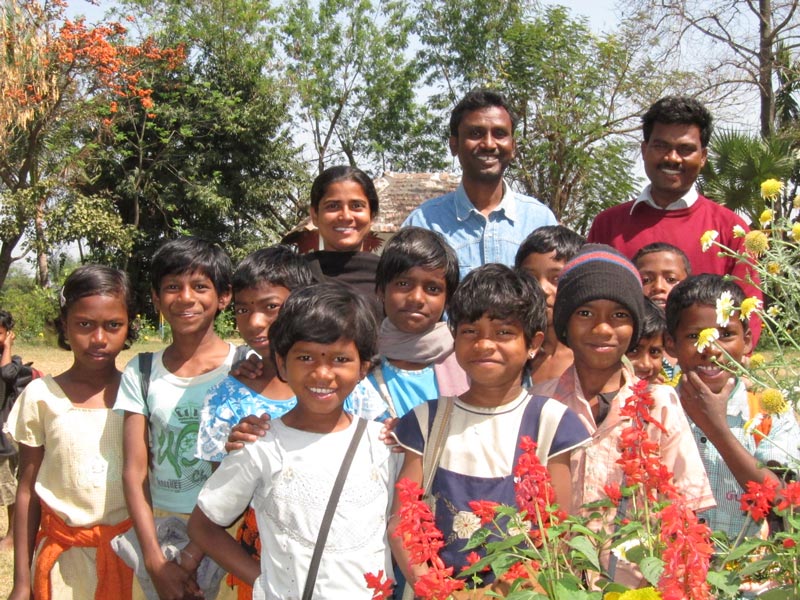
The non-formal Santal school Rolf Schoembs Vidyashram (RSV) was established in 1996. It has educated children of several Santal villages in Birbhum District by using a pioneering and model method of education. The Sanghas of the two Santal villages Ghosladanga and Bishnubati have combined their ideas and idealism to make such a school possible.
“The goal is to prepare some model students in our villages, so that others will be inspired to follow them.” – Boro Baski, “Long-term success of non-formal Adivasi school in West Bengal”
Recommended reading
Boro Baski and Kumkum Bhattacharya (eds.). Celebrating Life: The Santal Experiment in Freedom. Ten Years of a Non-Formal Santal School (1996-2006). Sattore: Ghosaldanga Bishnubati Adibasi Trust, 2007. Rs. 100.
Copies are available from:
Dr. Boro Baski
Ghosaldanga Bishnubati Adibasi Trust
P.O. Sattore 731 236, Dt. Birbhum
West Bengal
India
German / deutsche Informationen
Die deutsche Ausgabe hat den Titel Alternative Dorfentwicklung in Indien >>
Das Buch ist eine Übersetzung, Aktualisierung und Erweiterung der englischsprachigen Schrift: Celebrating Life – The Santal Experiment in Freedom, Ten Years of a Non-Formal Santal School (1996-2006).
Mit dem Buch möchten wir unserem deutschsprachigen Leserkreis ein authentisches Bild darüber geben, wie die Santals in Ghosaldanga und Bishnubati ihre Situation und Tradition sehen und ihre Dorfentwicklung selber in die Hand nehmen.
Interessenten können gegen ein Entgelt von 8 Euro ein Buchexemplar erwerben. Bitten wenden sie sich an Marianne Pal Chowdhury.
Search Worldcat.org for publications by reputed authors (select “Open Content/Open Access” for freely downloadable content)
Search tips
Combine the name of any particular state, language or region with that of any tribal (Adivasi) community.
Ask a question that includes “tribal” or “Adivasi”, for instance: “Adivasi way of life better?” (or “tribal way of life worse?”)
Add keywords of special interest (music, poetry, dance just as health, sacred grove and biodiversity); learn about the rights of Scheduled Tribes such as the “Forest Rights Act” (FRA); and the United Nations “Declaration on the Rights of Indigenous Peoples”, “Universal Declaration of Human Rights”, “women’s rights”, or “children’s right to education”.
Specify any particular issue or news item (biodiversity, bonded labour and human trafficking, climate change, ecology, economic development, ethnobotany, ethnomedicine, global warming, hunter-gatherers in a particular region or state, prevention of rural poverty, water access).
Research: explore PhD theses from all over India
Shodhganga (Open Access)
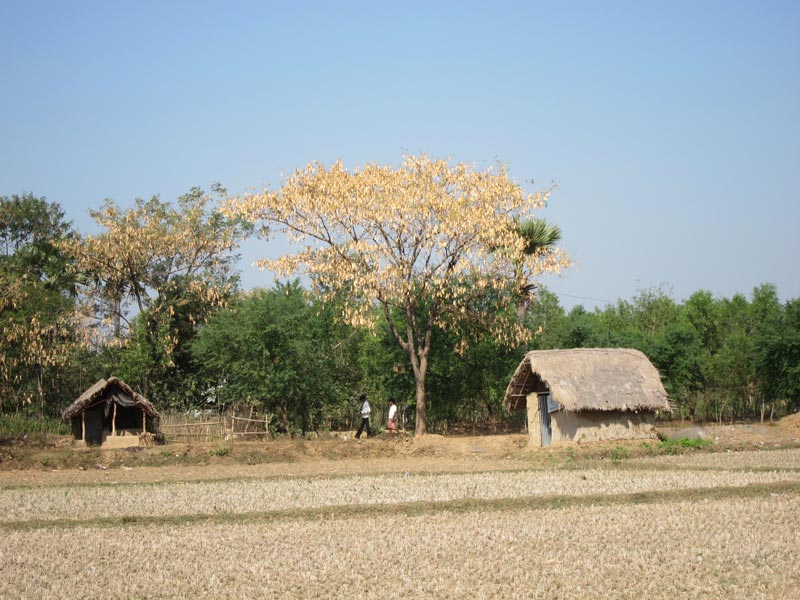
Photo © Ludwig Pesch
Learn more about a wide range of issues
including Education and literacy, Health and nutrition & Ethnobotany >>
UNESCO World Heritage Centre | Backup: PDF-Repository >>
Learn more about the status and spread of Santali in different regions of India:
Clarifications by Ivy Imogene Hansdak >>
To locate the Museum of Santal Culture in Bishnubati village (near Santiniketan) on the map seen below, open by clicking on the left button:
Tips for using interactive maps
Toggle to normal view (from reader view) should the interactive map not be displayed by your tablet, smartphone or pc browser
For details and hyperlinks click on the rectangular button (left on the map’s header)
Scroll and click on one of the markers for information of special interest
Explore India’s tribal cultural heritage with the help of another interactive map >>