Photo © Accord Gudalur in
Gardening their way to Good Health >>
The healthier tribal ‘food basket’ >>
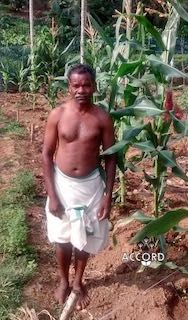
Tribal farmer Killo Dombu and his land cultivated under NABARD’s ‘Maa Thota’ scheme at Anthriguda hamlet in Ananthagiri mandal in Visakhapatnam district.
Killo Dombu of Anthriguda village in Dumbriguda mandal is proud of his achievements. Almost every plant is productive on his one-acre plot which yields cash crops. The innovative methods of cultivation adopted by him are a big draw today.
He is growing 40 varieties of horticulture plants, using bio-pesticides and adopting totally organic methods of cultivation. […]
Dombu advocates growing multiple crops instead of mono-crop. His plantations include 40 plants each of mango, chiku, acid lime, red sanders, teak, bamboo, fish tail palm, jack, jamun, custard apple, guava and Bahumia. Creeper varieties are pumpkin, beans, bottlegourd and ridgegourd. His plantation is fenced with trees such as euphorbia, agave and jetropha. Vegetables including brinjal, green pepper, chilli, pepper, rajma and cabbage are being grown as inter-crops along with medicinal plants.
P. Viswanatham, chairman of Vikasa, an NGO working to propagate organic farming among tribal farmers, told The Hindu that Dombu had been a source of inspiration to other ‘Maa Thota’ farmers. Dombu says that he is earning Rs.50,000 per year on the crop yield. Besides, the millet crops cultivated in his land take care of daily bread of his family members. A beaming Dombu shares his success story with his co-farmers and asks them to adopt his methods of farming. His wife, daughter and son-in-law together work in his ‘Maa Thota’ supported by NABARD. […]
Source: “A tribal farmer raises 40 varieties of biodiversity plantation” by Ravi P. Benjamin, The Hindu, VISAKHAPATNAM, October 12, 2012
Address : http://www.thehindu.com/news/cities/Visakhapatnam/a-tribal-farmer-raises-40-varieties-of-biodiversity-plantation/article3990699.ece
Date Visited: Sat Nov 03 2012 15:33:59 GMT+0100 (CET)
Dumbriguda is a village and a Mandal in the Sankaram Forest block of Visakhapatnam district in the state of Andhra Pradesh in India.[1]
There is a beautiful Dumbriguda waterfalls. It has a serene picture with row upon row of Silverwood trees stacked up the coffee-brown slopes of a valley
Source: Dumbriguda – Wikipedia, the free encyclopedia
Address : http://en.wikipedia.org/wiki/Dumbriguda
Date Visited: Sat Nov 03 2012 15:40:26 GMT+0100 (CET)
Up-to-date reports by Indian experts and journalists
Search tips
Combine the name of any particular state, language or region with that of any tribal (Adivasi) community.
Add keywords of special interest (music, poetry, dance just as health, sacred grove and biodiversity); learn about the rights of Scheduled Tribes such as the “Forest Rights Act” (FRA); and the United Nations “Declaration on the Rights of Indigenous Peoples”, “Universal Declaration of Human Rights”, “women’s rights”, or “children’s right to education”.
Ask a question that includes “tribal” or “Adivasi”, for instance: “Adivasi way of life better?” (or “tribal way of life worse?”)
Specify any particular issue or news item (biodiversity, bonded labour and human trafficking, climate change, ecology, economic development, ethnobotany, ethnomedicine, global warming, hunter-gatherers in a particular region or state, prevention of rural poverty, water access).
For official figures include “scheduled tribe ST” along with a union state or region: e.g. “Chhattisgarh ST community”, “Himalayan tribe”, “Scheduled tribe Tamil Nadu census”, “ST Kerala census”, “Particularly Vulnerable Tribal Group Jharkhand”, “PVTG Rajasthan”, “Adivasi ST Kerala”, “Adibasi ST West Bengal” etc.
SafeSearch browser tips
If your (mobile) browser fails to display “embedded” media contents, Google maps and SafeSearch windows
Try another browser like Firefox, Chrome or Safari available on your device
Ensure your favourite browser is up to date
Close your present browser
Check your browser and mobile (gsm) settings:
e.g. permission for video or JavaScript
(seen under Preferences >Security >Enable JavaSript)
Restart your computer (smartphone, tablet)
Reconnect to your wifi network or connect to a different one
On some iPhone models the following helps:
>Settings >Safari >scroll down to:
SETTING FOR WEBSITES
Enable “Request Desktop Website” (All Websites) temporarily
Return to the map-post in Safari and “Reload”
Return to >Settings and disable “Request Desktop Website” again
Return to the post in Safari and “Reload”which should now display “embedded” contents as intended (with the convenience of browsing the mobile version on a small screen)
Note: similar solutions may also work with other mobile operating systems.
List of websites covered by this Google custom search engine
Academia.edu (platform for academics to share research papers) – www.academia.edu
Archive.org – https://archive.org
Centre for Science and Environment – https://www.cseindia.org
Current Conservation – https://www.currentconservation.org
Development and Cooperation (D+C) https://www.dandc.eu
Down To Earth (India) – www.downtoearth.org.in
India Environment Portal – www.indiaenvironmentportal.org.in
Harnessing Nature Magazine – https://harnessingnature.online
Mongabay-India – https://india.mongabay.com
M S Swaminathan Research Foundation – www.mssrf.org
Navdanya (protecting India’s biodiversity based food heritage) – https://navdanya.org
People’s Archive of Rural India – https://ruralindiaonline.org/
Third World Network (Penang, Malaysia) – https://twn.my
The Shola Trust (nature conservation in the Nilgiri region) – www.thesholatrust.org
Indian online periodicals and platforms | Images view >>
~ ~ ~
Personalize your CustomSearch by combining other search words >>
(e.g. name of a tribal community and region, a craft, or dance and puppetry)
Research: explore PhD theses from all over India
Shodhganga (Open Access)
“If we take action, the right action – as the report [on Biological Diversity] proposes – we can transition to a sustainable planet.” […] Many good things are happening around the world and these should be celebrated and encouraged […] We have to act now. It is not too late. Otherwise, our children and grandchildren will curse us because we will leave behind a polluted, degraded and unhealthy planet.” – Elizabeth Maruma Mrema, executive secretary, UN Convention on Biological Diversity – “Extinction: Urgent change needed to save species, says UN”, BBC News, 15 September 2020 >>
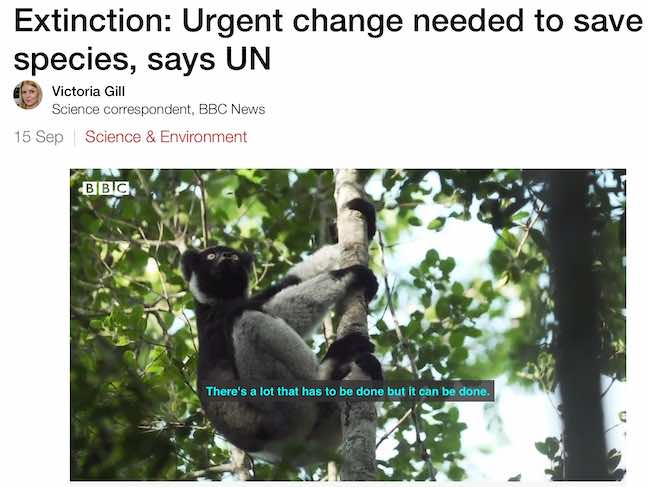
Watch the video on BBC News | More about Biodiversity in India >>
Up-to-date reports by Indian experts and journalists
List of sites covered by this Google SafeSearch engine
Academia.edu (platform for academics to share research papers) – www.academia.edu
Archive.org – https://archive.org
Centre for Science and Environment – https://www.cseindia.org
Current Conservation – https://www.currentconservation.org
Development and Cooperation (D+C) https://www.dandc.eu
Down To Earth (India) – www.downtoearth.org.in
India Environment Portal – www.indiaenvironmentportal.org.in
Harnessing Nature Magazine – https://harnessingnature.online
Kalpavriksh Environmental Action Group – https://kalpavriksh.org
Mongabay-India – https://india.mongabay.com
M S Swaminathan Research Foundation – www.mssrf.org
Navdanya (protecting India’s biodiversity based food heritage) – https://navdanya.org
People’s Archive of Rural India – https://ruralindiaonline.org/
Third World Network (Penang, Malaysia) – https://twn.my
The Shola Trust (nature conservation in the Nilgiri region) – www.thesholatrust.org
TribalConnect (“uplift and benefit the community without adversely affecting or changing their vernacular”) – https://tribalconnect.org.in
WorldCat (“the world’s largest library catalog, helping you find library materials online”) – https://worldcat.org
More SafeSearch on this website
Search tips
Combine the name of any particular state, language or region with that of any tribal (Adivasi) community.
Add keywords of special interest (music, poetry, dance just as health, sacred grove and biodiversity); learn about the rights of Scheduled Tribes such as the “Forest Rights Act” (FRA); and the United Nations “Declaration on the Rights of Indigenous Peoples”, “Universal Declaration of Human Rights”, “women’s rights”, or “children’s right to education”.
Ask a question that includes “tribal” or “Adivasi”, for instance: “Adivasi way of life better?” (or “tribal way of life worse?”)
Specify any particular issue or news item (biodiversity, bonded labour and human trafficking, climate change, ecology, economic development, ethnobotany, ethnomedicine, global warming, hunter-gatherers in a particular region or state, prevention of rural poverty, water access).
For official figures include “scheduled tribe ST” along with a union state or region: e.g. “Chhattisgarh ST community”, “Himalayan tribe”, “Scheduled tribe Tamil Nadu census”, “ST Kerala census”, “Particularly Vulnerable Tribal Group Jharkhand”, “PVTG Rajasthan”, “Adivasi ST Kerala”, “Adibasi ST West Bengal” etc.
SafeSearch browser tips
If your (mobile) browser fails to display “embedded” media contents, Google maps and SafeSearch windows
Try another browser like Firefox, Chrome or Safari available on your device
Ensure your favourite browser is up to date
Close your present browser
Check your browser and mobile (gsm) settings:
e.g. permission for video or JavaScript
(seen under Preferences >Security >Enable JavaSript)
Restart your computer (smartphone, tablet)
Reconnect to your wifi network or connect to a different one
On some iPhone models the following helps:
>Settings >Safari >scroll down to:
SETTING FOR WEBSITES
Enable “Request Desktop Website” (All Websites) temporarily
Return to the map-post in Safari and “Reload”
Return to >Settings and disable “Request Desktop Website” again
Return to the post in Safari and “Reload”which should now display “embedded” contents as intended (with the convenience of browsing the mobile version on a small screen)
Note: similar solutions may also work with other mobile operating systems.
What does it mean to be Indigenous?
Indigenous Peoples can be identified according to certain characteristics:
They are politically and socially marginalized.
Most importantly, they self-identify as Indigenous Peoples.
They share an ancestral link with those who inhabited a country or region before they were colonized or before other peoples became dominant.
They have a strong link to particular territories and the surrounding natural resources.
They have distinct social, economic or political systems, which they are resolved to maintain and reproduce.
They have a distinct language, culture and beliefs.
There are more than 5,000 different Indigenous Peoples around the world comprising 476 million people – around 6.2% of the global population. They are spread across more than 90 countries in every region and speak more than 4,000 languages. | Learn more (Amnesty International) >>
Source: “INDIGENOUS PEOPLES’ RIGHTS” by Amnesty International
URL: https://www.amnesty.org/en/what-we-do/indigenous-peoples/
Date Visited: 10 May 2025
Learn more on the Rights of Indigenous Peoples, their Languages & linguistic heritage & Tribal culture worldwide >>