
With Art and Science, Two Women Are Reviving Uttarakhand’s Nutritional Delicacies
Tanya Kotnala, an illustrator and Tanya Singh, a nutritionist joined hands to form Bhuli (which means ‘Little Sister’ in the native dialect of Garhwali), last year with the intention of reviving the local art and culture of the state. | Read the full story and view more images here >>
As more people migrate to cities and towns in search of better employment and education opportunities, one tends to take up food habits that are convenient and less time-consuming.
And when migration doesn’t involve just individuals but families as a whole, much of the native culinary practices that a village or town had to boast about, often gets lost somewhere as time passes by.
Sadly, this is the story of most villages in India that have bid adieu to not just its people but its age-old regional cuisines that were high on nutritional values too. […]
“It was sometime during this time that a local preparation named lungdi somehow cropped up in my mind. When I had inquired about its recipe with my family members and friends, most had little or almost no recollection of the dish! This led to research into the various culinary practices of Uttarakhand, while the nutritionist in me sought out the benefits,” she laughs.
While much of these preparations are crafted out of seasonal crops, Singh sheds light on the importance of nutritional content in these native vegetables and fruits.
“There is a reason why such crops are called seasonal. They are meant to be consumed at a particular time of the year. If one tries to draw a parallel with cities, one will find vegetables and fruits being available almost round the year,” Singh adds.
To help more people know of the nutritional local delicacies of Uttarakhand, the duo decided to release a series of informative illustrations in the first week of September. […]
Source: “With Art and Science, Two Women Are Reviving Uttarakhand’s Nutritional Delicacies by Lekshmi Priya S (7 September 2017)
URL: https://www.thebetterindia.com/114669/uttarakhands-nutritional-delicacies-revived-through-art-bhuli/
Date visited: 9 September 2020
[Bold typeface added above for emphasis]
“The tribal households traditionally had a backyard garden that had multiple, multilayered and multipurpose indigenous trees, plants, herbs, and shrubs. […] The produce from this small garden was sufficient to meet the dietary and nutrition needs of a family for an entire year.” – Learn more about food crops that are resistant to pests, grow on poor soils, flourish under changed climatic conditions and offer high nutritive value | Food distribution >>
Adivasi communities: stewards of India’s cultural heritage and biodiversity
[…] India’s tribal communities — over 104.5 million people, or 8.6 per cent of the population — remain among the most marginalised despite decades of welfare schemes and development promises. In states such as Chhattisgarh, Jharkhand, Bihar, Rajasthan and Odisha, tribal districts consistently record higher poverty levels than non-tribal areas, even as these regions supply land, forests and minerals for the country’s growth. These communities have often been compelled to relinquish their lands for large-scale infrastructure projects, resulting in the erosion of their identity, livelihoods, and future prospects.
It is crucial to recognise the value these communities bring, particularly their eco-friendly lifestyles, which offer important insights into addressing climate-related challenges. For instance, during the 2018 drought in Sundergarh, Odisha, a visit to a remote tribal village revealed thriving vegetation and effective water-harvesting systems. Kiri village in Lahunipara block of Sundergarh district, inhabited by the Paudi Bhuyan community — a Particularly Vulnerable Tribal Group (PVTG) — has demonstrated remarkable resilience.
This observation underscores the importance of learning from traditional ecological knowledge, especially sustainable farming practices that rely on drought-resistant and indigenous seeds.
Adivasi communities, as stewards of India’s cultural heritage and biodiversity, must be central to the nation’s development narrative. Their lives are intricately linked to land, forests and water, yet they face growing threats from climate change, livelihood insecurity and displacement. Addressing these challenges requires more than welfare initiatives; it demands robust enforcement of constitutional rights, substantial public investment and the strengthening of Gram Sabha–based governance. […]
Source: “Union Budget must shift from welfare to rights-based public investment for Adivasi communities” by Debabrat Patra, Sion Kongari & Saurabh Kumar, Down to Earth, 9 February 2026
URL: https://www.downtoearth.org.in/governance/union-budget-must-shift-from-welfare-to-rights-based-public-investment-for-adivasi-communities
Date Visited: 30 June 2026
The tribal food basket has always been diverse and nutritious, including maize, minor millets like kodo and kutki, oil seeds like ramtila, along with fruits, leaves, rhizomes, mushrooms, meat and fish. […] We have pushed them out of their complementary relationship with ecology, way of life and time-tested nutrition >>
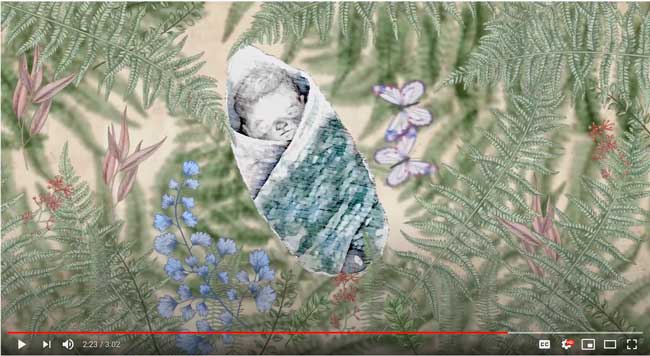
Watch “The Good Ancestor – The Legacies We Leave” (3 min.): An animation that explores the legacies we might leave for future generations >>
Links to some of the most important organisations, thinkers and doers that are leading the way and that have inspired the book The Good Ancestor by Roman Krznaric >>
Related posts
- As obesity and diabetes spread “like wildfire” throughout India, traditional foods can make a difference: Tribal elders enjoy better health thanks to a more balanced diet
- The Food Book of four communities in the Nilgiri mountains: Gudalur Valley – Tamil Nadu
- Uttarakhand
- Video | Living with the cycles of nature and understanding that it is bountiful: National award winning documentary “I Cannot Give You My Forest” – Odisha
- Wild food festivals & Slow Food Youth Network (SFYN): The world’s most important food movement
- Women business
- “Woodsmoke and Leafcups”: A book that opens up the full joy of tribal life without romanticisation – Bastar