To view the original animated resource (3 min.) and listen to school children reflecting on the Indian Removal Act of 1830, click here >>
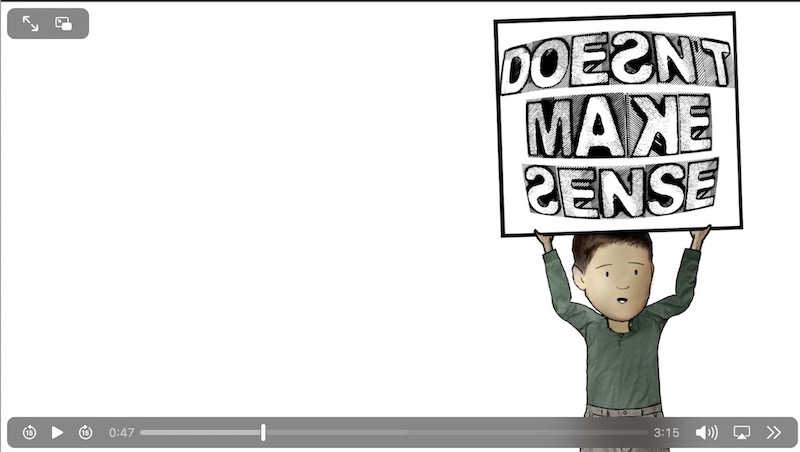
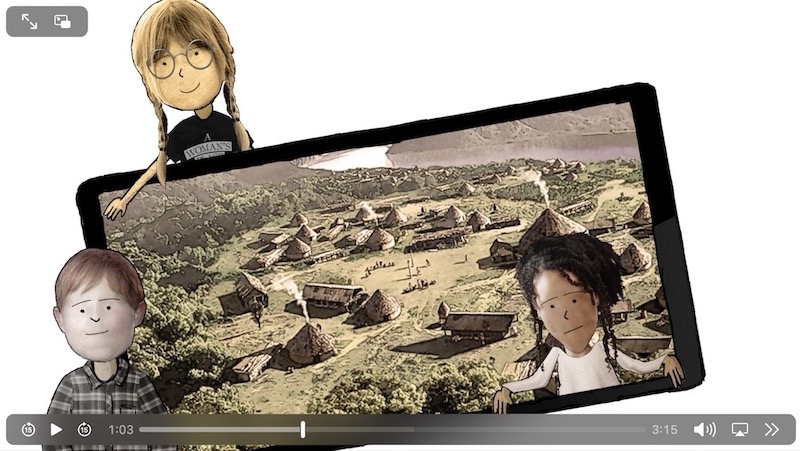
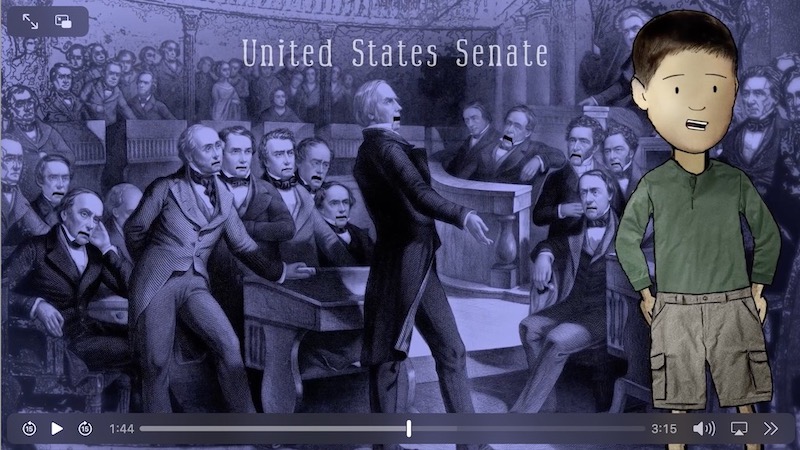
If you were told that you had to leave your home and go live somewhere far away, how would you react? Thousands of American Indians who originally lived east of the Mississippi River faced this reality in the nineteenth century as land-hungry Americans saw economic opportunity in American Indian lands. This animated videocaptures the responses of middle school students who learned about the history of American Indian removal.
Removal is an educational short film created as part of our Native Knowledge 360° online lesson, “American Indian Removal: What Does It Mean to Remove a People?” Through the film, we explore the impact of one of the most shameful policies in U.S. history—the Indian Removal Act of 1830—through the lens of students discovering this significant period in history for the first time.
Soon after the founding of the United States, American Indian Nations in the East faced increasing pressure to cede their lands and move west of the Mississippi. For many years, American Indian leaders made difficult choices by planning strategically and relying on their nations’ cultural, political, and military strengths to avoid removal. Removal became a federal policy with the passage of the Indian Removal Act in 1830. Although a few Indian Nations were successful in keeping some of their lands, about 100,000 Indian people were ultimately removed to Indian Territory. The process of removal created upheaval, suffering, and death among Indian people. However, it was not the end for American Indians; they have survived and thrive as their own cultural and political entities today. The history of American Indian removal serves as an important lesson for all people today in understanding the importance of human rights, relations among diverse peoples, and the consequences of certain policies and actions taken by nations.
Source: Online Resources, Smithsonian Institution
URL: https://americanindian.si.edu/nk360/removal/pdf/lesson-0-full.pdf
Date Visited: 19 July 2025
The Living Earth Festival celebrates indigenous contributions to environmental sustainability, conservation and indigenous plant use for health and nutrition. The purpose of the festival is to create an environment of activity and wonder, where the public can engage directly with Native and non-Native researchers and practitioners who are using traditional and modern methods to address climate change, environmental issues, food health and sustainability on Native and public lands. The festival will be held July 22-24, 2011.
Source: Multimedia | National Museum of the American Indian
Address : https://nmai.si.edu/explore/multimedia/
Date Visited: Sat Feb 08 2014 18:54:52 GMT+0100 (CET)
Popular videos
https://www.youtube.com/@SmithsonianNMAI/videos?view=0&sort=p&shelf_id=7
The National Museum of the American Indian cares for one of the world’s most expansive collections of Native artifacts, including objects, photographs, archives, and media covering the entire Western Hemisphere, from the Arctic Circle to Tierra del Fuego. We operate 3 facilities: the museum in Washington, D.C., the George Gustav Heye Center (GGHC) in New York City, and the Cultural Resources Center (CRC) in Suitland, Maryland. Learn more: https://americanindian.si.edu/about
Vision: Equity and social justice for the Native peoples of the Western Hemisphere through education, inspiration, and empowerment.
Mission: In partnership with Native peoples and their allies, the National Museum of the American Indian fosters a richer shared human
Source: YouTube Channel, National Museum of the American Indian
URL: https://americanindian.si.edu/nk360/ > https://www.youtube.com/SmithsonianNMAI
Date Visited: 19 July 2025
The NMAI and Indigenous Filmmaking
Created in 1979 within the former Museum of the American Indian–Heye Foundation in New York, the Film & Video Center is the country’s oldest media arts center for Native and indigenous film. The center is dedicated to promoting Native and indigenous filmmaking throughout the Americas and opening up new opportunities for Native film.
Source: Film & Media | National Museum of the American Indian
Address : http://nmai.si.edu/explore/film-media/
Date Visited: Sat Feb 08 2014 18:49:32 GMT+0100 (CET)