Why Odisha’s Tribal Women Are Returning to Their Natural Roots for Guidance on Food
Written by Rakhi Ghosh for Women’s Feature Service (WFS) and republished here in arrangement with WFS | Read the full article and view more photos on thebetterindia.com >>
Women’s Feature Service, December 26, 2016India’s tribals often possess traditional knowledge that gets lost because of the younger generation’s lack of interest. An organisaton is trying to prevent the same from happening in Odisha. […]
With support from Living Farms, a non-profit working on food and nutrition security, these women are going back to their native wisdom to, at least, secure the health of their coming generations.
Ever since she participated in the 15-day nutrition camp that was held in her Nuagaon village in the Bissam Cuttack block of Odisha’s Rayagada district, Chandrabati Kadraka, 22, has been a happy woman. For the first time since her daughter, Tiki, was born two years and four months ago, she now knows how to properly nurture her into a healthy child. Her baby girl is weak and, consequently, falls ill quite frequently, giving the young mother sleepless nights. “Fortunately, I have understood the importance of having a balanced meal put together from locally grown produce. We have a variety of foods, including various types of tubers and roots gathered from nearby forests, which are unique to our diet. Previously, we were hesitant to feed them to our kids. However, at the camp, I came to know how our tribal foods are highly nutritious, particularly for children,” elaborates Chandrabati. […]
According to Bichitra Biswal of Living Farms, “Kondh tribal farmers were growing different varieties of traditional foods in the upland and hill areas. But with time, most shifted to cash crop cultivation for money. Naturally, the highly nutritious foods have disappeared from their plates. Through the camps, we are trying to generate awareness around the good values of their indigenous fare.”
Nutritionist Tapaswini Swain explains, “Tribal people are believed to be the closest to nature. They consume foods with very minimal processing, and the duration from the field to the plate is less, hence the bio-availability of nutrients is very high.”
“Millets, for example, grow in abundance, and are a storehouse of nutrients as they contain protein, fibre as well as micro-nutrients such as beta carotene, iron and calcium.” […]
Pratima Kumuruka, another Kondh tribal woman, adds, “There are no chemical fertilisers in our foods, so we do not see many pregnancy-related complications among tribal women. Rather, if we take millets and pulses regularly, our children are healthier.” […]
“We collected seeds from neighbouring villages by sharing seeds of traditional crops, and presently we have a variety of seeds. So much so that we do not have to buy them from the market; rather, we collect and preserve our own,” says Majia Kumuruka. […]
Whereas good farming practices are one aspect of healthy eating, preparing meals is another. A few elderly tribal women have concerns about the indifference of the younger generation with regard to the traditional preparations. “Our food is our identity. Once our food is lost, we will be lost,” remarks Rupa Kumuruka, 52, of Badeipadar village, rather ominously. However, since Living Farms has been organising recipe festivals, there’s been a revival of interest. At these festivals, community elders rustle up some delicious dishes from millets and other forest foods. They tweak these versions to attract the youngsters, who prefer spicy street fare easily available in haats. Young daughters-in-law are trying their hand at making ladoos, halwa, and pakoda from finger millet, niger and foxtail millet. “In the recipe festival, the emphasis is on making wholesome dishes that children will relish,” says Biswal. […]
Through special nutrition camps, the tribal community is now rediscovering agriculture, natural resource management, and nutrition.
Source: Odisha’s Tribal Women Have a New Source for Good Food – Forest Food
Address: http://www.thebetterindia.com/79661/odisha-tribal-women-new-source-good-food-forest-food/
Date Visited: Mon Jan 09 2017 17:30:29 GMT+0100 (CET)
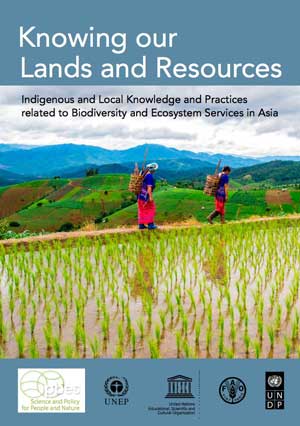
Learn more about health and nutrition
The Food Book of four communities in the Nilgiri mountains: Gudalur Valley – Tamil Nadu
Recommendations by the Expert Committee on Tribal Health – Government of India
Wild food festivals & Slow Food Youth Network (SFYN): The world’s most important food movement
Up-to-date reports by Indian experts and journalists
Search tips
Combine the name of any particular state, language or region with that of any tribal (Adivasi) community.
Add keywords of special interest (music, poetry, dance just as health, sacred grove and biodiversity); learn about the rights of Scheduled Tribes such as the “Forest Rights Act” (FRA); and the United Nations “Declaration on the Rights of Indigenous Peoples”, “Universal Declaration of Human Rights”, “women’s rights”, or “children’s right to education”.
Ask a question that includes “tribal” or “Adivasi”, for instance: “Adivasi way of life better?” (or “tribal way of life worse?”)
Specify any particular issue or news item (biodiversity, bonded labour and human trafficking, climate change, ecology, economic development, ethnobotany, ethnomedicine, global warming, hunter-gatherers in a particular region or state, prevention of rural poverty, water access).
For official figures include “scheduled tribe ST” along with a union state or region: e.g. “Chhattisgarh ST community”, “Himalayan tribe”, “Scheduled tribe Tamil Nadu census”, “ST Kerala census”, “Particularly Vulnerable Tribal Group Jharkhand”, “PVTG Rajasthan”, “Adivasi ST Kerala”, “Adibasi ST West Bengal” etc.
SafeSearch browser tips
If your (mobile) browser fails to display “embedded” media contents, Google maps and SafeSearch windows
Try another browser like Firefox, Chrome or Safari available on your device
Ensure your favourite browser is up to date
Close your present browser
Check your browser and mobile (gsm) settings:
e.g. permission for video or JavaScript
(seen under Preferences >Security >Enable JavaSript)
Restart your computer (smartphone, tablet)
Reconnect to your wifi network or connect to a different one
On some iPhone models the following helps:
>Settings >Safari >scroll down to:
SETTING FOR WEBSITES
Enable “Request Desktop Website” (All Websites) temporarily
Return to the map-post in Safari and “Reload”
Return to >Settings and disable “Request Desktop Website” again
Return to the post in Safari and “Reload”which should now display “embedded” contents as intended (with the convenience of browsing the mobile version on a small screen)
Note: similar solutions may also work with other mobile operating systems.
List of websites covered by this Google custom search engine
Academia.edu (platform for academics to share research papers) – www.academia.edu
Archive.org – https://archive.org
Centre for Science and Environment – https://www.cseindia.org
Current Conservation – https://www.currentconservation.org
Development and Cooperation (D+C) https://www.dandc.eu
Down To Earth (India) – www.downtoearth.org.in
India Environment Portal – www.indiaenvironmentportal.org.in
Harnessing Nature Magazine – https://harnessingnature.online
Mongabay-India – https://india.mongabay.com
M S Swaminathan Research Foundation – www.mssrf.org
Navdanya (protecting India’s biodiversity based food heritage) – https://navdanya.org
People’s Archive of Rural India – https://ruralindiaonline.org/
Third World Network (Penang, Malaysia) – https://twn.my
The Shola Trust (nature conservation in the Nilgiri region) – www.thesholatrust.org
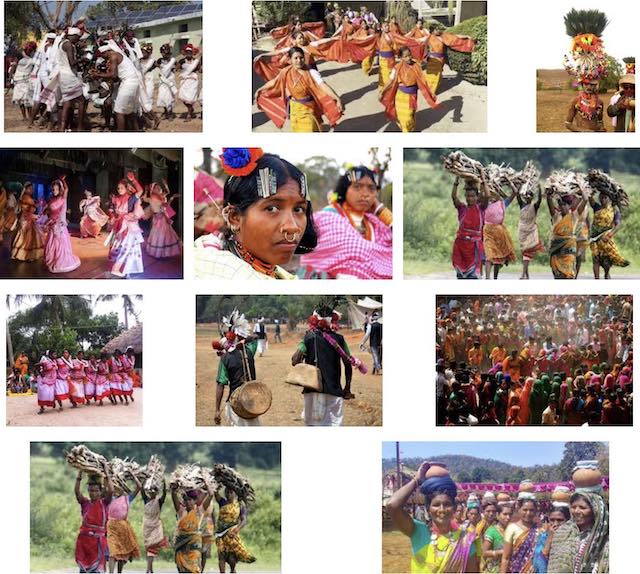
Indian online periodicals and platforms | Images view >>
~ ~ ~
Personalize your CustomSearch by combining other search words >>
(e.g. name of a tribal community and region, a craft, or dance and puppetry)
Research: explore PhD theses from all over India
Shodhganga (Open Access)