This RSA Animate was adapted from a talk given at the RSA by Sir Ken Robinson, world-renowned education and creativity expert and recipient of the RSA’s Benjamin Franklin award. […]
Find out more about the RSA at https://www.thersa.org
Join the RSA on Facebook at https://www.facebook.com/thersaorg
——
This audio has been edited from the original event by Becca Pyne. Series produced by Abi Stephenson, RSA. Animation by Cognitive Media.
Source: ▶ RSA Animate – Changing Education Paradigms – YouTube, Uploaded on Oct 14, 2010
Address : https://www.youtube.com/watch?v=zDZFcDGpL4U&feature=kp
Date Visited: Wed Jul 30 2014 17:09:02 GMT+0200 (CEST)
This video raises many questions, which generates lot of discomfort on schooling and education. What can be done? To remain as a mute spectator or to overhaul the system of education? […]
Source: email circular by N. Ramkumar (Educaton Co-ordinator, Swami Vivekananda Youth Movement, Mysore), 28 July 2014, www.svym.org
At 400 million, India is home to the world’s largest child population. More than 50 per cent of the children are malnourished and almost 50 per cent of them do not attend school. That’s the state of our country, soon to have the world’s largest young population. […]
(Mathuram Santhosham is a scientist and the recipient of the 2014 Albert B. Sabin Gold Medal Award.)
Source: “A need to turn the corner on child health” by Mathuram Santhosham, The Hindu, 31 July 2014
Address : https://www.thehindu.com/opinion/op-ed/a-need-to-turn-the-corner-on-child-health/article6265091.ece?homepage=true
Date Visited: 21 January 2022
[Bold typeface added above for emphasis]
“The highest education is that which does not merely give us information but makes our life in harmony with all existence.” – Rabindranath Tagore
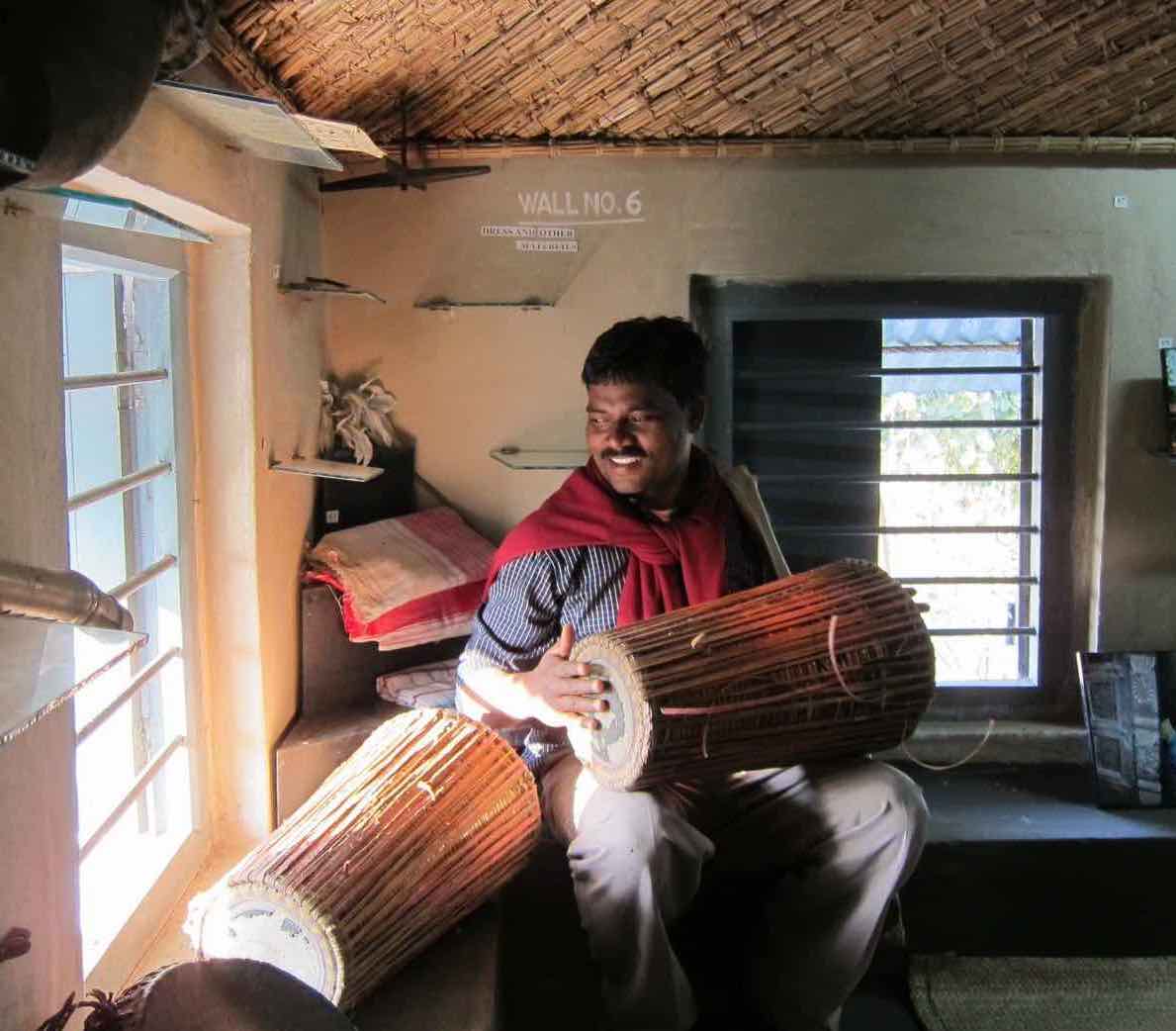
“The goal is to prepare some model students in our villages, so that others will be inspired to follow them.” – Boro Baski in Long-term success of non-formal Adivasi school in West Bengal >>
Find up-to-date information provided by, for and about Indian authors, researchers, officials, and educators
List of sites covered by this Google SafeSearch engine
Ashoka Trust for Research in Ecology and the Environment (ATREE) – www.atree.org
Freedom United – www.freedomunited.org
Government of India (all websites ending on “.gov.in”)
Kalpavriksh Environmental Action Group – https://kalpavriksh.org
Shodhganga (a reservoir of Indian theses) – https://shodhganga.inflibnet.ac.in
Survival International – www.survivalinternational.org
UCLA Digital Library – https://digital.library.ucla.edu
Unesco – https://en.unesco.org
Unesco digital library – https://unesdoc.unesco.org
Unicef – www.unicef.org
United Nations – www.un.org/en
Video Volunteers – www.videovolunteers.org
WorldCat (“the world’s largest library catalog, helping you find library materials online”) – https://worldcat.org
Search tips
Combine the name of any particular state, language or region with that of any tribal (Adivasi) community.
Add keywords of special interest (music, poetry, dance just as health, sacred grove and biodiversity); learn about the rights of Scheduled Tribes such as the “Forest Rights Act” (FRA); and the United Nations “Declaration on the Rights of Indigenous Peoples”, “Universal Declaration of Human Rights”, “women’s rights”, or “children’s right to education”.
Ask a question that includes “tribal” or “Adivasi”, for instance: “Adivasi way of life better?” (or “tribal way of life worse?”)
Specify any particular issue or news item (biodiversity, bonded labour and human trafficking, climate change, ecology, economic development, ethnobotany, ethnomedicine, global warming, hunter-gatherers in a particular region or state, prevention of rural poverty, water access).
For official figures include “scheduled tribe ST” along with a union state or region: e.g. “Chhattisgarh ST community”, “Himalayan tribe”, “Scheduled tribe Tamil Nadu census”, “ST Kerala census”, “Particularly Vulnerable Tribal Group Jharkhand”, “PVTG Rajasthan”, “Adivasi ST Kerala”, “Adibasi ST West Bengal” etc.
SafeSearch browser tips
If your (mobile) browser fails to display “embedded” media contents, Google maps and SafeSearch windows
Try another browser like Firefox, Chrome or Safari available on your device
Ensure your favourite browser is up to date
Close your present browser
Check your browser and mobile (gsm) settings:
e.g. permission for video or JavaScript
(seen under Preferences >Security >Enable JavaSript)
Restart your computer (smartphone, tablet)
Reconnect to your wifi network or connect to a different one
On some iPhone models the following helps:
>Settings >Safari >scroll down to:
SETTING FOR WEBSITES
Enable “Request Desktop Website” (All Websites) temporarily
Return to the map-post in Safari and “Reload”
Return to >Settings and disable “Request Desktop Website” again
Return to the post in Safari and “Reload”which should now display “embedded” contents as intended (with the convenience of browsing the mobile version on a small screen)
Note: similar solutions may also work with other mobile operating systems.

“Many people – though not all – have been able to secure freedom from torture, unjustified imprisonment, summary execution, enforced disappearance, persecution and unjust discrimination, as well as fair access to education, economic opportunities, and adequate resources and health-care. They have obtained justice for wrongs, and national and international protection for their rights, through the strong architecture of the international human rights legal system.” – Introduction to the Universal Declaration of Human Rights, p.vi
See also: The Universal Declaration of Human Rights turns 70 | Human Rights Commission (posts) | National Human Rights Commission: www.nhrc.nic.in (Government of India) >>
For additional learning resources visit the website of the Centre for Science and Environment (CSE), “a public interest research and advocacy organisation based in New Delhi”:
Communication for Awareness
CSE’s publications and informational products have been its strength and they have always combined research and readability to get the message across.
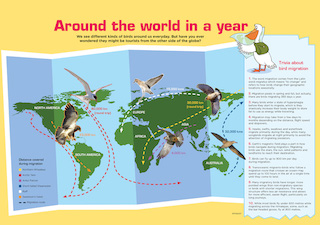
CSE’s tools for awareness raising are periodicals, publications, films/short spots, briefing papers, exhibitions, posters and other products. CSE’s informational products reach people in more diverse ways such as features service, website and e-news bulletins. […]
Source: About CSE
URL: https://www.cseindia.org
Date Visited: 10 July 2022