“My (mobile) browser fails to display embedded media content” | Tips >>
The Kattunayakans are a honey gathering community in the Gudalur valley. Over generations they have mastered the skills required to take honey out of hives. – Priyashri Mani (upload information 3 July 2012 on Youtube) | Credits: Adivasi Munnetra Sangam | Learn more >>
“Don’t fund our eviction”: honey-collecting tribe pleads with US government
January 20, 2020
Two tribal communities famed for their honey-gathering skills have written to the US authorities urging them to scrap support for a conservation project that could lead to the tribe’s eviction from their ancestral forests.
The villagers, members of India’s Jenu Kuruba (“honey collectors”) tribe, object to the US Fish and Wildlife Service funding a project in Karnataka state, home to the Nagarhole Tiger Reserve, which was created on their tribal lands.
The project is a partnership with Wildlife Conservation Society-India. Its first objective is to “facilitate government-sponsored, voluntary relocation of forest-interior families to new sites outside the forest.” But the Jenu Kuruba are determined to stay in their forests, and view U.S. government money being used in this way as “Aiding and abetting the government and WCS’s plans to evict us from our forests.”
Other Jenu Kuruba people were previously evicted from Nagarhole, where WCS-India has worked for decades. They told Survival that they were pressured to “voluntarily relocate” after their lives in the forest were rendered impossible, and they were left with no choice. One described it as “a kind of torture.”
Gurumala, a Jenu Kuruba man who was evicted from a nearby tiger reserve 30 years ago, told Survival: “Our children were once independent and free; the whole community was their teacher. After the government came, we lost so much, they moved us out of the forest and restricted our lives. Now our children who grow up here have no freedom. I’m sad that our children have to live like this. I feel very sad that I have to tell our children and grandchildren about our way of life as if it were just a story from the past.”
The WCS is the parent organization of the Bronx Zoo. One of its founders, Madison Grant, was a notorious eugenicist and author of “The Passing of the Great Race”, a book Hitler referred to as his “bible.”
Survival’s research into Indian government-sponsored “voluntary relocations” of tribal people from tiger reserves has found them to be forced evictions, and so illegal under Indian and international law.
The letter comes just weeks after members of the US government’s House Committee on Natural Resources started to investigate WCS’s role in conservation grants tied to human rights abuses. In December the committee wrote to WCS President and CEO, Christián Samper requesting information “related to WCS’s awareness of the occurrence of human rights abuses, funding for eco-guards or law-enforcement that committed human rights abuses, and policies addressing the rights of indigenous and local peoples.”
A member of the US Congress has also submitted a law that would prohibit the government from funding international conservation groups that fund or support human rights violations.
Survival International Director Stephen Corry said today: “Tribal people have long been considered disposable and just “in the way” by big conservation NGOs who want to kick them off their land. But now at least some of them are able to lobby the government funders behind the schemes, which usually do a worse job of conservation than the original inhabitants themselves. Governments shouldn’t fund illegal land grabs and conservation NGOs must learn to treat people with respect. Times are changing.”
Read this press release online: https://www.survivalinternational.org/news/12320
For more information and images, contact our press office:
+44 (0)207 687 8709 | +44 (0)7841 029 289
press@survivalinternational.org
www.survivalinternational.org/news
MADURAI: The lifestyle of Paliyar community, a tribal people found in mountains in southern districts, is far more progressive than modern society in the plains, say the participants of a three-day programme organized to get closer to the community in Kodaikanal hills. […]
“If Paliyars uproot one plant to gather roots, they plant in five places. When they go for gathering honey, they will extract only a part of honey from the hive. Similarly, they will not cut any living tree as they worship them as god.
They still lead a living a life far away from the consumeristic and greedy society found in plains. Only recently, they have started using basic gadgets such as mobile phone and television. […]
Source: Paliyar tribes more progressive than modern society Times of India, July 22, 2019
URL: https://timesofindia.indiatimes.com/city/madurai/paliyar-tribes-more-progressive-than-modern-society/articleshow/70321782.cms
, Date accessed: 27 January 2020
[Bold typeface added above for emphasis]
Making tourism “non-exploitative”: economic development that benefits local communities
We envision forms of tourism which are non-exploitative, where decision making is democratised, and access to and benefits of tourism are equitably distributed. EQUATIONS believes in the capacity of individuals and communities to actualise their potential for the well-being of society. We work toward justice, equity, people centred and movement centred activism, democratisation and dialogue.
Everyday we hear that tourism brings economic development, it creates jobs and revenues. But who really benefits from it? The local community, the village elite, or the owner?
There’s been an exponential increase in tourism in India over the last several decades, fueled by the growing economy and disposable incomes. The tourism industry in India has expanded wildly in an unregulated fashion with no regard for environmental, social and cultural impacts.
Source: Equitable Tourism (EQUATIONS)
URL: https://beta.equitabletourism.org/about
Date Visited: 28 November 2021 | Backup (PDF, 100 KB)
Up-to-date reports by Indian experts and journalists
Search tips
Combine the name of any particular state, language or region with that of any tribal (Adivasi) community.
Add keywords of special interest (music, poetry, dance just as health, sacred grove and biodiversity); learn about the rights of Scheduled Tribes such as the “Forest Rights Act” (FRA); and the United Nations “Declaration on the Rights of Indigenous Peoples”, “Universal Declaration of Human Rights”, “women’s rights”, or “children’s right to education”.
Ask a question that includes “tribal” or “Adivasi”, for instance: “Adivasi way of life better?” (or “tribal way of life worse?”)
Specify any particular issue or news item (biodiversity, bonded labour and human trafficking, climate change, ecology, economic development, ethnobotany, ethnomedicine, global warming, hunter-gatherers in a particular region or state, prevention of rural poverty, water access).
For official figures include “scheduled tribe ST” along with a union state or region: e.g. “Chhattisgarh ST community”, “Himalayan tribe”, “Scheduled tribe Tamil Nadu census”, “ST Kerala census”, “Particularly Vulnerable Tribal Group Jharkhand”, “PVTG Rajasthan”, “Adivasi ST Kerala”, “Adibasi ST West Bengal” etc.
SafeSearch browser tips
If your (mobile) browser fails to display “embedded” media contents, Google maps and SafeSearch windows
Try another browser like Firefox, Chrome or Safari available on your device
Ensure your favourite browser is up to date
Close your present browser
Check your browser and mobile (gsm) settings:
e.g. permission for video or JavaScript
(seen under Preferences >Security >Enable JavaSript)
Restart your computer (smartphone, tablet)
Reconnect to your wifi network or connect to a different one
On some iPhone models the following helps:
>Settings >Safari >scroll down to:
SETTING FOR WEBSITES
Enable “Request Desktop Website” (All Websites) temporarily
Return to the map-post in Safari and “Reload”
Return to >Settings and disable “Request Desktop Website” again
Return to the post in Safari and “Reload”which should now display “embedded” contents as intended (with the convenience of browsing the mobile version on a small screen)
Note: similar solutions may also work with other mobile operating systems.
List of websites covered by this Google custom search engine
Academia.edu (platform for academics to share research papers) – www.academia.edu
Archive.org – https://archive.org
Centre for Science and Environment – https://www.cseindia.org
Current Conservation – https://www.currentconservation.org
Development and Cooperation (D+C) https://www.dandc.eu
Down To Earth (India) – www.downtoearth.org.in
India Environment Portal – www.indiaenvironmentportal.org.in
Harnessing Nature Magazine – https://harnessingnature.online
Mongabay-India – https://india.mongabay.com
M S Swaminathan Research Foundation – www.mssrf.org
Navdanya (protecting India’s biodiversity based food heritage) – https://navdanya.org
People’s Archive of Rural India – https://ruralindiaonline.org/
Third World Network (Penang, Malaysia) – https://twn.my
The Shola Trust (nature conservation in the Nilgiri region) – www.thesholatrust.org
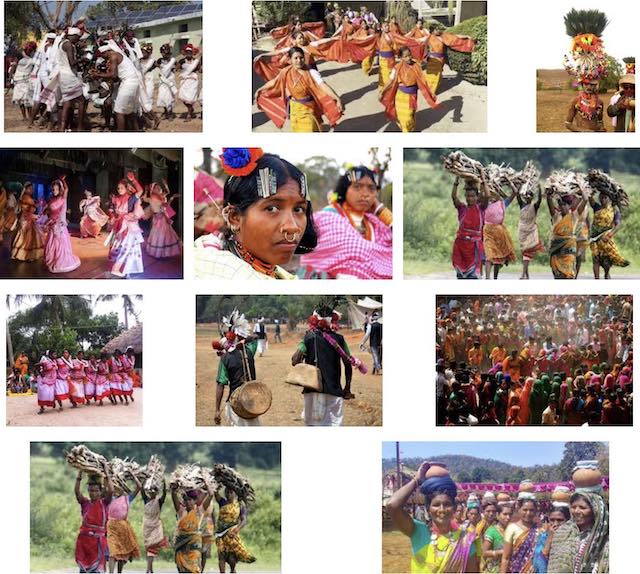
Indian online periodicals and platforms | Images view >>
~ ~ ~
Personalize your CustomSearch by combining other search words >>
(e.g. name of a tribal community and region, a craft, or dance and puppetry)
Research: explore PhD theses from all over India
Shodhganga (Open Access)